
Chapter 4: Built Environment
About this document
Lead authors: Dejan Mumovic, Clare Heaviside, Ting Sun, Oscar Brousse, Eleni Davidson, Nishesh Jain
Contributing authors: Laurent Amoudry, Mim Andrews, Rachel Brisley, Sani Dimitroulopoulou, Jon French, Marios Kordilas, Valentina Marincioni, Scott Orr, Aakash Patel, Meysam Akbari Paydar, Giorgos Petrou, Andrew Russell, Paul Sayers, Charles Simpson, Phil Symonds, Jonathon Taylor, Helen Thomas, Marcella Ucci, Bingyu Xu, Jiaxu Zhou
Additional contributors: Alexander Askew, Zishen Bai, Emily Barker, Sarah Bell, Owen Bellamy, Hannah Findley, Rajat Gupta, Rowena Hill, Miriam Kennedy, Yue Meng, Rachel Perks, Olivia Shears, Stefan Smith, Daniel Williams

This publication is available in PDF format at the end of the page >
4.1 Chapter summary
The built environment encompasses residential and non-residential buildings, and communities, cultural heritage and public services. Adapting the UK’s building stock to address long-term climate risks presents significant challenges, particularly in identifying appropriate measures for risk reduction. This chapter assesses the risks to buildings, particularly those associated with heat, flooding and extreme weather conditions, and downstream impacts.
Headlines
- For the built environment, the highest urgency risks are due to overheating (BE1) and flooding (BE2). There is often a confluence of extreme events, such as storms and more intense rainfall (BE4), heatwaves, droughts, and floods. These events, place strain on the local emergency service response capabilities (BE8), especially in densely populated urban areas.
- Household energy demand (BE9) is expected to change, driven by the projected increase in cooling demand (especially in England) and fall in heating demand. Additionally, in some cases, the impact of rising indoor temperature has implications beyond occupant health (covered in the health chapter). In schools (BE7), risks from heat include reduced well-being among students, increased loss of cognitive performance, and lower test scores.
- Risks to the built environment disproportionally affect vulnerable populations, such as older people, young children and people with poor health or disabilities. Risks are also higher in low-income neighbourhoods, deprived areas, and isolated communities.
- New evidence has identified areas of action, extending beyond the investigation stage. For example, evidence suggests that reduced summer rainfall and the associated increase in soil drought (BE4), which is associated with subsidence, has a greater impact than previously predicted.
- Risk from coastal change (BE3) varies locally between and within countries and is expected to rise significantly over time, especially by the 2080s. Further investigation is needed in individual countries, especially Scotland, Wales and Northern Ireland.
- There is a significant gap in evidence across countries for indoor environmental quality risk (BE5) and risks to broader building types within public services (BE7). This needs further investigation.
- More evidence is needed for individual countries, particularly Scotland, Wales, and Northern Ireland, where gaps exist across several risk categories.
Increasing temperatures mean that the insides of buildings are becoming uncomfortably hot (BE1), requiring critical action. Hotter summers are expected across the UK as global temperatures continue to rise. The risk of overheating is driven by building design, its operation, occupant behaviour, and the local climate. Critical action is needed to reduce the risk of overheating in both new and existing buildings. Many buildings that will be in use in the mid-to-late century are already in existence, and some have cultural value. While critical action is necessary to manage the overheating risk in England, Scotland, and Wales, critical investigation is needed in Northern Ireland.
The flood risk from coastal, rivers, surface water and wastewater to buildings and communities (BE2) across all UK nations needs critical action. There has been significant public investment in flood defences and new schemes, though surface water flooding remains a particular challenge requiring different approaches. Ongoing challenges include planning enforcement, property-level resilience, and coverage for all communities. This has a significant impact in dense urban areas, because of continued development in high-risk areas such as floodplains and coastal zones.
Across the UK, the risk to buildings and communities from storms, wind-driven rain, subsidence, wind, and wildfires (BE4) is increasing and has reached a high level. Seasonal rainfall intensity is expected to rise, with Scotland being most affected, particularly in the west, followed by Wales. Summer soil drying and associated subsidence risk are intensifying, especially in southern England, with risk gradually decreasing further north. The direct and indirect impacts associated with these events are inevitable, and more action is necessary to mitigate them.
Risks to local resilience planning and emergency response (BE8) are high across all UK regions. Weather events requiring emergency responses are expected to continue increasing in the future, alongside population growth and urban expansion, requiring critical investigation. This will likely increase the strain on emergency services, especially as these events have a growing tendency to overlap or occur within a short time period.
Rising heat and similar climate risks have broader implications beyond health. For instance, in schools (BE7), indoor overheating is observed to negatively affect students’ learning and well-being, resulting in decreased cognitive performance and lower test scores. In prisons, overheating, exaggerated by overcrowding, can contribute to tension and unrest. When combined with the vulnerabilities of inmates overheating can also limit the effectiveness of standard health interventions.
Increasing temperature is significantly altering energy demand trends (BE9). Summer cooling energy demand is projected to rise, while winter heating demand is projected to fall. The increased cooling energy demand, resulting from the rising uptake and use of air conditioning, is expected to be higher in England, particularly in London, South West, and South East England.
Most climate change-related risks to buildings and communities disproportionately affect vulnerable populations. Vulnerability to risks across the built environment depends on both the level of exposure and the characteristics of people and communities. Age, health and socio-economic circumstances all play a role. Older people, young children, and people with poor health or disabilities are at a higher risk. This also extends to low-income neighbourhoods, deprived areas, and isolated communities.
Risk to buildings and communities from coastal change (BE3) across the four devolved nations is currently low to medium, increasing to high and very high due to climate change. Coastal change is difficult to predict due to complex, often non-linear feedback between landforms, and shoreline processes. Further investigation is needed to increase confidence in Scotland, Wales, and Northern Ireland.
Evidence gathered across all risks in the built environment points towards further and urgent action needed. However, additional evidence is required to fill the gaps in understanding risks to indoor environmental quality (BE5) and cultural heritage and landscapes (BE6) across the four nations. Additionally, more investigation is needed in public service facilities, beyond schools and prisons (BE7).
Table 4.1: List of risks and urgency scores for the Built Environment by country. Details of how the scores in this table were calculated are in the Methods Chapter.  | |||||||
| ID | Risk | Present | 2030 | 2050 | 2080 | Urgency | |
| BE1 | Risks to buildings and communities from heat | UK | VH • • • | VH • • • | VH • • • | VH • • • | CAN |
| England | VH • • • | VH • • • | VH • • • | VH • • • | CAN | ||
| Northern Ireland | H • | H • | H • • | H • • | CI | ||
| Scotland | H • | VH • | VH • • | VH • • | CAN | ||
| Wales | H • • | VH • • | VH • • | VH • • | CAN | ||
| BE2 | Risks to buildings and communities from flooding | UK | VH • • • | VH • • • | VH • • • | VH • • • | CAN |
| England | H • • • | H • • • | VH • • • | VH • • • | CAN | ||
| Northern Ireland | H • • • | H • • • | VH • • • | VH • • • | CAN | ||
| Scotland | VH • • • | VH • • • | VH • • • | VH • • • | CAN | ||
| Wales | VH • • • | VH • • • | VH • • • | VH • • • | CAN | ||
| BE3 | Risks to buildings and communities from coastal change | UK | M • • • | M • • | M • • | H • | MAN |
| England | M • • • | M • • | M • • | H • | MAN | ||
| Northern Ireland | L • • | L • • | M • | M • | FI | ||
| Scotland | L • • • | L • • | M • | M • | FI | ||
| Wales | L • • • | L • • | M • | H • | FI | ||
| BE4 | Risks to buildings and communities, excluding from heat, flooding and coastal change | UK | H • • • | H • • | H • • | H • • | MAN |
| England | H • • • | H • • | H • • | H • • | MAN | ||
| Northern Ireland | H • • | H • • | H • • | H • • | MAN | ||
| Scotland | H • • • | H • • | H • • | H • • | MAN | ||
| Wales | H • • • | H • • | H • • | H • • | MAN | ||
| BE5 | Risks to indoor environmental quality | UK | H • • | M • | M • | M • | MAN |
| England | H • • | M • | M • | M • | MAN | ||
| Northern Ireland | H • • | M • | M • | M • | MAN | ||
| Scotland | H • • | M • | M • | M • | MAN | ||
| Wales | H • • | M • | M • | M • | MAN | ||
| BE6 | Risks to cultural heritage and landscapes | UK | M • • | M • • | H • | H • | CI |
| England | M • • | M • • | H • | H • | CI | ||
| Northern Ireland | M • | M • | H • | H • | CI | ||
| Scotland | M • • | M • • | H • | H • | CI | ||
| Wales | M • • | M • • | H • | H • | CI | ||
| BE7 | Risks to facilities delivering public services, excluding health and social care | UK | M • • | M • • | M • | H • | MAN |
| England | M • • | M • • | M • | H • | MAN | ||
| Northern Ireland | M • | M • | M • | M • | FI | ||
| Scotland | M • | M • | M • | H • | FI | ||
| Wales | M • | M • | M • | M • | FI | ||
| BE8 | Risks to local resilience planning and emergency service response capabilities | UK | H • • • | H • • | VH • | VH • | CI |
| England | H • • • | H • • | H • | VH • | CI | ||
| Northern Ireland | H • • | H • • | H • | VH • | CI | ||
| Scotland | H • • | H • • | VH • | VH • | CI | ||
| Wales | H • • | H • • | VH • | VH • | CI | ||
| BE9 | Risks to households from changing energy demand | UK | M • • • | M • • | H • • | H • • | MAN |
| England | M • • • | M • • | H • • | H • • | MAN | ||
| Northern Ireland | L • • • | L • • • | L • • | M • • | SCA | ||
| Scotland | L • • • | L • • • | L • • | M • • | SCA | ||
| Wales | L • • • | L • • | M • • | H • • | MAN | ||
4.2 Risks to the built environment
4.2.1 Risks to buildings and communities from heat – BE1
Higher ambient temperatures are expected to cause more buildings and outdoor spaces to be uncomfortably hot for a greater proportion of the time. This section covers the risk of overheating in buildings and heat outdoors without discussing the health, economic, or energy impacts etc., which are covered by other sections. Risks to services such as schools, hospitals, prisons etc., are covered by other sections.
Headlines
- Critical action is needed for this risk in England, Scotland and Wales. Critical investigation is needed in Northern Ireland.
- Hotter summers are expected as global temperatures increase. Much of the building stock that will exist in the mid-to-late century is already built. The combination of building design and operation as well as changes in climate are driving overheating risk across the building stock.
- There are critical evidence gaps, particularly in Scotland and Northern Ireland. In addition, there is a lack of evaluation of interventions including the implementation of building regulations and post-occupancy monitoring of new or adapted buildings.
- Evidence is lacking on the effectiveness of current adaptation actions.
| Table 4.2: Urgency scores for BE1 Risks to buildings and communities from heat. Details of how the scores in this table were calculated are in the Methods Chapter. | |||||||
| ID | Risk | Present | 2030 | 2050 | 2080 | Urgency | |
| BE1 | Risks to buildings and communities from heat | UK | VH • • • | VH • • • | VH • • • | VH • • • | CAN |
| England | VH • • • | VH • • • | VH • • • | VH • • • | CAN | ||
| Northern Ireland | H • | H • | H • • | H • • | CI | ||
| Scotland | H • | VH • | VH • • | VH • • | CAN | ||
| Wales | H • • | VH • • | VH • • | VH • • | CAN | ||
4.2.1.1 Evidence relevant to the entire United Kingdom
Current and future drivers of risk
Risks to buildings and communities from heat have multiple drivers. Hazards include increased temperatures and more heatwaves (consecutive hot days), higher daily maximum temperatures and higher nighttime temperatures, which are exacerbated by the Urban Heat Island effect (State of the Climate chapter) (Bassett et al., 2020; Brousse et al., 2024; Chowienczyk et al., 2020; Simpson et al., 2024; Simpson et al., 2025). Overheating is a risk during warm seasons and heatwaves. Exposure to the risk depends on building characteristics such as housing quality, type, size, insulation levels, ventilation, active cooling, glazing and shading. Exposure also depends on broader built-environment characteristics such as built-up fraction, building materials, and level of vegetation. Vulnerability of the population depends on demographic factors, including population density, age, socio-economic characteristics, as well as occupant behaviours (Cole et al., 2024, 2023; Kenny et al., 2024; Sahani et al., 2024; Taylor et al., 2024). Risks to health also depend on other factors which are discussed in H1. The current building stock is observed to overheat in the present climate and is generally not well adapted to the future climate. Overheating was reported by 12% of households in the 2023 English Housing Survey (EHS). Based on monitoring of indoor temperatures in a sample of homes, the Energy Follow Up Survey (EFUS) reported 15% of living rooms and 19% of bedrooms overheated in summer 2018 (EFUS, 2021).
Certain kinds of housing are more likely to overheat, for example flats (EFUS, 2021). Monitoring studies indicate that more energy efficient buildings are not necessarily at greater risk of overheating, contrary to some previous studies although these did not distinguish between flats and houses (Lomas et al., 2021, 2024; Taylor et al., 2023).
Outdoor temperatures drive indoor temperatures. While people spend most of their time indoors, outdoor temperatures are important to understand heat stress, due to this relationship. Cool spaces, such as parks or green areas (or cool public buildings) can offer refuge from heat. Outdoor heat can make it uncomfortable or unsafe to walk or do physical work outdoors, especially where shade is not available. Access to cool spaces, and availability of shade, may be unequal across the population.
Risk Interactions: Adoption of air conditioning can decrease overheating risk (although not necessarily in an equitable way), and overheating can drive adoption of air conditioning, suggesting a two-way connection with BE9. Mass adoption of air conditioning in dense urban areas could exacerbate overheating through waste heat outside buildings (Brousse et al., 2022). Air conditioning use could impact energy demand (BE9) and potentially contribute to electricity system disruption (I2 and I3). Electricity system disruption during hot weather would exacerbate overheating risk for homes dependent upon air conditioning. Downstream, risks to health from heat (H1) are mediated by indoor overheating, but this link is poorly quantified and data directly linking health impacts to indoor temperature is lacking (Murage et al., 2024). In addition, uncomfortably hot conditions can lead to reduced productivity – in outdoor or indoor conditions (working from home or in the office) – and absenteeism (E4). Indoor air quality may worsen with temperature rises in polluted areas due to changes in ventilation and window opening behaviour (BE5). Overheating can also affect service delivery in schools, hospitals, and prisons or other public buildings (BE7). Nevertheless, adaptation of buildings to overheating could provide an economic opportunity (e.g., revenue growth, risk reduction, and new jobs) (E8).

Figure 4.1 Interconnecting risks to buildings and communities from heat (BE1), both within the chapter and with other chapters
Assessment of current magnitude of risk
Risk is quantified based on numbers of households affected by overheating, and heat-related mortality burdens. Research, particularly in England, suggests that overheating in homes is already widespread, affecting millions of people (EFUS, 2021). Data estimating the number of people affected by building overheating is only available for England. In the absence of nation-specific evidence, risk magnitude estimates for the other nations are based on the consideration of nation-specific temperature projections and building stock composition. Evidence for the number of people affected is provided by estimates of heat-related mortality based on outdoor temperatures. These scores are aligned with H1. Therefore, risk magnitude is assessed as High to Very High in all countries of the UK, with High confidence in England, Medium confidence in Wales, and Low confidence for Scotland and Northern Ireland, where there is less research. Remotely-sensed land surface temperatures have proven to be poor predictors of outdoor heat exposure, especially in cities (Chakraborty et al., 2022; Fahy et al., 2024), so were not considered in this report.
Assessment of future magnitude of risk
Future risk of overheating was assessed using evidence from published literature, expert judgement and the most recent UK Climate Projections (UKCP18), noting the limitation that the UKCP18 projections are of outdoor temperature. Consistency with scoring in risk H1 was also considered. Confidence in magnitude of risk is High in England because there is a larger body of published literature in general agreement, and good availability of data. Confidence is Low in Scotland and Northern Ireland as there are fewer studies. Confidence in Wales is Medium, despite a lack of primary literature, because expert judgement suggests that risks would be similar to England, which is better studied. Confidence in magnitude of risk increases in Scotland and Northern Ireland from 2050 onwards because projected changes in temperature are higher than the 2030s. Although there is less specific research on these areas, expert judgement suggested that we can be more confident of an increase in overheating over the longer timescale. The risk magnitude for Northern Ireland is currently set to High until the 2080s, based on estimates of heat-related deaths. However, it should be considered potentially Very High, aligning more closely with Scotland’s risk scores.
Level of preparedness for risk
Since 2022 for England and Wales, and 2023 for Scotland, building regulations address overheating in new buildings (except in Northern Ireland), which should reduce overheating in new buildings. These include Part O for England and Wales, and Standard 3.28 of the Scottish Building Standards for Scotland. There is an ongoing discussion as to whether these regulations should be extended to cover “material change of use” (Department for Levelling Up, Housing and Communities, 2025). Whether these regulations reduce overheating will depend upon how they are applied. There is not yet direct evidence on the efficacy of the regulations for reducing overheating in practice: large scale post-occupancy monitoring could help to provide this evidence (CCC, 2025; Durosaiye et al., 2019; Environmental Audit Committee, 2024).
New Building Regulations in England, Scotland, and Wales set standards for avoiding overheating (Ministry of Housing, 2021; Scottish Statutory Instruments, 2022a). Maximum glazing area and minimum openable window area are specified, depending on floor area, building orientation and whether the building is identified as high risk. Dynamic thermal modelling can be used to test the building design against the indoor overheating standard (e.g., TM59). Excess heat should be prevented by limiting solar gains and ensuring adequate ventilation. Factors affecting the use of windows must be considered, including security, noise, pollution, and safety. Air conditioning can only be used to meet the standard if passive measures are not sufficient.
Excess heat is included as a risk in the Housing Health and Safety Rating System (GOV.UK, 2006). If a local authority identifies a category 1 hazard (most dangerous, e.g., death is reasonably foreseeable as a result) in a building they must take enforcement action. The Decent Homes Standard requires that social housing must be free from category 1 hazards. The Building Safety Regulator has statutory responsibility for overseeing safety and standards of all buildings.
Interventions in planning and urban design, such as green space and water features, can reduce temperatures in urban areas and improve thermal comfort outdoors (Sahani et al., 2023). A growing number of local governments in the UK have developed climate adaptation plans and are considering heat risk. Local governments including Greater London and Greater Manchester have planning guidance including urban greening fractions, which are motivated by drainage and biodiversity but may also reduce urban heat, as shown in some modelling studies (Brousse et al., 2024). However, urban green infrastructure remains unequally distributed throughout the urban environment, with wealthier locations in the UK tending to have greater green space coverage (Ngan et al., 2025). Some local governments have also adopted cooling hierarchies into strategic planning policy. For example, The London Plan requires projects to demonstrate that the potential for overheating is reduced through passive design measures (such as external shading) and without reliance on air conditioning (Greater London Authority, 2021).
Assessment on the evidence base and evidence gaps
Overall, there is a lack of consistent data on overheating incidence and monitoring of adaptation and preparedness measures. The EHS and EFUS include occupant-reported overheating in homes and measures used to keep cool, and EFUS monitors indoor temperatures, but these only cover England and reporting is infrequent. There are no public official statistics that provide regular monitoring of overheating in buildings. There are also none which monitor delivery of adaptation, either via measures such as urban greening or adaptation-based retrofit of buildings.
While the TM59 bedroom criterion, which set overheating criteria for bedrooms in residential buildings, is based on sleep research, its basis has been questioned (Lomas and Li, 2023). It is unclear how indoor overheating standards influence health more broadly: the connection between indoor temperature and health outcomes is poorly studied (Murage et al., 2024). Studies attempting to attribute a health impact to indoor conditions often rely on epidemiological studies based on outdoor temperature data (e.g., Taylor et al., 2021).
Urban temperature trends may be mostly driven by increasing background temperatures; trends in urban heat island intensity (difference between urban and rural temperature) are uncertain (Barnes et al., 2022; Doger de Speville et al., 2023; Eunice Lo et al., 2020).
4.2.1.2 England
Assessment of current and future magnitude of risk
There are numerous studies of indoor overheating and on the intensity of urban heat islands in England, especially from highly urbanised areas like Greater London or the West Midlands metropolitan area (EFUS, 2021; Lomas et al., 2024; Macintyre et al., 2021; Simpson et al., 2024; Voke et al., 2025). Risk varies geographically, although temperatures are generally highest in Greater London and Southeast England (see State of the Climate chapter). Millions of people are affected by overheating in England, justifying a Very High magnitude score. Numerous studies and data sources are available, and are generally in agreement, which justifies high confidence.
Level of preparedness for risk
Building regulations addressing overheating (Part O) could reduce the magnitude of risk, but direct evidence of their efficacy in practice is not yet available, and existing buildings are not covered. The current National Adaptation Programme (NAP3) does not set specific objectives for the reduction of overheating and relies solely on the expected impacts of the current building regulations (Defra, 2023). Many local authorities have programs to increase tree cover or other vegetation, but evaluation of the effectiveness of these programs for reducing heat is required.
Evaluation of urgency score
Based on the assessment of the current and future risks as well as the level of preparedness in England, critical action is needed.
Table 4.3: Urgency scores for BE1 Risks to buildings and communities from heat for England. Details of how the scores in this table were calculated are in the Methods Chapter.
| England | |||||||||
| BE1 | Risks to buildings and communities from heat. | ||||||||
| Present | 2030 | 2050 | 2080 | ||||||
| Central | High | Central | High | Low | Central | High | |||
| No adaptation | VH • • • | VH • • • | VH • • • | VH • • • | VH • • • | VH • • • | VH • • • | VH • • • | |
| With adaptation | VH • • • | VH • • • | VH • • • | VH • • • | VH • • • | VH • • • | VH • • • | ||
| Urgency scores | CAN | CAN | CAN | MAN | |||||
| Overall urgency score | CAN | ||||||||
4.2.1.3 Northern Ireland
Assessment of current and future magnitude of risk
Northern Ireland is expected to be at lower risk of overheating than England, due to a lower population density, as well as lower average and extreme temperatures as projected by the UKCP18. The risk remains High and could reach Very High magnitudes at the end of the century because of the potential for higher temperatures. Although temperature projections remain comparable to Scotland (Arnell et al., 2021), the population at risk is smaller in Northern Ireland, and so the magnitude of impact is smaller. Therefore, current and future risk is set to High. There is less evidence specific to Northern Ireland, so confidence scores are lower than in England. However, UKCP18 projections show larger temperature changes in the longer term, so confidence in the magnitude is increased to Medium.
Level of preparedness for risk
Northern Ireland published the Northern Ireland Climate Change Adaptation Programme 2 (NICCAP2) in 2019, but no specific actions to address overheating were identified (DAERA, 2019). NICCAP3 draft publication for public consultation encourages further monitoring of the risk and the introduction of overheating mitigation requirements under the building regulations (NICCAP3, 2025a, 2025b). Current building regulations in Northern Ireland refer to limiting solar gains but do not address overheating, and they do not integrate overheating in national building regulation or climate adaptation plans. Local governments are engaged in some adaptation activity, for example in Belfast (CCC, 2023a; Ramsey et al., 2024).
Evaluation of urgency score
Based on the assessment of the current and future risks as well as the level of preparedness in Northern Ireland, critical investigation is needed in the short term and more action needed for the 2050s onwards. These scores are in line with the recently published National Climate Change Risk Assessment from Ireland’s Environmental Protection Agency and the NICCAP3.
Table 4.4: Urgency scores for BE1 Risks to buildings and communities from heat for Northern Ireland. Details of how the scores in this table were calculated are in the Methods Chapter.
| Northern Ireland | |||||||||
| BE1 | Risks to buildings and communities from heat. | ||||||||
| Present | 2030 | 2050 | 2080 | ||||||
| Central | High | Central | High | Low | Central | High | |||
| No adaptation | H • | H • | H • | H • • | H • • | H • • | H • • | VH • • | |
| With adaptation | H • | H • | H • • | H • • | H • • | H • • | VH • • | ||
| Urgency scores | CI | CI | MAN | MAN | |||||
| Overall urgency score | CI | ||||||||
4.2.1.4 Scotland
Assessment of current and future magnitude of risk
Risk of overheating in the built environment is lower in Scotland than in England, due to its lower temperatures in both the present day and the projected future (Met Office, 2025). However, Scotland lies at the upper end of the High risk magnitude and projected near-future temperature changes are expected to increase this to a Very High risk, affecting thousands of people. Evidence comes from a small number of studies (ARUP, 2022; Morgan et al., 2017; Wan et al., 2023), and therefore confidence is lower than for England. In the longer term, UKCP18 projections show larger temperature changes, so confidence in the magnitude score is increased to Medium.
Level of preparedness for risk
The implementation of overheating criteria in the Scottish Building Standards (described above) may reduce overheating risk in new buildings (Scottish Government, 2024; Scottish Statutory Instruments, 2022b). However, there is currently no direct evidence of how effective these measures are in practice, and existing buildings are not covered by the standards. The 2024-2029 National Climate Adaptation plan does not specifically address overheating and solely relies on the newly implemented building regulations (Scottish Government, 2024). The Heat in Buildings strategy mentions exploring the benefits of passive and energy efficient active cooling strategies but does not define specific goals (Scottish Government, 2021a). Nature based solutions promoted via the Green-Blue infrastructure fund for mitigating flooding risks may also reduce heat exposure. There is no direct evidence of the benefits brought by these action plans and regulations.
Evaluation of urgency score
Based on the assessment of the current and future risks as well as the level of preparedness in Scotland, critical investigation is needed for the near-future and critical action is to be taken by the 2050s.
Table 4.5: Urgency scores for BE1 Risks to buildings and communities from heat for Scotland. Details of how the scores in this table were calculated are in the Methods Chapter.
| Scotland | |||||||||
| BE1 | Risks to buildings and communities from heat. | ||||||||
| Present | 2030 | 2050 | 2080 | ||||||
| Central | High | Central | High | Low | Central | High | |||
| No adaptation | H • | VH • | VH • | VH • • | VH • • | VH • • | VH • • | VH • • | |
| With adaptation | VH • | VH • | VH • • | VH • • | VH • • | VH • • | VH • • | ||
| Urgency scores | CI | CI | CAN | MAN | |||||
| Overall urgency score | CAN | ||||||||
4.2.1.5 Wales
Assessment of current and future magnitude of risk
High risk is assigned in Wales. This increases in the 2030s to Very High due to similar levels of projected climate change as in England, leading to similar estimates on the number of buildings and people at risk. However, confidence scores are lower than in England and are set to Medium, due to limited nation-specific evidence on the level of urban and building overheating (Green et al., 2024; Huang et al., 2024).
Level of preparedness for risk
Welsh Building Regulations address overheating in a similar way to the regulations in England (Part O, see Section 4.2.1.2) but existing buildings are not covered (Ministry of Housing, 2021). Green infrastructure promoted by the Green Infrastructure Statements required for any planning application may also reduce the risk of heat exposure (Welsh Government, 2024). Direct evidence of the efficacy of these actions in practice is not yet available.
Evaluation of urgency score
Based on the assessment of the current and future risks as well as the level of preparedness in Wales, critical action is needed to address overheating risks.
Table 4.6: Urgency scores for BE1 Risks to buildings and communities from heat for Wales. Details of how the scores in this table were calculated are in the Methods Chapter.
| Wales | |||||||||
| BE1 | Risks to buildings and communities from heat. | ||||||||
| Present | 2030 | 2050 | 2080 | ||||||
| Central | High | Central | High | Low | Central | High | |||
| No adaptation | H • • | VH • • | VH • • | VH • • | VH • • | VH • • | VH • • | VH • • | |
| With adaptation | VH • • | VH • • | VH • • | VH • • | VH • • | VH • • | VH • • | ||
| Urgency scores | MAN | CAN | CAN | MAN | |||||
| Overall urgency score | CAN | ||||||||
4.2.2 Risks to buildings and communities from flooding – BE2
This risk includes impacts to buildings and communities from coastal, river, surface water, groundwater and wastewater flooding. The risk is assessed by direct damage costs, such as physical damage to properties. However, a wider range of indirect economic consequences is also discussed. Economic damage due to coastal erosion is treated separately in BE3.
Headlines
- Flood risk to buildings and communities across all UK nations is High or Very High. Critical action is needed for both current and future climates.
- Climate change is increasing the area at risk of flooding as well as the likelihood and extent (i.e., depths) of flooding in locations which are already at risk. The extent of flood risk also depends on other factors such as the population distribution and land use, which can impact runoff. Projections show flood risk will stay high or very high in the 2030s, 2050s, and 2080s as climate impacts outpace adaptation efforts.
- There has been significant public investment in flood defences and new schemes, though surface water flooding remains a particular challenge requiring different approaches. Ongoing challenges include planning enforcement, property-level resilience, and coverage for all communities, especially urban and rural areas.
- There is high confidence in the magnitudes of flood risk across all UK nations and time periods. This is based on multiple robust national-level studies and consistent projections. However, the effectiveness of long-term adaptation strategies against high-end climate scenarios requires ongoing evaluation.
| Table 4.7: Urgency scores for BE2 Risks to buildings and communities from flooding. Details of how the scores in this table were calculated are in the Methods Chapter. | |||||||
| ID | Risk | Present | 2030 | 2050 | 2080 | Urgency | |
| BE2 | Risks to buildings and communities from flooding | UK | VH • • • | VH • • • | VH • • • | VH • • • | CAN |
| England | H • • • | H • • • | VH • • • | VH • • • | CAN | ||
| Northern Ireland | H • • • | H • • • | VH • • • | VH • • • | CAN | ||
| Scotland | VH • • • | VH • • • | VH • • • | VH • • • | CAN | ||
| Wales | VH • • • | VH • • • | VH • • • | VH • • • | CAN | ||
4.2.2.1 Evidence relevant to the entire United Kingdom
Current and future drivers of risk
Climate change increases the frequency and intensity of extreme flood events caused mainly by storm surge[1] (the increase in coastal water levels during storms) and rainfall (see State of the Climate chapter). More intense rainfall will increase river and surface water flooding (Met Office, 2024). Flooding can result either from intense rainfall that overwhelms drainage systems and causes rapid surface water flooding, or from prolonged rainfall over days or weeks that saturates the ground and leads to river flooding, especially in large catchments such as the Severn. Rising sea levels amplify the impacts of storm surges, increasing the frequency of extreme coastal water levels (Palmer et al., 2018; Muis et al., 2023). Sea-level rise amplifies storm surges, increasing the likelihood of compound flood events, where multiple flood hazards combine or occur in close succession, increasing impacts through simultaneous, widespread, or sequential hazards that limit recovery time (e.g., ONR, 2022). Tide locking impacts coastal lowlands, where rivers or drains cannot discharge during high tide or storm surge events. Groundwater flooding, though less visible, affects 122,000-290,000 properties and causes prolonged impacts lasting weeks or months. It occurs when prolonged rainfall saturates chalk and limestone aquifers, with the range reflecting different aquifer types and risk thresholds (McKenzie and Ward, 2015). Groundwater flooding can also occur following cessation of abstraction where groundwater levels recover to natural levels (groundwater rebound), a concern in former industrial areas.
Exposure to flood risk is influenced by a combination of factors, including geographic location, the presence and effectiveness of flood defences, and building setting, condition and characteristics (particularly floor level and construction type). Evidence suggests that absolute exposure is increasing due to continued development in flood-risk areas across all UK nations, though the extent varies by planning policy and enforcement.
Upstream catchment characteristics fundamentally shape downstream flood risk. Agricultural intensification through soil compaction has increased surface runoff rates, contributing to altered drainage patterns and potentially influencing downstream flows. Legacy urbanisation has created extensive impermeable surfaces that accelerate runoff, though modern developments are increasingly required to incorporate sustainable drainage systems (SuDS) to manage surface water at source. River channelisation and floodplain disconnection prevent natural flood attenuation, with main rivers and drainage channels in regions like Somerset and Lincolnshire unable to discharge water quickly enough during high river levels. Meanwhile, urban drainage systems struggle specifically with surface water flooding, and river flooding presents a separate risk – though both can occur simultaneously during extreme rainfall events.
Flood risk depends on both exposure (whether people and properties are in flood-prone areas) and vulnerability (the characteristics of people and communities that influence how severely they are affected, e.g., age, health, income, housing tenure, and access to insurance) (Sayers et al., 2022). Research shows that flood risk in the UK is geographically concentrated, and impacts can be unevenly distributed; neighbourhoods with high proportions of vulnerable groups are also more likely to be located in flood-exposed areas. Risks are particularly high in coastal areas, densely populated urban centres with overwhelmed drainage systems, and rural communities with limited flood infrastructure, where both exposure and vulnerability often overlap (Sayers et al., 2017; 2025).
Risk Interactions: Flooding interacts with a range of other climate risks. Changes in land use and landscapes, including coastal change (BE3) and risks to agricultural land (N6) (and land management) can contribute to increased flood risk. These risks may also be exacerbated by flooding. Downstream, flooding can increase risks to building fabric, such as damp and mould (BE4), and reduce indoor environmental quality (BE5), affecting health and comfort (H3). Flooding also creates risks to critical infrastructure including transport networks and water treatment works. Flooding also disrupts key public services, such as schools and prisons, through closures and access issues (BE7), and places pressure on emergency response capabilities, requiring coordinated multi-agency response (BE8). Economic consequences can be significant, impacting public (E6) and household finances (E7), particularly where insurance cover is limited.

Figure 4.2 Interconnecting risks to buildings and communities from flooding (BE2), both within the chapter and with other chapters
Assessment of current magnitude of risk
Across the UK, there are millions of properties in flood-risk areas. In England, 6.3 million properties are located in flood risk areas: 2.4 million properties at risk from rivers and sea, 4.6 million from surface water (an estimate higher than in the Second Climate Change Risk Assessment – Independent Assessment Technical Report, CCRA2-IA TR), and 750,000 properties facing multiple flood sources (Environment Agency, 2025; Sayers et al., 2020). Northern Ireland has 45,000 properties at risk: 25,000 from river/coastal and 20,000 from surface water flooding (DfI, 2023). Scotland has 400,000 properties at risk (SEPA, 2025). Wales has 245,000 properties at risk: 196,372 from river/coastal flooding and 143,674 from surface water, with significant overlap between sources (NRW, 2024). Of those living in England, 1.9 million people are at high risk of flooding (defined as >1% annual probability).
Estimates of UK annual flood damages vary substantially by methodology (see Table 4.8). Recent academic analysis scaling the National Flood Risk Assessment (NaFRA) for England data estimates £2.246 billion annual flood damages for Great Britain including indirect impacts, while analysis using depth-damage curves estimates £730 million for direct damages only (Bates et al., 2023). The difference reflects inclusion of business disruption, emergency response, and mental health costs, which add approximately 85% to direct damages (Sayers et al., 2020). Insurance data (ABI) provides a lower bound at £714 million, reflecting only claimed losses.
Table 4.8: Estimates for direct and total financial losses due to flooding (2020 values). Notes: – Total includes indirect costs (business disruption, emergency response, mental health) where available – ‘—’ indicates data not separately reported – Groundwater excluded from most estimates but causes additional £530m annually (ESI, 2016).
| Source | Coverage | Flood Sources | Property Types | Methodology | Direct (£bn) | Total (£bn) |
| Bates et al. (2023) | Great Britain | River, coastal, surface water | Residential + non-residential | NaFRA scaling + depth-damage | 0.730 | 2.246 |
| Sayers et al. (2020) | UK | River, coastal, surface water, groundwater | Residential + non-residential | Future Flood Explorer | ~1.1 | ~2.0 |
| ABI | UK | All insured | Insured properties only | Claims data | 0.714 | — |
Surface water flooding affects the most properties (4.6 million), but river/coastal flooding causes higher economic damage per property. Groundwater flooding affects 122,000-290,000 properties, causing £530 million annual damage (ESI, 2016) – 30% of total costs – due to persistence over weeks/months. Wastewater incidents in 2023-24 were the highest since industry-wide reporting began in 2015: 5,857 internal and 53,071 external flooding incidents.
Recent storms demonstrated current flood risks across all sources. Storm Babet (October 2023) flooded 2,146 properties while 97,000 were protected by flood defences. Storm Henk (January 2024) affected 2,500 properties despite 102,000 being protected (Environment Agency, 2024). The Association of British Insurers reported that Storms Babet, Ciarán, and Debi together resulted in £560 million in insurance claims, with 36,000 home insurance claims processed (distinct from all storm damages) (ABI, 2023).
Assessment of future magnitude of risk
Future flood risk in the UK is set to remain High and worsen in the coming decades across all nations under both central and high global warming scenarios. Properties at risk are projected to increase from the current 6.3 million in England, to approximately 8 million by 2050s, a 27% increase (depending on future adaptation investment) (Environment Agency, 2025). When accounting for changes in spatial flood patterns, Expected Annual Damages (EAD) for England are projected to increase by a factor of approximately 1.5 compared to conventional projections, with single event damages potentially rising from £1.1 billion today to £1.7 billion by the 2080s under a 4 °C warming scenario (Sayers et al., 2024). The extent of damage and loss for each future time period is provided at a regional level in the sections below. The long-term investment scenarios (LTIS) (due end 2025) will provide detailed economic projections aligned with NaFRA2 methodology (Environment Agency, 2025).
Level of preparedness for risk
The UK has invested significantly in managing flood and coastal erosion risk for many decades. This investment continues with funding commitments: England has allocated £2.65 billion for 2024-26, with over £10.5 billion committed by 2035-36 (Defra, 2025), Scotland maintains £42 million annual funding for flood risk management through the General Capital Grant (Scottish Government, 2024), while Wales has committed £77 million for 2025-26 (Welsh Government, 2025), and Northern Ireland £20 million (DfI, 2023).
Delivery rates for flood defence schemes have slowed in recent years, while the condition of flood and coastal erosion risk management assets is declining. Environment Agency asset condition is now at 92.9%, with expectation to sustain at or above 92% for 2025/26. The long-term target is to return assets to their optimum condition of 97-98% (Environment Agency, 2025c). Comparable detailed condition data for flood defences in Scotland, Wales, and Northern Ireland is not publicly available in national assessments, representing a significant evidence gap. Northern Ireland’s Department for Infrastructure reports requiring £8 million annually for maintenance against current limited budgets (DfI, 2023).
National strategies and local flood risk plans are in place across all nations, which set out plans to prepare places and communities for flooding from all sources. Property-level flood resilience measures are increasingly delivered within defence schemes, with increasing evidence pointing to the cost-effectiveness of property-level measures (JBA Risk Management, 2025; Lamond and Gibbs, 2020). Initiatives like resilience pilots, mandatory sustainable drainage systems (SuDS) in Wales, and natural flood management (like reconnecting functional floodplains) are underway in many areas. The EA Partnership Funding Calculator now provides improved recognition for NFM schemes. Such initiatives can reduce flood risk during less extreme events through storing flood water and slowing the flow of water. However, evidence gaps remain around the effectiveness of NFM during more extreme events and at larger catchment scales. See also, the EA position statements on nature-based solutions (Environment Agency, 2024a) and physical modifications challenges for the water environment (Environment Agency, 2023d).
Preparedness approaches vary by flood source: surface water flooding requires sustainable drainage systems and urban flood management, while coastal flooding relies on sea defences and early warning systems. These warning systems work in conjunction with emergency response capabilities (BE8) to manage residual flood risk and coordinate evacuation when defences are overwhelmed. The Environment Agency operates flood warning services covering approximately 1.5 million properties, with a 3-level warning system from flood alerts (flooding is possible), flood warnings (flood is expected) to severe flood warnings (danger to life and significant disruption) (Environment Agency, 2024). Flood Re currently provides affordable flood insurance for approximately 260,000 high-risk properties, though the scheme ends in 2039 with uncertainty about future affordability (Flood Re, 2023).
Evidence suggests consistently high compliance rates for planning applications following Environment Agency flood risk advice in England (Environment Agency, 2025). Between April 2024 and March 2025: over 96% of all planning decisions were in line with EA advice on flood risk; over 99% of new homes proposed in planning applications complied with EA advice on flood risk. Planning policies across all UK nations include sequential and exception tests to steer development away from flood risk areas. Note that September 2025 changes to Planning Practice Guidance for England now provide exemption from sequential test for sites solely at surface water flood risk where Flood Risk Assessment demonstrates risks can be addressed. The National Planning Policy Framework in England, Planning Policy Wales, Scottish Planning Policy, and Planning Policy Statement 15 in Northern Ireland all require developments to avoid building in floodplains where possible and demonstrate flood risk management where unavoidable (DLUHC, 2023; Welsh Government, 2021; Scottish Government, 2020; DfI, 2014).
Flood insurance remains accessible through the Flood Re scheme, which caps premiums for 350,000 high-risk properties and ensures availability in the private market. The scheme has facilitated over 1.1 million policies since 2016, with 75% of insurers now offering Build Back Better coverage. However, the scheme’s planned closure in 2039 creates uncertainty, with 10% of properties potentially facing unaffordable premiums (Flood Re, 2024). Properties built after 2009 remain excluded from Flood Re, affecting over 100,000 homes. While planning regulations require flood risk assessment, many properties face increased risk as flood patterns have changed since construction and not all were built with adequate resilience measures (Defra, 2023; TCPA, 2024).
Despite these investments and measures, the number of properties and people at risk of flooding remains in the range of High to Very High magnitude levels, especially with growing climate change.
Assessment on the evidence base and evidence gaps
Multiple recent assessments reveal areas for further research in UK flood risk evidence, but differences in methodologies and data availability make direct UK-wide risk comparison challenging. England benefits from the Environment Agency’s National Flood Risk Assessment (2025), and Scotland, Wales and Northern Ireland have their own flood risk assessments. Key evidence gaps include:
- Compound flooding: Limited understanding of simultaneous coastal-fluvial events, particularly in western regions of the UK (3-6 events per decade) compared to eastern regions (0-1 per decade) (Hendry et al., 2019).
- Model validation data: Absence of high-resolution observational data on flood extents, depths, and velocities limits confidence in large-scale flood simulations (Bates et al., 2023).
- Groundwater flooding: Groundwater flooding a gap first identified in CCRA2-IA TR, remains excluded from most assessments despite causing an estimated £530 million annually (ESI, 2016).
- Tidal/coastal transition: Data gap between tidal flood risk and coastal erosion assessments – the risk of permanent or frequent inundation as a result of sea level rise is not well captured by either framework.
- Future wastewater flooding: Limited updated evidence on future wastewater flooding risks under climate change. More comprehensive analysis is needed for combined overflow impacts across all water companies.
4.2.2.2 England
Assessment of current and future magnitude of risk
England faces distinct flood risk drivers. Surface water flooding affects 73% of at-risk properties (4.6 million) (Environment Agency 2025). Sea level projections show regional variation: southern England faces approximately a 40 cm rise by 2100 under a middle-of-the-road RCP4.5 emissions scenario, while southern and eastern England experience additional land subsidence due to post-glacial isostatic adjustment. Rainfall intensity is projected to increase 5-15% per degree of regional warming, with Southeast England experiencing the highest increases (Met Office, 2024). Recent analysis shows 109,017 properties (8% of new homes) were built in high-risk Flood Zone 3 between 2013-2022 (Aviva, 2024).
Around 6.3 million properties in England are in flood-risk areas (Environment Agency, 2025). This includes 2.4 million properties at-risk from rivers and coastal flooding, and 4.6 million at-risk from surface water flooding. Approximately 750,000 properties are at-risk from both rivers or the sea, and surface water (Environment Agency, 2025). Flood-risk properties sell at an average reduced rate of 8% (Skouralis and Lux, 2023).
While NaFRA2 provides detailed property risk data for England, it does not report economic damages directly. Academic analysis scaling NaFRA data to Great Britain estimates Expected Annual Damages at £2.246 billion including indirect impacts (Bates et al., 2023). This includes both direct property damage and indirect costs such as business disruption, emergency response, and mental health impacts.
No England-specific assessment of flood risk exists for the 2030s. Met Office (2024) projections indicate a 10-20% increase in winter rainfall extremes by the 2030s under current warming trajectories. Storm frequency analysis shows 25% increase in Category 3+ storms affecting England since 2015, suggesting magnitude will exceed present-day by 2030s (Met Office, 2024).
By 2050s, approximately 8 million properties (1-in-4) in England are expected to be at risk from various flood sources by mid-century under Environment Agency’s high emissions climate scenario (UKCP18 RCP8.5, 50th percentile for river and surface water flooding, increasing to 70th percentile for coastal flooding) (Environment Agency, 2025a). Up to 637,600 properties could be at high-risk, defined as >3.3% annual probability or greater than 1-in-30-year chance, from river and coastal flooding (up 73%) and 1.8 million from surface water flooding (up 66%) (Environment Agency, 2025).
Wastewater flooding often coincides with surface water flooding, making attribution challenging (see also Infrastructure chapter for wastewater infrastructure risks), although there are some estimates of future risk. Drainage and Wastewater Management Plans (DWMPs), first published in 2024, are now statutory for future planning cycles (Defra, 2025a). For example, Thames Water’s drainage system modelling indicates future escalation in risk of flooding from the sewer system, projecting a 54% increase in properties at risk of internal sewer flooding (90,310 to 138,821) and 31% increase for external flooding (315,598 to 414,331) by 2050 under climate change scenarios (Thames Water, 2023).
NaFRA2 reports properties at risk in England will increase from 6.3 million to around 8 million by mid-century but does not provide EAD projections (Environment Agency, 2025). Updated economic projections await the Long-term investment scenarios (LTIS) due end 2025.
Level of preparedness for risk
England’s flood preparedness operates through multiple mechanisms, each addressing different aspects of risk.
- Flood defence infrastructure forms the primary protection, with £2.65 billion invested between 2024-2026 and at least £10.5 billion committed by March 2036, better protecting nearly 900,000 properties. The government are also investing a record £262 million on maintenance in 2025/26 (Defra, 2025). However, maintenance backlogs affect 3,000 high-consequence assets, leaving 203,000 properties at increased risk (NAO, 2023).
- Property Flood Resilience (PFR) provides individual property protection, demonstrating 73% damage reduction and 5:1 benefit-cost ratios where implemented (JBA Risk Management, 2025). Yet, uptake remains severely limited: only 1,700 properties were better protected by standalone PFR schemes through the Flood Investment Programme between 2015 and 2021, with the sector’s £20-25 million annual turnover constraining expansion despite proven effectiveness (Borio and Kassian, 2022). The FloodReady report (Bonfield, 2025) sets out how individuals and industry stakeholders can accelerate practical flood resilience measures for homes and businesses.
- Warning and forecasting systems enable advance preparation through EA revenue funding of approximately £32 million annually (Environment Agency, 2024). Coverage reaches 84% of at-risk properties from flooding from rivers and the sea, with community flood wardens playing an important role in warning dissemination in many areas, though significant gaps exist in surface water flooding where lead times prove insufficient.
- Planning controls prevent inappropriate development. The EA provides advice on planning applications, achieving 96% compliance with flood risk guidance. Enforcement responsibility sits with local planning authorities, where capacity varies significantly (Town and Country Planning Association, 2024).
Critical gaps remain in this framework. Groundwater flooding has limited dedicated warning coverage (EA operates 49 alert areas and 39 warning areas in susceptible chalk/limestone regions), with the Flood and Coastal Resilience Innovation Programme (FCRIP) groundwater projects expanding their capacity in the Chilterns, Northumbria and Lincolnshire. However, targeted adaptation strategies remain underdeveloped despite affecting 122,000-290,000 properties in chalk and limestone areas including Hampshire, Dorset and Kent, and causing £530 million annual damage (ESI, 2016), 30% of total flood costs. This represents a significant preparedness deficit given groundwater flooding’s persistence and property damage intensity.
Evaluation of urgency score
England’s evidence base is strong, with updated risk assessment data from the Environment Agency in 2025. Risk evidence gaps include: detailed attribution between surface water and sewer flooding, compound event frequencies, and sub-regional climate projections. Adaptation evidence gaps include: the true scale of planning non-compliance (Town and Country Planning Association, 2024), property flood resilience market capacity versus future demand (Borio and Kassian, 2022), and climate change impacts on property values beyond current 8% reduction (Skouralis and Lux, 2023).
The expected damages from flooding in England are in the hundreds of millions, with millions of properties already at-risk, and thousands of people affected. This aligns with a High magnitude score, expected to increase to Very High (i.e., damages costing billions of pounds) by the 2050s. Confidence in the assessment is High, since multiple peer-reviewed studies and national assessments arrive at the same magnitude score. The overall urgency score for England is Critical action needed.
Table 4.9: Urgency scores for BE2 Risks to buildings and communities from flooding for England. Details of how the scores in this table were calculated are in the Methods Chapter.
| England | |||||||||
| BE2 | Risks to buildings and communities from flooding. | ||||||||
| Present | 2030 | 2050 | 2080 | ||||||
| Central | High | Central | High | Low | Central | High | |||
| No adaptation | H • • • | H • • • | H • • • | VH • • • | VH • • • | VH • • • | VH • • • | VH • • • | |
| With adaptation | H • • • | H • • • | VH • • • | VH • • • | VH • • • | VH • • • | VH • • • | ||
| Urgency scores | MAN | MAN | CAN | MAN | |||||
| Overall urgency score | CAN | ||||||||
4.2.2.3 Northern Ireland
Assessment of current and future magnitude of risk
Northern Ireland’s approach to flood risk management is guided by the Living With Water Programme (DAERA, 2019a). Northern Ireland has 45,000 properties at risk[2], approximately 5% of all properties. This comprises 25,000 from river and coastal flooding and 24,500 from surface water flooding with 4,500 properties facing multiple flood sources (DfI, 2023). The most recent data on damages estimated £21.2 million in direct residential annual damages, while the Northern Ireland Flood Risk Assessment (NIFRA) recorded average annual damages of £56 million for all property types (DfI, 2018; Kovats and Brisley, 2021).
No evidence has been identified directly to assess this risk for the 2030s scenario. It is expected that the magnitude will be similar or slightly greater than present-day impacts due to more frequent and intense extreme weather events. UKCP18 projections indicate winter precipitation could increase by 5-10% by the 2030s under central scenarios, with more intense rainfall events becoming more frequent (Met Office, 2018). The Department for Infrastructure’s Business Plan 2023-24 confirms that climate change projections will increase the number of properties at risk from 45,000 to 59,800 by 2080 (DfI, 2023), suggesting progressive increases expected through the 2030s.
For 2050s, direct all-property EAD is approximated at £78-89 million and total damages (including indirect impacts) reaching £144-165 million (Sayers et al., 2020). And for 2080s direct all-property EAD estimated between £86 and £106 million and total damages including indirect impacts up to £196 million (Sayers et al., 2020). No new evidence has been identified to revise these figures. Northern Ireland is projected to experience a higher EAD per person in flood-risk areas than England: £506 vs. £109 under a high warming scenario (Sayers et al., 2020).
Level of preparedness for risk
Northern Ireland’s flood preparedness is guided by the Living With Water Programme (DAERA, 2019). The Department for Infrastructure currently spends approximately £20 million annually on flood risk management, against an estimated requirement of £38 million – an annual shortfall of £18 million (DfI, 2023). Maintenance of existing flood defence assets requires approximately £8 million annually, though current budgets are limited (DfI, 2023). Comparable detailed asset condition data, such as that reported by the Environment Agency for England, is not publicly available for Northern Ireland, representing a significant evidence gap.
Evaluation of urgency score
For Northern Ireland, direct all-property EAD estimates are in the tens of millions, ranging from 0.1-0.4% of GDP. In the present climate and 2030s, a High magnitude of impact is expected, this is likely to increase to Very High by the 2050s. Although estimates vary, multiple studies agree on the overall magnitude category, hence the High confidence. The overall urgency score for Northern Ireland is Critical action needed.
Table 4.10: Urgency scores for BE2 Risks to buildings and communities from flooding for Northern Ireland. Details of how the scores in this table were calculated are in the Methods Chapter.
| Northern Ireland | |||||||||
| BE2 | Risks to buildings and communities from flooding. | ||||||||
| Present | 2030 | 2050 | 2080 | ||||||
| Central | High | Central | High | Low | Central | High | |||
| No adaptation | H • • • | H • • • | H • • • | VH • • • | VH • • • | VH • • • | VH • • • | VH • • • | |
| With adaptation | H • • • | H • • • | VH • • • | VH • • • | VH • • • | VH • • • | VH • • • | ||
| Urgency scores | MAN | MAN | CAN | MAN | |||||
| Overall urgency score | CAN | ||||||||
4.2.2.4 Scotland
Assessment of current and future magnitude of risk
There are 400,000 properties currently at risk of flooding in Scotland (SEPA, 2025). This includes properties at risk from both river/coastal flooding and surface water flooding, with significant overlap between the two categories. Research confirms flood impacts in Scotland disproportionately affect socially vulnerable groups, particularly in Glasgow where 84% of neighbourhoods rank among Scotland’s most disadvantaged, with low income, poor health, social housing tenure, and limited insurance access as key vulnerability drivers (Sayers et al., 2023). Rural communities face particular challenges from isolation and limited internet access affecting flood warning receipt, while urban areas see concentrations of deprivation and health issues amplifying flood impacts. Previous estimates include £68.5 million in direct annual damage for residential properties only (Kovats and Brisley, 2021). Direct and indirect EAD across all properties is estimated at £324 million (approximately £175 million in direct EAD). The average economic damage per person is £241 (Sayers et al., 2020).
No evidence has been identified to directly assess this risk for the 2030s scenario. It is expected that the magnitude will be similar or slightly greater than present-day impacts due to more frequent and intense extreme weather events. UKCP18 projections for Scotland indicate winter precipitation could increase by 3-6% by the 2030s under central scenarios, while summer precipitation declines by approximately 3–8%, and short-duration heavy rainfall becomes more intense (Met Office, 2018).
For 2050s Direct EAD across all property types is estimated at £183-205 million, with total damages including indirect impacts up to £379 million (Sayers et al., 2020). And for 2080s direct all-property EAD estimates between £193-236 million and total damages including indirect impacts £356-436 million. No new evidence has been identified to update these estimates. Economic damages per person are expected to be significantly larger in Scotland than England: £450 vs. £109 under a high warming scenario (Sayers et al., 2020).
Level of preparedness for risk
Scotland maintains £42 million in annual funding for flood risk management through the General Capital Grant (Scottish Government, 2024). Flood impacts disproportionately affect socially vulnerable communities, particularly in urban areas such as Glasgow, where deprivation concentrates in flood-prone neighbourhoods (Sayers et al., 2023). Rural communities face additional challenges from isolation and limited internet access affecting flood warning receipt. Comparable detailed condition data for flood defence assets is not publicly available in national assessments, representing a significant evidence gap.
Evaluation of urgency score
Estimates of economic damage in Scotland align with a Very High magnitude score for current risk, likely costing hundreds of millions when accounting for all property types and affecting hundreds of thousands of properties and individuals. The overall confidence in the assessment is High, based on SEPA’s National Flood Risk Assessment and recent Potentially Vulnerable Areas update (SEPA, 2024). The magnitude of impact is expected to increase in future climates, with an overall urgency score of Critical action needed.
Table 4.11: Urgency scores for BE2 Risks to buildings and communities from flooding for Scotland. Details of how the scores in this table were calculated are in the Methods Chapter.
| Scotland | |||||||||
| BE2 | Risks to buildings and communities from flooding. | ||||||||
| Present | 2030 | 2050 | 2080 | ||||||
| Central | High | Central | High | Low | Central | High | |||
| No adaptation | VH • • • | VH • • • | VH • • • | VH • • • | VH • • • | VH • • • | VH • • • | VH • • • | |
| With adaptation | VH • • • | VH • • • | VH • • • | VH • • • | VH • • • | VH • • • | VH • • • | ||
| Urgency scores | CAN | CAN | CAN | MAN | |||||
| Overall urgency score | CAN | ||||||||
4.2.2.5 Wales
Assessment of current and future magnitude of risk
Approximately 245,100 properties (1-in-8) in Wales are currently at risk of flooding (NRW, 2023). Additionally, Natural Resources Wales (NRW) annual report indicates significant surface water flood risk, with 48,000 more properties expected to be at risk by 2120 compared to present day (from 130,000 to 174,000 properties) (NRW, 2024). This aligns with UK-wide patterns, where surface water flooding represents the fastest-growing flood risk category. Wales’s Long-term Investment Requirements assessment (NRW, 2024) confirms these risk levels. It identifies flood defence investment needs of £19.7-50 million annually depending on adaptation strategy, with current defences preventing approximately £800 million in annual damages.
Wales faces proportionally lower flood risk exposure than England, with approximately 17% of Welsh properties at risk compared to England’s 25% (6.3 million from approximately 25 million dwellings). However, economic damages per person remain higher in Wales (£316) compared to England (£109) under high warming scenarios (Sayers et al., 2020), reflecting differences in property values, defence standards, and geographic vulnerability. This higher per person impact reflects Wales’s concentration of risk in areas with limited defence standards, higher vulnerability characteristics, and geographic factors that intensify flood impacts when they occur. This is compounded by increasing urban surface water risks from paving over gardens and climate-driven rainfall intensity changes (I9).
UKCP18 projections indicate winter precipitation could increase by 5-10% by the 2030s under central scenarios, with more intense rainfall events becoming more frequent, particularly along the Welsh coast (Met Office, 2022a). Wales’s Long-term Investment Requirements assessment (NRW, 2024) indicates that without keeping pace with climate change, flood risk will escalate significantly by mid-century. While the assessment uses a 100-year timeframe, it shows that climate change impacts accelerate substantially from 2040 onwards. The assessment identifies that maintaining current investment levels (£19.7million annually) would leave over 60,000 properties at high risk, compared to 42,464 properties if defences keep pace with climate change (requiring £50 million annual investment). Total economic impacts are projected to increase substantially, though specific annualised estimates for the 2050s require interpolation from the longer-term assessment.
Residual flood damages are projected to increase substantially under climate change scenarios, based on Wales’s Long-term Investment Requirements assessment (NRW, 2024). The assessment indicates that without keeping pace with climate change, Wales faces cumulative damages of £26-27 billion over the next century, with approximately 87,803 properties at high tidal flood risk and 43,122 at high fluvial flood risk by 2120 under central climate projections (NRW, 2024). Annual damage estimates derived from the 100-year assessment suggest economic impacts will significantly exceed current levels.
Level of preparedness for risk
The Welsh Government has committed £77 million for flood and coastal erosion risk management in 2025-26 (Welsh Government, 2025). Wales has mandated sustainable drainage systems (SuDS) for all new developments. Natural Resources Wales’s Long-term Investment Requirements assessment (NRW, 2024) identifies flood defence investment needs of £19.7–50 million annually depending on adaptation strategy, with current defences preventing approximately £800 million in annual damages. Per-person flood damages in Wales (£316) are significantly higher than in England (£109) under high warming scenarios (Sayers et al., 2020), and comparable detailed condition data for flood defence assets is not publicly available at a national level, representing a notable evidence gap.
Evaluation of urgency score
Current estimates suggest EAD costs for all properties in Wales exceeds approximately £266 million annually (Sayers et al., 2020), aligning with a Very High magnitude of impact, with hundreds of thousands of people and properties at risk. This is projected to continue increasing under future climates. The confidence is High, reflecting general agreement across studies on the scale of impact. This overall urgency score is Critical action needed.
Table 4.12: Urgency scores for BE2 Risks to buildings and communities from flooding for Wales. Details of how the scores in this table were calculated are in the Methods Chapter.
| Wales | |||||||||
| BE2 | Risks to buildings and communities from flooding. | ||||||||
| Present | 2030 | 2050 | 2080 | ||||||
| Central | High | Central | High | Low | Central | High | |||
| No adaptation | VH • • • | VH • • • | VH • • • | VH • • • | VH • • • | VH • • • | VH • • • | VH • • • | |
| With adaptation | VH • • • | VH • • • | VH • • • | VH • • • | VH • • • | VH • • • | VH • • • | ||
| Urgency scores | CAN | CAN | CAN | MAN | |||||
| Overall urgency score | CAN | ||||||||
4.2.3 Risks to buildings and communities from coastal change – BE3
This risk includes impacts to buildings and communities from coastal erosion and changing shorelines, other coastal change risks such as coastal flooding are discussed separately (BE2). The risk is assessed by the number of properties and households that are impacted by coastal erosion.
Headlines
- Risk to buildings and communities from coastal change is geographically varied within and between nations. Current risk is generally Low to Medium but can be locally Very High.
- Coastal change and erosion can result in irreversible and total loss of assets, with no recovery possible, which implies enhancing resilience is particularly challenging.
- Sea-level rise and changes to other hazards caused by climate change are expected to have a significant increase in risk to buildings and communities, with the 2080s having High and Very High risk across most nations.
- Coastal erosion and shoreline change is inherently difficult to predict due to complex and often non-linear feedbacks. These include landforms (e.g., cliffs, beaches, tidal flats, saltmarshes), erosional and depositional processes, factors that limit sediment supply (e.g., coastal protection), sea-level rise and other hazards caused by climate change.
- The UK has invested in a multitude of public defence schemes. While the government has committed to further investment, the level of risk will increase at a greater rate than current plans have the potential to adapt to.
| Table 4.13: Urgency scores for BE3 Risks to buildings and communities from coastal change. Details of how the scores in this table were calculated are in the Methods Chapter. | |||||||
| ID | Risk | Present | 2030 | 2050 | 2080 | Urgency | |
| BE3 | Risks to buildings and communities from coastal change | UK | M • • • | M • • | M • • | H • | MAN |
| England | M • • • | M • • | M • • | H • | MAN | ||
| Northern Ireland | L • • | L • • | M • | M • | FI | ||
| Scotland | L • • • | L • • | M • | M • | FI | ||
| Wales | L • • • | L • • | M • | H • | FI | ||
4.2.3.1 Evidence relevant to the entire United Kingdom
Current and future drivers of risk
Climate change drives an increase in hazards to the built environment in the coastal zone, mainly through the effects of sea-level rise and increased storminess on shoreline erosion, as well as inundation during extreme water level events and changes to ground water causing ground instability and landslides in some locations. Coastal change, in the context of this chapter, is taken to mean the physical changes in coastal landforms and the resulting shifts in shoreline position. Although depositional processes can sometimes move the shoreline seawards, landward erosion poses the most significant hazard to coastal properties and community amenities and infrastructure (See Infrastructure chapter). Permanent (or very frequent) inundation due to sea-level rise poses a risk in some low-lying coastal areas. Erosion and flood hazards often occur together. However, significant erosion risks to the built environment are geographically highly localised and mainly affect more exposed open coasts (stretches of coastline directly open to the sea, as opposed to inlets or bays) (Masselink et al., 2020).
Coastal inundation hazards affect a much larger number of properties (BE2) and other built assets within a broader low-elevation coastal zone that also includes extensive protected estuarine floodplains (Hinkel et al., 2023). These hazards are projected to increase in future decades and centuries, partly driven by unavoidable increases in sea level, which will occur even under best-case emission reduction scenarios (Palmer et al., 2024). Wave action and sediment supply are other key drivers of coastal erosion, and localised stretches of erosion have often occurred down-drift of coastal infrastructure (e.g., defences, ports, etc.), which can disrupt coastal sediment systems and reduce resilience to storms and sea-level rise.
The evidence base for a consistent, integrated, UK-wide assessment of coastal erosion hazards remains incomplete (Lazarus et al., 2021) but past data suggest that about 17% of the UK coast is eroding (Masselink and Russell, 2013). Around 18% of the UK coast is protected in some way, such that future risk depends on the extent to which that protection is maintained or enhanced in addition to the extent to which climate related hazards change in the future.
Coastal communities in England amount to between 8.7 million (ONS, 2021) to 10.4 million people (Asthana and Gibson, 2021) and about 40% of the total population (i.e., about 2.2 million) in Scotland (James Hutton Institute, 2023). Far fewer coastal properties are directly exposed to erosion than are at significant risk of flooding, but this exposure is projected to increase significantly by mid-century. It should also be noted that the consequence of erosion can be a permanent and total loss of an asset, such that recovery is much more difficult than in the case of flooding. The latest National Coastal Erosion Risk Mapping (NCERM) produced by the Environment Agency for England (NCERM, 2025) indicates that there are 3,500 properties in areas at significant risk of erosion by 2055. In Wales, 400 residential properties are currently at risk of coastal erosion (Welsh Government, 2020). For Scotland, about 650 residential properties are at risk of erosion by 2050 (Rennie et al., 2021). The coastal zone also hosts critical infrastructure. For example, erosion poses a risk to over 1200 coastal historic landfill sites in England alone (Brand and Spencer, 2018; Nichols et al., 2021; Riley et al., 2022). Many heritage assets are also at risk from coastal change (Ackland et al., 2023). A regional inventory covering 650 km of the central-southern English coast (Hillawi et al, 2025) found 1,093 unique historical assets at risk from coastal hazards over the next century. Of these, 23% of these are threatened by shoreline erosion and a further 12% by a combination of erosion and coastal flooding.
Even in presently defended areas, the residual risk of damage will increase with climate change. Future transitions in management policy (e.g., a shift away from a policy of defending the shoreline to one of no intervention) will likely lead to a significant additional increase in the number of properties and other built assets at risk (Sayers et al. 2022, Brown et al., 2023). Future decisions on transitions in management policy may be required where the cost of protecting a stretch of coastline becomes unsustainable in the context of irreversible coastal change.
Enhancing the resilience of coastal communities (and the broader social-ecological systems in which they exist) is now a key goal in policy documents (e.g., Environment Agency, 2020; HMG, 2020). Resilience provides a broader framework than risk, and in this context represents the ability of coastal communities to prepare for, withstand and recover from hazardous events such as extreme storms (Townend et al., 2021; 2024). Socio-economic factors, including age and income, may impact the ability of communities living in low-lying and erosion-prone areas to adapt, causing a disproportionate increase in risk to deprived areas (CCC, 2018; Whitty and Loveless, 2021; Brown et al. 2023). It is harder to enhance resilience of properties to erosion, since the consequence is usually a total loss of an affected asset rather than recoverable partial damage that more typically results from flooding. However, the current Coastal Transition Accelerator Programme (CTAP) work in England is investigating adaptation through transition of households and community assets at risk of erosion which would support wider community resilience if adopted as a mainstream approach.
Risk Interactions: Coastal changes can be impacted by upstream flooding (BE2) and disruptions to resilient coastal ecosystems (N1), suggesting that aggravating feedback loops may result from the interaction with these two risks. Downstream, increases in baseline moisture and salt levels related to coastal erosion can degrade building fabric over time (BE4). Heritage sites located in eroding coastal zones are also vulnerable (BE6), and the pressure on emergency response services may intensify as erosion progresses (BE8). Coastal erosion can potentially strain both public finances and private household finances as a result of costs incurred by the loss or retreat of properties, especially where insurance coverage is limited (E6, E7) or not available. Infrastructure is also critical to coastal communities and coastal change poses a risk to various infrastructure (I1 to I10) leading to severe impacts on communities.

Figure 4.3 Interconnecting risks to buildings and communities from coastal change (BE3), both within the chapter and with other chapters
Assessment of current magnitude of risk
The risk of coastal change across the UK is significant but varies considerably within and between the nations. Current magnitude scores range from Low to Medium. England has the highest risk, with much of this being associated with some of the most rapidly eroding soft-rock cliffs in Europe (rates of retreat around 2 to 4 metres per year) in Yorkshire, Norfolk and Suffolk (NCERM, 2025). Parts of the south coast, including the Isle of Wight, are at risk of landslides and cliff failures, which can be triggered either by marine erosion or by heavy winter rainfall and elevated groundwater levels. In Scotland, around 78% of the coast is characterised by resistant geology and has rates of change that are almost imperceptible over timescales of a few decades. However, about 46% of the remaining ‘softer’ coast shows evidence of erosion, with an average erosion rate of around 0.4 metres per year (Rennie et al., 2021). In Wales, too, erosion is locally placing severe pressure at a few ‘hotspots’ (e.g., parts of the Llyn Peninsula, Conwy Bay, Barry Island) where the coastal geology is dominated by less resistant rocks and sedimentary deposits (Welsh Government, 2020). The coast of Northern Ireland is shorter but geologically diverse, with low rates of erosion over more than 80% of the coastline, where rocks are older and more resistant (DAERA, 2018).
Assessment of future magnitude of risk
2030s, central warming scenario: The magnitude of risk from coastal change remains largely similar to present day, and therefore scores remain unchanged. There is little evidence for any significant change in erosion hazard since the Third Climate Change Risk Assessment Technical Report (CCRA3-IA TR). However, the evidence base continues to improve in terms of both data and modelling methodology. This is exemplified by the latest NCERM (NCERM, 2025) and the Dynamic Coast Project in Scotland (Rennie et al., 2021). It should be noted that many areas are currently defended and that coastal erosion would be significantly more widespread if these defences were not maintained, noting that maintenance costs will increase with declining asset lifetimes as well as sea-level rise.
2050s, central and high warming scenarios: The magnitude of risk increases in all nations in the 2050s due to sea-level rise and increased rates of coastal erosion. This is reflected in increased estimates for the number of properties at risk, although the time epochs used vary between analyses. A further driver for change is likely to be management policy and, in particular, the policy transitions embedded in current coastal flood and erosion management frameworks (e.g., the Shoreline Management Plans (SMPs) for England and Wales). By the 2050s, the proportion of policy units for the coastline of England and Wales with a policy of ‘hold the line’ is set to decline from the present 52% to 44% because of policy transitions to ‘no active intervention’ or ‘managed realignment’ (Brown et al., 2023).
2080s, central and high warming scenarios: All regions face very serious challenges under this scenario. The magnitude of risk is High or Very High in most regions. Projected increases in sea level of about 0.5 metres in London and 0.3 metres in Edinburgh by 2080 under a mid-range RCP4.5 warming scenario and 0.6 metres and 0.4 metres under a high-end RCP8.5 scenario (Palmer et al., 2018; Weeks et al, 2023) would be likely to cause an acceleration in erosion. The increased risks to the built environment in a wider range of coastal communities are likely to require further policy transitions (both those currently planned and potentially others necessitated by funding constraints).
Level of preparedness for risk
In England and Wales, the key policy mechanisms driving preparedness for coastal change are the 2020 Flood and Coastal Erosion Risk Management (FCERM) strategy and the SMP process. The UK government has committed to spending £2.65 billion in England for flooding and erosion between April 2024 and March 2026 (UK GOV, 2025). Non-statutory SMPs guide long-term coastal policies, with a growing shift towards nature-based solutions that protect the coast and conserve the natural environment (Defra, 2011; MCCIP, 2020). Some SMPs were developed in Scotland, and the Scottish Government introduced funding in 2022 to have local authorities develop Coastal Change Adaptation Plans (CCAP). Northern Ireland does not have SMPs and has a focus on establishing a strategic approach to coastal erosion through baseline assessment and a Coastal Forum to coordinate monitoring and decision-making. Coastal authorities can designate Coastal Change Management Areas (CCMA) to prevent development in areas at risk, although these designations are not always consistent and depend on a good understanding of data. In all nations, planning for the kind of policy transitions envisaged in all these plans has been slow (Sayers et al., 2022; Brown et al., 2023).
Assessment on the evidence base and evidence gaps
Quantitative assessments of future risks from coastal erosion due to climate change and evolving management policy depend on the availability of consistent UK-wide good data supported by robust models. Key gaps are around the availability and accessibility of data to researchers (Lazarus et al. 2021). Even though there have been improvements in data availability and erosion hazard mapping at national level, exemplified by NCERM (2025) gaps remain in NCERM where flooding and erosion risk is not predicted. Predicting future coastal geomorphological change, including rates of shoreline erosion and hazard to the built environment, remains inherently difficult due to the complex non-linear relationships between morphology and sediment transport, and by the effect of geological as well as engineering constraints. Confidence is therefore generally high for the near-term but declines for mid- and late-century time epochs. While sea level projections are available beyond 2105 (Palmer et al., 2024) it is not currently feasible to make robust quantitative predictions of shoreline change at such longer timescales.
4.2.3.2 England
Assessment of current and future magnitude of risk
Although current and future drivers of coastal change in England are largely identical to those for the UK, England faces the most significant risks. This is largely due to the length of highly erodible soft-rock coast, approximately 29.8% of the coast (Masselink et al., 2020), slightly higher rates of background sea-level rise due to land subsidence in south-east England (Weeks et al., 2023), and a larger number of coastal properties. Another driver of risk is the likelihood of failure of coastal protection structures and improved information on the condition of defences has been used in the latest assessments (NCERM, 2025).
England has a Medium magnitude of risk currently. The NCERM (2025) analysis indicates that there are 1,900 residential and 1,600 non-residential properties at risk from coastal erosion under present day climate with SMPs being delivered from now to 2055. The management of this risk is heavily dependent on extensive defensive structures and without the current SMPs to hold the line, up to 32,800 properties (25,200 residential; 7,600 other) would be at risk from erosion. There is no insurance for coastal erosion and economic damage costs are locally significant. At Hemsby, Norfolk, erosion has already led to evacuations and property demolitions. A further managed relocation of around 30 households on the coast to new homes built inland is being piloted, with support from the Environment Agency ‘Resilience Coasts’ scheme.
For the 2030s, coastal change risk is likely to be incrementally greater than for the present, with erosion hazards and risks to the built environment remaining highly localised. However, by the 2050s, coastal change risk in England is expected to increase significantly due to both sea-level rise and accelerated rates of erosion and pressure on the existing management regimes. NCERM (2025) estimates that by 2055, climate change could result in 5,200 properties (2,900 residential) being at risk from erosion. Furthermore, NCERM (2025) estimates that the number of coastal properties at risk could increase to 19,700 (13,000 residential) by 2105. Up to 102,100 properties including 80,100 residential homes could be at risk of erosion by 2105 without the current SMP policies in place, showing the importance of management.
Level of preparedness for risk
There have been significant developments in FCERM policy and strategy in England since 2020.
- HM Government published an FCERM Policy Statement (HMG, 2020) that largely restated the ambition of the 25 Year Environment Plan (HMG, 2018) i.e., to “… reduce the risk of harm to people, the environment and the economy from natural hazards including flooding, drought and coastal erosion…” This was expanded with two other goals to “…be better protected to reduce the likelihood of flooding and coastal erosion” and to “…be better prepared to reduce the impacts when flooding does happen.” However, the “five key policies” outlined to achieve these goals are mainly flood-focused, with only the nature-based solutions policy having relevance to coastal change management.
- The Environment Agency updated the National FCERM Strategy (Environment Agency, 2020), as required by the Flood and Water Management Act (2010). The Strategy attempted to reframe FCERM as a resilience issue – the first long-term ambition of the Strategy is to work towards “climate resilient places”.
The government, through the Flood and Coastal Resilience Innovation Programme (FCRIP), has provided £200 million to increase resilience to future flood and coastal erosion risk. This included £150 million for 25 local areas to develop “innovation actions” to build flood and coastal change resilience (HM Treasury, 2020). In Cornwall, for example, the Making Space for Sand project aims to promote an ecosystem approach to coastal management using sand dunes (Environment Agency, 2023). Other coastal projects included work led by Wyre Council, South Tyneside Council, and Southend-on-sea Council. As part of FCRIP, the Coastal Transition Accelerator Programme (CTAP) is investing £36 million supporting local authorities in East Riding of Yorkshire, North Norfolk, Cornwall and Dorset to work with local communities and authorities on helping them adapt to the effects of coastal erosion. In Dorset, this is supporting improved beach access and improved awareness of coastal risk. In North Norfolk and East Riding of Yorkshire, it is speeding up long-term planning around the movement of communities and businesses away from at-risk coastal locations. The EA recently announced that £30 million will further support Coastal Adaptation Pilots across England to plan ahead for coastal change (Defra and Environment Agency, 2026).
SMPs remain the main framework for guiding the management of coastal erosion and flood risk. An ‘SMP refresh’ project was completed at the end of 2023 and a digital SMP Explorer tool was released in 2024 allowing SMP information to be more accessible and display the latest NCERM data (Environment Agency, 2024).
In 2022, Coastal Partnership East on behalf of East Suffolk Council and Great Yarmouth Borough Council were successful in attracting £9.1 million from the Department for Environment, Food and Rural Affairs (Defra) for the Resilient Coasts project. The project takes a proactive approach to co-creating resilient, coastal places. The project aims to provide innovative solutions to problems such as funding, infrastructure risk mapping, community engagement and policy (East Suffolk Council, 2022).
Evaluation of urgency score
The overall urgency score for risk to buildings and communities from coastal change is More action needed. This is due to the projected risk being High to Very High. There are many uncertainties when modelling coastal change, therefore confidence decreases from Medium to Low over time.
Table 4.14: Urgency scores for BE3 Risks to buildings and communities from coastal change for England. Details of how the scores in this table were calculated are in the Methods Chapter.
| England | |||||||||
| BE3 | Risks to buildings and communities from coastal change. | ||||||||
| Present | 2030 | 2050 | 2080 | ||||||
| Central | High | Central | High | Low | Central | High | |||
| No adaptation | M • • • | H • • | H • • | H • • | H • | H • | VH • | VH • | |
| With adaptation | M • • | M • • | M • • | M • | H • | H • | H • | ||
| Urgency scores | MAN | MAN | MAN | FI | |||||
| Overall urgency score | MAN | ||||||||
4.2.3.3 Northern Ireland
Assessment of current and future magnitude of risk
Current and future drivers of coastal change in Northern Ireland are broadly similar to those for the UK, although sea-level rise under future climate scenarios is slightly lower than for England and Wales, with an increase of about 0.3 metres in Belfast projected under a medium warming scenario (RCP4.5) and about 0.4 metres under a high-end warming scenario (RCP8.5) by 2080 (Weeks et al., 2023). Given the exposure to the North Atlantic, storm magnitude and frequency are also drivers of risk, although future changes are less certain (D’Agostini et al., 2022). The coastline is relatively resistant geologically and significant erosion is highly localised.
Masselink et al. (2020) reported that 19.5% of the Northern Ireland coast is eroding, although a more recent analysis of historical shoreline change by the University of Ulster (Grottoli et al., 2023) indicates detectable erosion along 42% of the shoreline. Rates of change are generally low, but a particular hotspot of erosion is the Magilligan Foreland on the North Coast, where the maximum erosion rate has averaged 1.5 metres per year since 1830. This study also documented shoreline advance along 54% of the coast, almost entirely due to land claim and port expansion. Significant erosion is localised, including pockets of shoreline retreat on beaches formed between rocky headlands. There is some erosional risk to infrastructure (e.g., coastal roads), and heritage assets (Jackson and Cooper, 2024a; b) but there seems to be relatively limited direct risk to properties from rapid coastal erosion (DAERA, 2018).
For the 2030s coastal change risk is likely to be incrementally greater than for the present, with erosion hazards and risks to the built environment remaining highly localised. However, for the 2050s, as in the other nations, coastal change risk in Northern Ireland is expected to increase with sea-level rise and any increase in storminess. The projected sea-level rise for Belfast by 2050 is 0.17 metres under a mid-range RCP4.5 scenario, increasing to 0.21 metres under a high-end RCP8.5 scenario (Weeks et al., 2023). Qualitative projections of likely coastal change have been made as part of a high-level assessment of the risks to heritage assets (Jackson and Cooper, 2024a; b). This study indicates risks from change are generally low for this time epoch.
The projected sea-level rise for Belfast by 2080 is 0.32 metres under a mid-range RCP4.5 scenario, increasing to 0.45 metres under a high-end RCP8.5 scenario (Weeks et al., 2023). Some intensification of erosion can be expected and a few hotspots where infrastructure and a small number of buildings are at higher risk by 2080 have been identified, for example at Cushenden in County Antrim (Jackson and Cooper, 2024a). Generally, however, risks to the built environment remain moderate.
Level of preparedness for risk
The completion of the Northern Ireland Historical Shorelines Analysis (NIHSA) Project and the mapping of coastal sediment cells (Grottoli et al., 2023; DAERA, 2024) has greatly improved the evidence base to support assessments of current rates of coastal change. However, more systematic surveys of built environment assets within the potential future coastal erosion and flooding hazard zone are required to allow more robust analysis of future risk and likely future coastal change.
Evaluation of urgency score
The overall urgency score for risk to buildings and communities from coastal change is Further investigation. This is due to the current and projected risk being Low to Medium with Medium confidence, decreasing to Low confidence over time due to uncertainties when modelling coastal change. The evidence base for historic coastal change has improved significantly since CCRA3-IA TR but the potential future risks to the built environment have yet to be systematically evaluated.
Table 4.15: Urgency scores for BE3 Risks to buildings and communities from coastal change for Northern Ireland. Details of how the scores in this table were calculated are in the Methods Chapter.
| Northern Ireland | |||||||||
| BE3 | Risks to buildings and communities from coastal change. | ||||||||
| Present | 2030 | 2050 | 2080 | ||||||
| Central | High | Central | High | Low | Central | High | |||
| No adaptation | L • • | L • • | L • | L • | M • | M • | M • | M • | |
| With adaptation | L • • | L • | M • | M • | M • | M • | M • | ||
| Urgency scores | SCA | SCA | FI | FI | |||||
| Overall urgency score | FI | ||||||||
4.2.3.4 Scotland
Assessment of current and future magnitude of risk
Current and future drivers of coastal change in Scotland are broadly similar to those for the UK, although sea-level rise under future climate scenarios is slightly lower than for the rest of the UK, with an increase of 0.29 metres in Edinburgh projected under a mid-range RCP4.5 warming scenario and 0.42 metres under a high-end RCP8.5 scenario by 2080 (Weeks et al., 2023). As is the case for the UK more generally, there is relative confidence in the sea-level rise that will occur under given climate warming scenarios, but less confidence in changes to storm frequency and impact. Artificial defences currently protect approximately £5 billion of assets, while natural defences protect £14.5 billion of assets (Rennie et al., 2021), and decisions regarding the maintenance and/or enhancement of defences will therefore be a significant factor determining future risks from coastal erosion.
Erosion is geographically less widespread in Scotland, with only 11.6% of the coast being reported as eroding by Masselink at al. (2020). The recently updated Dynamic Coast project has shown that 46% of the ‘softer’ coastline is eroding, with Highland and Argyll and Bute being particularly affected (Rennie et al., 2021).
In 2030’s coastal change risk is likely to be incrementally greater, than for the present. And by 2050s, coastal erosion is likely to increase with sea-level rise under all climate scenarios. Under a high warming scenario, an estimated £1.2 billion of additional assets, including approximately 650 residential properties, 5 km of rail and 55 km of road likely are to be affected by erosion (Rennie et al., 2021).
Dynamic Coast analysis suggests much more widespread erosion, extending along 56% of the ‘softer’ coastline under a low warming scenario and 84% under a high warming scenario (Rennie et al., 2021). This study also highlights the fact that coastal erosion is likely to cause more frequent coastal flooding, for example where it damages or removes a protective natural barrier such as a beach or sand dune. This implies greater economic damage costs to the built environment than a consideration of shoreline erosion alone.
Level of preparedness for risk
Adaptation is led by local authorities, who are responsible for implementing flood and coastal protection under the Coast Protection Act (1949) and Flood Risk Management (Scotland) Act (2009). SMPs of the kind developed for England and Wales have been produced only a few parts of the Scottish coast (Hansom et al., 2004). The National Coastal Change Risk Assessment (Muir et al., 2021) provides evidence of current and projected changes in erosion risk to 2100, and there has been an increasing emphasis placed on the implementation of Coastal Change Adaption Plans (Scottish Government, 2023). The Coastal Change Adaptation Planning Guidance was published in 2023 to assist local authorities in the development of coastal change adaptation plans. This guidance allows for planning to include coastal hinterland and relocation plans (Scottish Government, 2024). The coastal change adaptation fund allocates funding of the £11.7 million fund to coastal authorities each year and encourage nature-based solutions (Dynamic Coast, 2023). Alongside this, Scotland’s Third Land Use Strategy (2021-26) integrates coastal planning with marine plans and aims to strengthen natural defences.
Evaluation of urgency score
The overall urgency score for risk to buildings and communities from coastal change is Further investigation. This is due to the projected risk ranging from Low to Very High. The Dynamic Coast analysis (Rennie et al., 2021) makes it clear that accelerating sea-level rise and more widespread erosion will increase pressure on existing coastal defences and put increasing strain on the budgets to maintain and upgrade these. SMPs do not have a single overarching approach and further effort is needed to enhance the resilience of coastal communities and adapt planning approaches in relation to land-use and the built environment. There are many uncertainties when modelling coastal change. Therefore, even with robust prediction methods, confidence decreases from Medium to Low over time.
Table 4.16: Urgency scores for BE3 Risks to buildings and communities from coastal change for Scotland. Details of how the scores in this table were calculated are in the Methods Chapter.
| Scotland | |||||||||
| BE3 | Risks to buildings and communities from coastal change. | ||||||||
| Present | 2030 | 2050 | 2080 | ||||||
| Central | High | Central | High | Low | Central | High | |||
| No adaptation | L • • • | L • • | L • • | M • | H • | M • | H • | VH • | |
| With adaptation | L • • | L • • | M • | M • | M • | M • | M • | ||
| Urgency scores | SCA | SCA | FI | FI | |||||
| Overall urgency score | FI | ||||||||
4.2.3.5 Wales
Assessment of current and future magnitude of risk
Current and future drivers of coastal change in Wales are broadly similar to those for England, with an increase in sea level of 0.45 metres in Cardiff projected for a mid-range RCP4.5 warming scenario and 0.59 metres for a high-end RCP8.5 scenario by 2080 (Weeks et al., 2023). As is the case for the rest of the UK, there is relative confidence in the sea-level rise that will occur under given climate warming scenarios, but less confidence in changes to storm frequency and impact.
The Welsh coast extends over 2,700 km of which approximately 346 km (about 13%) is currently eroding (National Strategy for Flood and Coastal Erosion Risk Management in Wales, 2020). Around 415 km of coast is currently protected by defensive structures, although around 400 residential properties are currently at risk from coastal erosion. We can expect the exposure of the built environment to coastal change to increase as rising sea levels drive faster rates of erosion (Welsh Government, 2020).
For 2030s coastal change risk is likely to be incrementally greater, than for the present and by 2050s it’s likely to increase with sea-level rise under all climate scenarios. The latest coastal erosion risk analysis suggests that approximately 2,100 properties will be at risk from erosion by 2114 (Welsh Government, 2020).
Level of preparedness for risk
The Welsh coast is covered by SMPs, formulated along the same lines as those for England. The risks from erosion are managed together with coastal flooding under the second National Strategy on FCERM for Wales (Welsh Government, 2020), prepared in accordance with the Flood and Water Management Act 2010. This adopts a fairly broad approach to risk management that emphasises not just prevention but also wider resilience against risk so that better decisions can be made by the public as well as government. Regarding the built environment, the Welsh Government has also published a Technical Advice Note (Welsh Government, 2021) to inform wiser planning designs in coastal areas and avoid inappropriate developments in coastal areas.
Evaluation of urgency score
The overall urgency score for risk to buildings and communities from coastal change is Further investigation. This is due to the projected risk ranging from Low to Very High. There are many uncertainties when modelling coastal change. Therefore, even with robust prediction methods, confidence decreases from Medium to Low over time.
Table 4.17: Urgency scores for BE3 Risks to buildings and communities from coastal change for Wales. Details of how the scores in this table were calculated are in the Methods Chapter.
| Wales | |||||||||
| BE3 | Risks to buildings and communities from coastal change. | ||||||||
| Present | 2030 | 2050 | 2080 | ||||||
| Central | High | Central | High | Low | Central | High | |||
| No adaptation | L • • • | L • • | M • • | H • | H • | H • | H • | VH • | |
| With adaptation | L • • | M • • | M • | M • | H • • | H • | H • | ||
| Urgency scores | SCA | SCA | FI | FI | |||||
| Overall urgency score | FI | ||||||||
4.2.4 Risks to buildings and communities, excluding from heat, flooding and coastal change – BE4
This risk includes risk to buildings and communities from wind-driven rain, storms, subsidence, wind and wildfires.
Headlines
- More action is needed across all four UK nations for this risk, which includes risk to buildings and communities from wind-driven rain, storms, subsidence, wind and wildfires.
- Rainfall and wind-driven rain are predicted to become more intense, with larger seasonal variations. In particular, an increase in wind-driven rain during winter is followed by a decrease in the summer months.
- Subsidence risk is high and increasing, and summer soil drought is worsening in parts of the UK. These trends bring inevitable direct and indirect risks to buildings and communities.
- Assessing the risk to buildings from wind-driven rain remains challenging due to limited data on building stock characteristics. Subsidence datasets are now available but have yet to be fully applied in modelling building-level risk. Wildfire is an emerging risk, with growing exposure but limited evidence on impacts to the built environment.
- New evidence on hazards and recent observations on climate change impacts have led to a change of urgency to More action needed.
| Table 4.18: Urgency scores for BE4 Risks to buildings and communities, excluding from heat, flooding and coastal change. Details of how the scores in this table were calculated are in the Methods Chapter. | |||||||
| ID | Risk | Present | 2030 | 2050 | 2080 | Urgency | |
| BE4 | Risks to buildings and communities, excluding from heat, flooding and coastal change | UK | H • • • | H • • | H • • | H • • | MAN |
| England | H • • • | H • • | H • • | H • • | MAN | ||
| Northern Ireland | H • • | H • • | H • • | H • • | MAN | ||
| Scotland | H • • • | H • • | H • • | H • • | MAN | ||
| Wales | H • • • | H • • | H • • | H • • | MAN | ||
4.2.4.1 Evidence relevant to the entire United Kingdom
Current and future drivers of risk
The UK climate is getting wetter. There is evidence of increasing rainfall extremes, although trends are difficult to detect above natural variability for short-duration local rainfall extremes. Rainfall is predicted to become more intense, with the largest increases in hourly extremes predicted to occur in autumn. Wind-driven rain exposure is projected to become more concentrated in winter months, while summers are likely to experience a marked decrease in wind-driven rain (DESNZ, 2024). Increased exposure to intense rainfall and wind-driven rain can raise the moisture content of the building fabric, leading to problems such as damp, mould growth, timber decay and corrosion.
Subsidence is an important risk to buildings, and climate change is expected to increase this risk, as cycles of wetter winters and drier summers are expected to be more pronounced. There is evidence that soil is getting drier in summer, with soil drought (a condition where the moisture content in the soil is significantly reduced) worsening for parts of the UK. Model estimates of soil moisture show wetting trends in October and December in most parts of the UK and drying trends in April.
Wildfire is an emergent risk for the UK because of the increasing likelihood of ‘fire weather’ (a combination of factors including high temperatures and dry spells) which cause vegetation to dry out. Past events have not had widespread major impacts to buildings and communities, but this could change in the future.
The impact of other hazards covered in this section is less well understood. Since the beginning of the 21st century, a decline of damaging European windstorms is noted. In the UK, thunderstorm decline was found particularly in southern England, while northern regions have experienced a slight increase. The influence of anthropogenic climate change on these trends remains uncertain. Although with low confidence, the frequency of hailstorms is expected to decrease, while the largest hailstones, as well as lightning, are expected to increase.
There is high confidence that in the future, the likelihood of severe hot-dry summers in the UK (associated with e.g., subsidence and fire) and wet-windy winters (associated with e.g., wind-driven rain) will increase. These conditions increase stress on buildings, accelerating deterioration of the building fabric and indoor air quality through moisture ingress, structural movement and reduced drying potential, especially where moisture becomes trapped within walls and other fabric elements. Consequences of rainwater getting trapped in the fabric include mould growth, leading to poor indoor air quality and health impacts (BE5), wood rot and corrosion, which can weaken the structural integrity of elements such as roof, floors and walls. Some insulation systems can exacerbate these issues by further reducing the drying potential of the fabric (Health and Safety Executive, 2024). Subsidence and fire can also weaken the structural integrity of buildings.
The impacts of these hazards can be interconnected; for instance, damage caused by storms can increase susceptibility to moisture penetration during subsequent rainfall events, while hot-dry periods can exacerbate subsidence risks that weaken structures before winter storms. Vulnerability is influenced not only by the frequency and intensity of these hazards but also by building age, construction type, maintenance condition, and the presence or absence of adaptation measures.
Risk Interactions: Upstream, rising temperatures may lead to an increase in indoor humidity levels, potentially compromising the moisture balance of building materials and leading to degradation of the fabric (BE1, BE5). Flooding events and coastal changes further exacerbate baseline moisture and salt levels in structures, reducing long-term durability of the building fabric (BE2, BE3). Wastewater system interactions with the building fabric (I9) may introduce additional moisture pathways from potential leaks.
Downstream, in heritage buildings (BE4, BE6), the impact of risk to the building fabric may be exacerbated because of the significance of the historic building fabric. Persistent dampness and material decay associated with excess moisture can increase fungal growth, degrading indoor environmental quality and posing health risks (BE5). Subsidence, wildfires, storms, and landslides (increasing the likelihood of damage to the building fabric) can place additional strain on local resources, affecting emergency response systems and local planning capacity (BE8). These impacts may necessitate public funding for the repair and maintenance of buildings (E6). Moreover, damage to the building fabric can transform building insurance finances. Where insurance does not cover issues that develop gradually, such as rainwater penetration, the cost of remediation often falls to owners or occupants (E7). Finally, health and safety concerns emerge from both acute events and chronic exposure to damp and mould, with implications for respiratory health and broader wellbeing (H2, H3). This places additional pressure on healthcare services such as the NHS (E6).

Figure 4.4 Interconnecting risks to buildings and communities, excluding from heat, flooding and coastal change (BE4), both within the chapter and with other chapters
Assessment of current magnitude of risk
The Association of British Insurers (ABI) identified that adverse weather is playing an increasing role in home claims, with the value of storm-related damage claims £133 million in 2023 with a further £153 million related to burst pipes (Association of British Insurers (ABI), 2024); these values exclude flood-related claims. This rise in storm damage was largely fuelled by the succession of storms, including storms Babet, Ciaran and Debi, that hit the UK in autumn 2023. Storms have contributed to coal tip landslides, particularly in Wales, prompting the development of new legislation.
A second factor is rainfall, which can lead to long-term rainwater penetration in the building and moisture damage, predominantly affecting roofs and, driven by wind, the walls of buildings. Although some issues such as storm-related damage develop quickly, other effects, including moisture accumulation (often called damp) and degradation of building fabric, develop gradually and are often under-reported. This makes direct attribution to weather events difficult. Yet the scale of the issue is already visible in England, with 1.3 million households experiencing damp issues (including condensation, penetrating and construction-related damp), and 2% of all homes reporting penetrating damp, which results from rainwater entering through external roofs or walls (DLUHC, 2023). In Scotland, 10% of homes reported damp or condensation in 2023 (Scottish Government, 2025b), and 3% of all homes reported rising or penetrating damp in the period 2017-2019 (Scottish Government, 2021b), with western Scotland facing the highest wind-driven rain intensities across the UK (Scottish Government, 2025b). The same survey found that 45% of Scottish dwellings had disrepair to critical elements essential for weathertightness, but comparable reporting is not available for other UK nations.
Subsidence claims have continued to increase since the publication of CCRA3-IA TR. Insurance claims associated with subsidence were £219 million in 2022 alone, the highest amount recorded since 2006 (Association of British Insurers (ABI), 2023). Southeast England is particularly vulnerable to subsidence, due to the presence of clay soil, which shrinks and swells in response to changes in soil moisture.
Finally, wildfire is an emerging risk in the UK, and there is growing evidence of its impact on buildings and communities. Between 2009-2021, 54.4% of wildfires in England were in built-up areas and gardens, accounting for 16% of the area burned (Forestry Commission, 2023). This risk was highlighted during the July 2022 heatwave, when multiple homes were destroyed in London and surrounding areas (BBC News, 2022).
Assessment of future magnitude of risk
In a 2 °C warming scenario, the UK is expected to face more intense rainfall and seasonal wind-driven rain variations. Winter rainfall, especially wind-driven rain from the south and west, will increase. This raises the risk of moisture damage in buildings, particularly those with westerly, south-westerly, and southerly orientation. North and east facing walls are projected to be less impacted by wind-driven rain. In a 4 °C warming scenario, wind-driven rain increases by up to 25% in the west and drops by 15% to 25% in the east. Long-duration events decrease significantly, while short spells become more dominant (DESNZ, 2024). These changes increase the risk to the building fabric, because wind-driven rain can be absorbed by porous walls, particularly those where masonry is exposed to the elements, leading to excess moisture accumulation, mould, and material decay, a key concern for heritage buildings.
Even in a sheltered location like London, the risks to buildings associated with wind-driven rain in 2050 are predicted to increase under a 2 °C warming scenario, with greater rainwater penetration, moisture accumulation and mould growth risk. Although the risk of frost damage caused by freeze-thaw action (where water within porous materials freezes, expands, and then thaws, causing progressive physical damage) is expected to decrease (Lu et al., 2021).
European-level analyses have shown that, under future climate projections (2070 to 2099), solid masonry walls in regions with temperatures which could be seen in the UK present an increased risk of mould growth and wood decay, particularly on the southerly, south-westerly and westerly orientations. These analyses also show a decreased risk of freeze-thaw under a medium emission (RCP4.5) scenario (Vandemeulebroucke et al., 2023, Vandemeulebroucke et al., 2024). Similarly, moisture accumulation and the risk of mould growth in solid masonry walls are projected to increase considerably by 2080 under a 3 °C warming scenario, while freeze-thaw risk is expected to decrease (Lu et al., 2021). These issues can be exacerbated by the presence of insulation systems that reduce the drying potential of the fabric (Lu et al., 2021).
Subsidence risk is likely to rise; even under low emissions scenarios, projections indicate a widespread rise in subsidence risk across most clay-rich areas of Great Britain by the 2080s (Harrison et al., 2012). Projections by the British Geological Survey indicate that, by the 2080s, up to 10.9% of properties in Great Britain could be affected by climate-related subsidence, with particularly high risk in Southeast England due to widespread clay-rich soils (British Geological Survey, 2021).
The latest research continues to show that wildfire risk is projected to increase in the UK (Tasker and Wentworth, 2024). Under a 2 °C warming scenario, hazardous fire weather could double in frequency during summer, with smaller increases in spring (Perry et al., 2022). Under a 4 °C warming scenario, the frequency of wildfire hazard days increases substantially, reaching a five-fold increase from the reference period (1981-2010), with the percentage frequency of very high fire danger in summer reaching 46% in England. Around 7% of homes across Britain lie within areas increasingly exposed to wildfire risk due to climate change and human activity, with more than 1.8 million properties located within the first 100 metres of urban-rural edges (Ordnance Survey, 2025).
Level of preparedness for risk
Current building regulations in England, Wales, and Northern Ireland address rainwater ingress but were last updated in 2013 for England and Wales and in 2012 for Northern Ireland. They also do not account for future climate scenarios or provide guidance for existing buildings, particularly in retrofit contexts. Scotland’s Building Standards Technical Handbook 2025 explicitly acknowledges the impact of climate change on building fabric, urging designers to consider increased rainfall as well as temperature (Scottish Government, 2025a).
A recent substantial update in the British Standard BS 5250:2021 now promotes principles for robust and moisture-safe new buildings and retrofits and requires designers to account for changing moisture sources due to climate change (British Standards Institution (BSI), 2021).
Across nations, the national adaptation planning for Scotland and Wales includes measures to address climate resilience in the built environment, wind-driven rain (Scottish Government, 2024) and moisture-related risks (Welsh Government, 2024) in addition to overheating. In Scotland, national housing surveys also monitor the extent of disrepair to critical building elements, which can exacerbate vulnerability to wind-driven rain.
The building retrofit framework PAS 2035:2023 which is used across the UK and mandatory for all publicly funded retrofit projects in England and some in Wales, mentions risk management and climate change but does not refer to risks other than overheating (British Standards Institution (BSI), 2023). This limited scope means that other climate-related hazards – such as wind-driven rain or subsidence – are not explicitly considered, which may undermine the effectiveness of the framework to support climate-resilient retrofit strategies.
Moisture-related risks such as ‘damp and mould’ (caused by factors including rainfall and rainwater penetration) and structural risks (such as subsidence) are also recognised in housing policy across the UK. Housing quality standards are currently under review in some nations, offering an opportunity to integrate climate resilience. Insurance remains a key mechanism at household level for recovering from damage caused by subsidence, water ingress, or wildfire.
Assessment on the evidence base and evidence gaps
Concerning climate-related risks to buildings and communities, excluding risks from heat, flooding and coastal change, there is a growing evidence base, particularly on hazards such as wind-driven rain and subsidence. However, this remains limited in scope and coverage. Moreover, there is little or no agreed set of metrics or indicators to assess and monitor adaptation to risks affecting the building fabric.
For wind-driven rain, both European- and UK-scale studies remain limited in the range of construction types and geographical locations considered. For example, UK analyses have largely been confined to a single brick masonry wall type in London (Lu et al., 2021). New national projections now allow wind-driven rain exposure to be assessed under 2 °C and 4 °C warming scenarios (DESNZ, 2024), but these lack integration with building stock characteristics, such as wall construction, material properties or condition, critical to understand impact on buildings and communities. Monitoring of building fabric disrepair, as undertaken in Scotland, should be extended across all UK nations to strengthen the evidence base and better assess vulnerability to hazards such as wind-driven rain.
For subsidence, the British Geological Survey (BGS) provides two key datasets for assessing subsidence risks in Great Britain, but these haven’t been integrated yet with building-level characteristics (British Geological Survey, no date). Analyses of future risk of material damage related to subsidence need to be carried out with recent datasets, also including Northern Ireland in the analysis.
A wildfire hazard study for the UK also used UKCP18 (Perry et al., 2022), and while observations show that the majority of wildfires occur in proximity of buildings, evidence is only now beginning to emerge on future wildfire risk to buildings (Ordnance Survey, 2025).
4.2.4.2 England
Assessment of current and future magnitude of risk
England faces rising risks from climate-related hazards with subsidence and wildfire risks projected to be higher than in other UK nations, while increases in rainfall and wind-driven rain are expected to follow UK-wide trends. Currently, over a million people (2% of all homes) in England are estimated to be affected by rainwater penetration (DLUHC, 2023). Wind-driven rain is projected to intensify from southerly and westerly directions, increasing moisture-related damage, and decline from northerly and easterly directions (DESNZ, 2024), while summer rainfall declines may worsen soil drying and shrink–swell subsidence, particularly in south-eastern England (Pritchard, Hallett and Farewell, 2015; Thompson et al., 2025). Wildfire risk is also expected to rise in frequency under future warming scenarios, with a particularly high risk compared to other nations (Perry et al., 2022).
Level of preparedness for risk
Preparedness remains limited. Building regulations in England have not been recently updated to reflect these challenges, with the relevant Approved Document for moisture and rainfall last revised in 2013. The building retrofit framework PAS 2035:2023 is mandatory for publicly funded retrofit projects; it considers overheating risk but does not include other climate-related hazards such as rainfall, wind-driven rain, subsidence or wildfire (British Standards Institution (BSI), 2023). The NAP3 acknowledges risks to building fabric including moisture, wind, subsidence and wildfire, but there is a lack of monitoring of progress against planned actions (Department for Environment, 2023).
Evidence shows that the risk of material damage is increasing from the current level of hundreds of millions of pounds (at UK level). However, there is no clear breakdown of material damage in the devolved nations, and the timeline for reaching billions of pounds of material damage in England is unclear.
Evaluation of urgency score
Given the projected rise in risk – particularly from subsidence and wildfires, which are expected to be more severe in England than in other UK nations, and rising wind-driven rain in line with UK-wide trends – alongside limited estimation of impacts to buildings and communities and weak evidence of adaptation effectiveness, a High risk magnitude is justified for England. The overall urgency score is More action needed.
Table 4.19: Urgency scores for BE4 Risks to buildings and communities, excluding from heat, flooding and coastal change for England. Details of how the scores in this table were calculated are in the Methods Chapter.
| England | |||||||||
| BE4 | Risks to buildings and communities, excluding from heat, flooding and coastal change. | ||||||||
| Present | 2030 | 2050 | 2080 | ||||||
| Central | High | Central | High | Low | Central | High | |||
| No adaptation | H • • • | H • • | H • • | H • • | H • • | H • • | H • • | H • • | |
| With adaptation | H • • | H • • | H • • | H • • | H • • | H • • | H • • | ||
| Urgency scores | MAN | MAN | MAN | MAN | |||||
| Overall urgency score | MAN | ||||||||
4.2.4.3 Northern Ireland
Assessment of current and future magnitude of risk
Current evidence on the impact of the risk in Northern Ireland remains limited. Damp and mould are recognised as recurrent issues in the housing stock, indicating that these problems are reported in a notable proportion of homes each year, particularly in older and poorly insulated properties (Chartered Institute of Housing Northern Ireland, 2025). Confidence in the assessment of current magnitude of risk is medium, and lower than for other UK nations, due to the limited nature of available data.
Northern Ireland is expected to experience an increase in wind-driven rain, broadly consistent with UK trends. The projected increase from the dominant south-westerly directions, is less marked than in other UK nations, while the reduction from north-easterly directions mirrors patterns seen in England. This suggests that, relative to nearby Scotland, Northern Ireland is a more sheltered with generally lower wind-driven rain intensification across orientations (DESNZ, 2024). Finally, the risk of subsidence and wildfire is lower in Northern Ireland than in England or Wales, but there is a large projected increase in the frequency of high fire danger, reaching 10-15% in summer in a 4 °C warming scenario (Perry et al., 2022).
Level of preparedness for risk
Current preparedness is limited, as building regulations for moisture and rainfall were last updated in 2012. The NICCAP2 acknowledges changing rainfall patterns but identifies no specific measures for building adaptation, instead committing to monitor developments in building Regulations in other UK nations and in the Republic of Ireland (DAERA, 2019); NICCAP3 is due to be released shortly. While all homes in Northern Ireland must legally be “free from dampness prejudicial to the health of the occupants (if any),” there is no dedicated legislation for damp and mould in social housing. However, recent good practice guidance has been published to support both the private and social housing sectors (Chartered Institute of Housing Northern Ireland, 2025).
Finally, the risk of subsidence and wildfire is lower in Northern Ireland than in England or Wales, but there is a large projected increase in the frequency of high fire danger, reaching 10-15% in summer in a 4 °C warming scenario (Perry et al., 2022).
Evaluation of urgency score
In Northern Ireland, the magnitude of these risks is projected to be High without effective adaptation. Projected increases in wind-driven rain – although less marked than in other nations – still represent a concern, while wildfire risk is relatively limited but projected to increase considerably, and evidence on subsidence risk remains limited. Limited evidence of preparedness justifies a High risk magnitude and an overall urgency score of More action needed.
Table 4.20: Urgency scores for BE4 Risks to buildings and communities, excluding from heat, flooding and coastal change for Northern Ireland. Details of how the scores in this table were calculated are in the Methods Chapter.
| Northern Ireland | |||||||||
| BE4 | Risks to buildings and communities, excluding from heat, flooding and coastal change. | ||||||||
| Present | 2030 | 2050 | 2080 | ||||||
| Central | High | Central | High | Low | Central | High | |||
| No adaptation | H • • | H • • | H • • | H • • | H • • | H • • | H • • | H • • | |
| With adaptation | H • • | H • • | H • • | H • • | H • • | H • • | H • • | ||
| Urgency scores | MAN | MAN | MAN | MAN | |||||
| Overall urgency score | MAN | ||||||||
4.2.4.4 Scotland
Assessment of current and future magnitude of risk
In Scotland, climate-related risks to the built environment remain high, particularly those related to wind-driven rain, while risks from subsidence and wildfires are comparatively lower (Perry et al., 2022). In 2023, 45% of dwellings exhibited disrepair to critical elements essential for weather-tightness and structural stability (Scottish Government, 2025b). Of these, 16% required urgent repairs and 2% showed extensive disrepair, with damp or condensation being reported in 10% of homes. Western Scotland experiences the highest wind-driven rain intensity in the UK, and projections indicate a marked increase in winter wind-driven rain, particularly from southerly and south-westerly wind directions, in line with the rest of the UK (DESNZ, 2024).
Level of preparedness for risk
The relevant building regulations for Scotland, the Building Standards Technical Handbook 2025, acknowledges the impact of climate change on building fabric, explicitly advising designers to consider increased rainfall and temperatures (Scottish Government, 2025a). The Scottish government’s third National Adaptation Programme (SNAP3) commits to tailoring energy efficiency schemes for both mitigation and adaptation, with attention to traditional and non-traditional buildings (Scottish Government, 2024). Area-based schemes and Warmer Homes Scotland now align with the building retrofit framework PAS 2035:2023, although notably, this currently addresses only overheating as a climate-related risk, meaning it does not yet cover other issues such as flooding, damp, or storm damage.
While these developments mark progress, further action is needed to embed climate resilience into building design and retrofit standards more fully. There is currently no formal requirement to account for future rainfall intensity or wind-driven rain in design specifications.
Finally, while the wildfire is lower in Scotland than in England or Wales, there is a large projected increase in the percentage frequency of high fire danger, reaching 15% in summer in a 4 °C warming scenario (Perry et al., 2022).
Evaluation of urgency score
In Scotland, climate-related risks to the built environment remain high. The overall urgency score of More action needed reflects both the high level of existing exposure – particularly to wind-driven rain, which is projected to intensify further – and the momentum towards stronger climate adaptation policy. Despite these positive policy developments, further action is needed to ensure effective implementation of preparedness for these risks.
Table 4.21: Urgency scores for BE4 Risks to buildings and communities, excluding from heat, flooding and coastal change for Scotland. Details of how the scores in this table were calculated are in the Methods Chapter.
| Scotland | |||||||||
| BE4 | Risks to buildings and communities, excluding from heat, flooding and coastal change. | ||||||||
| Present | 2030 | 2050 | 2080 | ||||||
| Central | High | Central | High | Low | Central | High | |||
| No adaptation | H • • • | H • • | H • • | H • • | H • • | H • • | H • • | H • • | |
| With adaptation | H • • | H • • | H • • | H • • | H • • | H • • | H • • | ||
| Urgency scores | MAN | MAN | MAN | MAN | |||||
| Overall urgency score | MAN | ||||||||
4.2.4.5 Wales
Assessment of current and future magnitude of risk
In Wales, wind-driven rain risk is relatively high and projected to increase, especially in western and coastal regions which already face significant rainfall and wind exposure. While future changes in wind-driven rain broadly follow UK-wide trends, the risk is intensified in Wales, (DESNZ, 2024). Wildfire risk is projected to rise in line with England, although is expected to be milder than its neighbouring nation, with the percentage frequency of very high fire danger in summer reaching 20% in a 4 °C warming scenario (Perry et al., 2022). Subsidence risk in Wales is higher than in Scotland but remains lower than in the most-affected regions of England.
Level of preparedness for risk
The Welsh adaptation plan recognises moisture, storm damage, and subsidence as important risks for both existing and new buildings, calling for them to be robustly addressed (Welsh Government, 2024). Additionally, the Welsh Government is progressing new policy and legislation to improve the inspection and management of coal tips, highlighting an important local risk exacerbated by changing weather patterns (Welsh Government, 2021).
Future wind-driven rain projections and broader moisture-related risks are not fully integrated into regulatory standards. A 2022 government-commissioned report recommended that Welsh building regulations explicitly link climate change with building fabric and occupant health, and that better design tools and climate vulnerability standards be embedded into regulation (Hayles, 2022). The government has since pledged to evaluate these recommendations and work collaboratively with other UK administrations (Welsh Government, 2022). However, building regulations in Wales have not been updated to reflect these challenges, with the relevant Approved Document for moisture and rainfall last revised in 2013. The level of preparedness is improving, but further action is needed to close the gap between policy and implementation.
Evaluation of urgency score
The urgency score of More action needed reflects both Wales’s exposure – particularly to wind-driven rain, which is the second highest after Scotland, and to subsidence and wildfire risks, both of which are milder than in England – and its relatively proactive, though still developing, policy framework.
Table 4.22: Urgency scores for BE4 Risks to buildings and communities, excluding from heat, flooding and coastal change for Wales. Details of how the scores in this table were calculated are in the Methods Chapter.
| Wales | |||||||||
| BE4 | Risks to buildings and communities, excluding from heat, flooding and coastal change. | ||||||||
| Present | 2030 | 2050 | 2080 | ||||||
| Central | High | Central | High | Low | Central | High | |||
| No adaptation | H • • • | H • • | H • • | H • • | H • • | H • • | H • • | H • • | |
| With adaptation | H • • | H • • | H • • | H • • | H • • | H • • | H • • | ||
| Urgency scores | MAN | MAN | MAN | MAN | |||||
| Overall urgency score | MAN | ||||||||
4.2.5 Risks to indoor environmental quality – BE5
Indoor Environmental Quality (IEQ) refers to the conditions within a building, typically including air quality, lighting, acoustics, and thermal comfort. Collectively, these elements significantly influence occupants’ comfort, health, and wellbeing. The majority of evidence presented in this chapter focuses on indoor air quality (IAQ), as there is currently very limited evidence available regarding the quality of lighting and acoustics due to climate change. Risks related to overheating are extensively addressed in BE1.
Headlines
- More action is needed on risks to IAQ across all four UK nations.
- Future IAQ risk is uncertain due to complex interactions between climate, building design, energy efficiency measures, and occupant behaviour.
- Understanding of future IAQ risk is limited by a lack of large-scale systematic monitoring, limited baseline data and inconsistent metrics for assessment.
- Under the context of climate change, poor IAQ is associated with adverse health outcomes as well as with structural, energy, and socio-economic demands and challenges.
- The current regulatory landscape is not fully aligned with IAQ policy goals, with some requirements (e.g., airtightness for energy efficiency) potentially undermining IAQ, and limited focus on emission control indoors (e.g., via emissions labelling scheme).
Several air pollutants and biological contaminants (i.e., damp and mould) may deteriorate IAQ. These include particulate matter (PM), ozone (O3), nitrogen oxides (NOx), sulphur dioxide (SO2), radon, carbon monoxide (CO), and volatile organic compounds (VOCs), originating both indoors and outdoors (Dimitroulopoulou, Dudzińska, et al., 2023). Poor IAQ is associated with adverse health outcomes (H3). Climate-related factors considered in this chapter such as higher temperatures, heavier rainfall, and wildfire smoke, influence IAQ in various ways. For instance, greater rainfall could increase risks associated with moisture ingress or build-up indoors, which in turn could increase damp and mould risks – although this could be counterbalanced by higher temperatures. The latter could also directly affect IAQ by increasing the rate at which some pollutants are emitted, but also indirectly by affecting ventilation and heating patterns via changes in occupant behaviours.
| Table 4.23: Urgency scores for BE5 Risks to indoor environmental quality. Details of how the scores in this table were calculated are in the Methods Chapter. | |||||||
| ID | Risk | Present | 2030 | 2050 | 2080 | Urgency | |
| BE5 | Risks to indoor environmental quality | UK | H • • | M • | M • | M • | MAN |
| England | H • • | M • | M • | M • | MAN | ||
| Northern Ireland | H • • | M • | M • | M • | MAN | ||
| Scotland | H • • | M • | M • | M • | MAN | ||
| Wales | H • • | M • | M • | M • | MAN | ||
4.2.5.1 Evidence relevant to the entire United Kingdom
Current and future drivers of risk
IAQ is shaped by complex interactions between indoor and outdoor environments, building characteristics and occupant activities. Outdoor air pollution is a key driver of IAQ and results from both natural and human-made sources (H3). IAQ is also influenced by building design, airtightness, ventilation and filtration systems and emissions from indoor sources like building materials, furniture and consumer products (Dimitroulopoulou, 2021). Occupant activities (e.g., window-opening, cooking, cleaning, wood burning, and drying clothes indoors) can further affect pollutant levels (Harrison, 2020; Lewis and Moller, 2022). Overall, indoor and outdoor air quality are closely linked, but the relationship between them varies over time. Indoor-outdoor pollutant ratios shift throughout the day and across seasons, mainly due to building operation and occupant behaviour (Stamp et al., 2022).
Climate change impacts IAQ, both directly through changes to outdoor environmental conditions, such as heat, rain, air pollution, and wildfire smoke. Direct climate-driven parameters, such as increased temperature, include increased outdoor levels of O3 and airborne pollen released from plants, which can enter buildings and degrade IAQ (Adams-Groom et al., 2022; Finch and Palmer, 2020; Rathebe et al., 2025). The increase of global temperature increases soil temperature; studies show that warmer soils accelerate the spread of radon and allow it to migrate more easily into buildings (Baltrocchi et al., 2023). Higher temperatures also worsen IAQ by increasing the release of VOCs from plants (Churkina et al., 2017) and certain building materials, such as formaldehyde and artificial wood-based panels (Zhu et al., 2024). Changes in ambient temperatures may also impact the type and distribution of biological pollutants, such as different mould or house dust mite species.
Wildfires degrade IAQ by releasing substantial amounts of smoke, containing PM and other toxic gases. While indoor levels of PM are lower than outdoors during wildfires (partly due to changes in ventilation behaviour), indoor concentrations can be three times higher than non-wildfire periods during these events, especially affecting buildings without sufficient filtration and ventilation management (Liang et al., 2021).
Rainfall may make IAQ better by washing out outdoor pollution. Intense rain can create a barrier around the soil, temporarily slowing radon movement (Victor et al., 2019). However, the increased moisture can worsen IAQ by leading to greater moisture build-up, which could increase the risk of condensation, damp and mould (Hayles et al., 2022). Indirectly, climate change affects IAQ via climate change policies, such as improved insulation, increased building airtightness, changes in ventilation strategies, and the introduction of energy-efficient technologies, as well as through potential behaviour changes (e.g., window-opening habits and air-conditioning usage with higher temperature).
The extent to which climate change directly impacts IAQ in the UK remains uncertain due to limited UK-specific evidence on the links between indoor environmental quality to climate hazards. Overall, human activity, building characteristics, and changes in outdoor pollution levels remain the primary influences on IAQ risk. However, climate change may act as an additional stressor due to increased temperature and rainfall, which could affect factors such as air exchange in buildings (e.g., via ventilation behaviour) and moisture build-up. In the near term, other factors such as building characteristics and their climate resilience features, are more clearly driving IAQ risks.
Risk Interactions: Elderly people, pregnant people, children and people with pre-existing health conditions are more susceptible to the health impacts associated with poor IAQ risks (H3). Low-income households and those containing health-vulnerable individuals are more likely to live in poor-quality or energy-inefficient housing, increasing their exposure to damp, mould and indoor pollutants (EFUS, 2021; Ferguson et al., 2020). These conditions are unevenly distributed, with higher risks for those in rented accommodation, ethnic minority groups, and fuel-poor households, (Clark et al., 2023; EFUS, 2021). Older buildings often have higher infiltration of outdoor air pollution through small cracks and gaps in their façade and structures. These buildings also generally rely on natural ventilation through window opening, which can result in greater air exchange between indoors and outdoors. The resulting greater ventilation rate arising from infiltration via building fabric may increase penetration of outdoor pollutants during wildfires, even if windows remain close. Higher infiltration also helps dilute indoor-generated pollutants.
IAQ is influenced by and interacts with a wide range of other climate-related risks. Upstream, higher temperatures (BE1) can directly impact pollutant levels, while also altering occupant behaviour (e.g., opening windows), affecting pollutant exposure indoors. Structural degradation from moisture (BE4) can promote fungal growth, degrading indoor environments. Moisture from poor IAQ can also worsen fungal growth, which may accelerate structural degradation
Downstream, poor IAQ exacerbates health impacts (H3), particularly for vulnerable groups, and can have implications for health and social care delivery (H6). It can also contribute to wider socio-economic consequences, including reduced productivity (E4), increased pressure on public finances (E6), and financial strain on households (E7). IAQ is closely linked to household energy demand (BE9), where adaptation and mitigation measures can either improve or worsen air quality and indoor environment depending on how ventilation and building performance are managed.

Figure 4.5 Interconnecting risks to indoor environmental quality (BE5), both within the chapter and with other chapters
Assessment of current magnitude of risk
IAQ poses a significant and often under-recognised health risk in the UK (UKHSA, 2023). While the number of deaths associated with air pollution is estimated to be between 26,000 and 38,000 a year, the full morbidity and mortality burden of indoor exposures is not fully captured (Lewis and Moller, 2022). While indoor exposures to outdoor pollutants like PM and NOx are typically lower than outdoor levels, if there are no indoor sources (e.g., cooking, smoking, cleaning). There is growing evidence of the wide-ranging health impacts from air pollutants generated from indoor sources, including PM, VOCs, damp, mould and radon (Lewis and Moller, 2022). Radon alone is estimated to cause at least 1,100 deaths in the UK each year, with exposure linked to increased risk of lung cancer, particularly for smokers (Milner et al., 2014). These health impacts are covered in H3.
Given the strong correlation between indoor and outdoor air quality, it is important to consider external pollution levels in IAQ assessments. Fire activity in the UK is increasing, with over 24,000 fires reported in summer of 2022 (British Red Cross, 2023). Indoor PM (for PM2.5, 15 μg m−3) levels can nearly triple during wildfire events (Liang et al., 2021). Current health risks from pollution are high across the UK, but the direct role of climate change hazards remains relatively small and uncertain.
Risk is quantified based on numbers of households affected by inadequate IAQ and related health burdens. Although there is a lack of large-scale comprehensive monitoring of indoor air pollution across the four UK nations and lack of standardized assessment methods, suggestive evidence exists for selected pollutants and contexts. Mould presence in homes is already widespread, especially in England and Wales, potentially affecting millions of people. This is an inadequate IAQ exposure, which justifies a High magnitude. However, how much this is related to climate alone is uncertain, as it is driven by both climate factors (increased moisture from heavy rainfall) and non-climate factors (poor ventilation, building fabrics, occupant behaviour). Specifically, the EHS found that 935,000 households (4% of homes) were living with damp and inadequate IAQ (DLUHC, 2023). On the other hand, another national survey reported that 6.5 million homes (27% of homes) in England were affected by damp and mould (EFUS, 2021). In a recent study of around 300 homes in Bradford, England, the World Health Organisation (WHO) guideline value for a 24-hour average exposure for PM (for PM2.5, 15 μg m−3), was exceeded 40% of the time (Carslaw et al., 2025).
Assessment of future magnitude of risk
The future impact of climate change on IAQ is uncertain due to many competing and often contradictory drivers. For example, climate change may have mixed effects on mould growth in buildings: higher winter temperatures could reduce mould risk, while increased precipitation may elevate it (Pakdehi et al., 2025). The overall impact will depend on factors such as thermal insulation quality, ventilation, airtightness, and indoor activities. Building materials may degrade more rapidly due to climate change impacts, such as increased rainfall, with subsequent implications on the indoor environment (Richards and Brimblecombe, 2022). Outdoor air pollution levels are declining, with factors such as electrification of heat and cars expected to continue this trend (Assareh et al., 2025). The shift away from gas boilers and cooking through heat electrification also improves IAQ by eliminating indoor combustion sources. Overall, emission reductions are expected to drive greater improvements in air quality than climate change effects through to the 2050s (Doherty et al., 2017). However, extreme events such as heatwaves may intensify ‘stagnant’ air pollution episodes (Doherty et al., 2017). Wildfire risk is expected to rise due to hotter and drier conditions, leading to more frequent and severe periods of raised PM and toxic emissions (Liang et al., 2021). Overall, expert judgement was used to assess future risk with Medium magnitude and Low confidence as there are few studies for impacts of climate projections on IAQ in the UK. While pollution-related health risks are currently high, the specific contribution of climate hazards to future IAQ remains unclear.
Level of preparedness for risk
All UK nations monitor outdoor air quality and have public health strategies. However, IAQ is not routinely monitored at scale and modelled, so it is difficult to track the level of preparedness. Climate change is not considered in most IAQ policies. While some adaptation measures (e.g., local air pollution targets and Ultra-Low Emission Zones) are in place, these focus largely on outdoor environments. Progress in building regulations and various initiatives support IAQ improvements, but their impact depends on consistent enforcement and application across building types. Those that are in place, focus largely on outdoor environments. Progress in building regulations and various initiatives support IAQ improvements, but their impact depends on consistent enforcement and application across building types.
There is some evidence that building upgrades, such as energy efficiency improvements in homes, can positively or negatively impact indoor air quality, if air quality is not sufficiently considered during design and installation. While there is limited evidence of direct effect of climate change on acoustics and lighting quality, some building design measures for climate change adaptation (e.g., reducing glazing area, adding fixed/dynamic shading, or leaving blinds closed) may cut daylight availability, increasing reliance on electric lighting, energy demand and glare-related discomfort (Byrd, 2012).
Assessment on the evidence base and evidence gaps
Evidence of climate change risks to IAQ is limited for the UK, due to a lack of studies using future climate projections, and multiple interacting contextual factors with competing direction of change. The absence of large-scale, systematic indoor air monitoring, inventories, and baseline data limits understanding of how climate change may affect indoor environments, particularly across different UK nations. Monitoring, inventories, and baseline data limits understanding of how climate change may affect indoor environments, particularly across different UK nations.
Demographic and social factors also influence IAQ risk, but further research is needed to explore their future distribution and interactions.
4.2.5.2 England
Assessment of current and future magnitude of risk
The lack of comprehensive baseline IAQ data in England and across the UK (e.g., monthly or seasonal pollutant concentrations) makes it difficult to assess regional variations or tailor interventions to specific local contexts. Some existing evidence on damp and mould could help provide insights more broadly on IAQ, however some of the evidence on the magnitude of the prevalence of damp and mould is not consistent. This emphasises the importance of standardised measurement and assessment protocols, and more broadly of routinely monitoring indoor environmental quality parameters at scale. Finally, the specific impact of climate change on relevant occupant behaviour (e.g., window opening, air-conditioning use) is uncertain and may be affected by other factors such as building characteristics and affordability of some building-related features.
In England, there is current regulatory and public attention on the health implications of exposure to formaldehyde, damp and mould in homes. Changes in climate (e.g., increased humidity, warmer temperatures, or altered rainfall distribution) could influence formaldehyde emission rates (which increase at high temperature), damp conditions and mould growth (BEIS, 2021b; VELUX and RAND Europe, 2022).
According to some estimates, in 2019 the presence of damp and mould in English residences was estimated to be associated with approximately 5,000 cases of asthma and 8,500 cases of lower respiratory infections among children and adults, and contributed to 1 to 2% of new cases of allergic rhinitis in that year. These estimates are derived from assuming 4% of homes with damp and mould. Alternative data sources, primarily from self-reporting, suggest that the percentage of dwellings affected by damp and mould may be even higher (up to 6.5 million homes in England; 27%), suggesting that the total number of cases could be 3 to 8 times greater (Clark et al., 2023; EFUS, 2021). In addition, the EHS found that 935,000 households were living with damp and inadequate IAQ (DLUHC, 2023).
Level of preparedness for risk
There are regulations in place for new buildings in England. This includes Part F (ventilation) and Part O (overheating), which can influence IAQ through the design of ventilation strategies. However, cross-ventilation to reduce overheating may be problematic if external air is polluted (Mavrogianni et al., 2015). There is limited regulation on emissions from building materials, hence approaches to source control indoors are limited. A major challenge remains in applying regulations effectively in existing buildings, especially in the private rented and social housing sectors.
The 2023 update to the Air Quality Strategy provides a framework for local authorities to reduce PM (for PM2.5, 15 μg m−3) pollution and improve public health. The strategy promotes proactive local action but does not explicitly address how other climate hazards (e.g., increase temperature) may interact with air quality (Defra, 2023).
Evaluation of urgency score
The evidence explained above from mould related studies in the present justifies the risk having a High magnitude with Medium confidence. The risk magnitude reduces to Medium under future climate scenarios, as expected air quality improvements from policies are likely to outweigh direct climate change effects, although this is based on expert judgement. This reduces the urgency from More action needed in the present day to Further investigation under future climate scenarios.
Table 4.24: Urgency scores for BE5 Risks to indoor environmental quality for England. Details of how the scores in this table were calculated are in the Methods Chapter.
| England | |||||||||
| BE5 | Risks to indoor environmental quality. | ||||||||
| Present | 2030 | 2050 | 2080 | ||||||
| Central | High | Central | High | Low | Central | High | |||
| No adaptation | H • • | M • | M • | M • | M • | M • | M • | M • | |
| With adaptation | M • | M • | M • | M • | M • | M • | M • | ||
| Urgency scores | MAN | FI | FI | FI | |||||
| Overall urgency score | MAN | ||||||||
4.2.5.3 Northern Ireland
Assessment of current and future magnitude of risk
Northern Ireland is projected to have a smaller population and lower average and extreme temperatures than England, according to UKCP18. However, there is limited research on how these differences may affect IAQ. There is limited evidence to suggest different levels of IAQ exposure in Northern Ireland than the rest of the UK. Assessment of risk magnitude align with UK-level.
Level of preparedness for risk
Northern Ireland has limited integration of climate adaptation into air quality policy. While air quality is referenced in the Northern Ireland Climate Change Adaptation Programme, specific adaptation measures to manage risks to indoor environments are lacking (DAERA, 2019). The region’s building standards address ventilation through Technical Booklet K, but there is little evidence of recent development or climate-specific IAQ considerations (Department of Finance, 2012).
Evaluation of urgency score
Further investigation is needed given data limitations. In this assessment, we applied a similar score as for England and assigned a Low confidence level. Given the potential discrepancies between the two regions, More action needed is warranted.
Table 4.25: Urgency scores for BE5 Risks to indoor environmental quality for Northern Ireland. Details of how the scores in this table were calculated are in the Methods Chapter.
| Northern Ireland | |||||||||
| BE5 | Risks to indoor environmental quality. | ||||||||
| Present | 2030 | 2050 | 2080 | ||||||
| Central | High | Central | High | Low | Central | High | |||
| No adaptation | H • • | M • | M • | M • | M • | M • | M • | M • | |
| With adaptation | M • | M • | M • | M • | M • | M • | M • | ||
| Urgency scores | MAN | FI | FI | FI | |||||
| Overall urgency score | MAN | ||||||||
4.2.5.4 Scotland
Assessment of current and future magnitude of risk
Scotland has lower temperatures in both present day and projected future relative to England. However, there is limited data on how these differences may affect IAQ. There is limited evidence to suggest different levels of IAQ exposure in Scotland than the rest of the UK. Assessment of risk magnitude aligns with UK-level.
Level of preparedness for risk
In Scotland, the second Cleaner Air for Scotland policy framework includes strategies specifically targeting air quality and climate adaptation (Scottish Government, 2021c). The Scottish Climate Change Adaptation Programme also includes a dedicated section on air quality, referring to Cleaner Air for Scotland policy framework and other efforts to reduce air pollution through uptake of electric vehicles (Scottish Government, 2019). Building regulations address ventilation and IAQ targets, aligning with the broader policy agenda.
Evaluation of urgency score
Further investigation is needed. In this assessment, a similar score was applied as for England and assigned a low confidence level. Given the potential discrepancies between the two regions, More action needed may be warranted.
Table 4.26: Urgency scores for BE5 Risks to indoor environmental quality for Scotland. Details of how the scores in this table were calculated are in the Methods Chapter.
| Scotland | |||||||||
| BE5 | Risks to indoor environmental quality. | ||||||||
| Present | 2030 | 2050 | 2080 | ||||||
| Central | High | Central | High | Low | Central | High | |||
| No adaptation | H • • | M • | M • | M • | M • | M • | M • | M • | |
| With adaptation | M • | M • | M • | M • | M • | M • | M • | ||
| Urgency scores | MAN | FI | FI | FI | |||||
| Overall urgency score | MAN | ||||||||
4.2.5.5 Wales
Assessment of current and future magnitude of risk
Due to similar levels of expected climate changes in Wales as in England (BE1), and evidence also found that increased incidences of summertime overheating in most dwellings, particularly in post-1990 dwellings in Wales (Hayles et al., 2022), there are therefore similar estimates on the number of buildings and people at risk.
Level of preparedness of risk
The Welsh adaptation plan includes actions to include climate risk in air quality policy, with the main approach outlined in the Clean Air Plan for Wales (Welsh Government, 2019 and 2024a). This 10-year plan focuses on nature-based solutions to reduce air pollution, climate mapping to identify pollution hotspots, and housing design and materials that influence indoor air quality. Wales is also reviewing Building Regulations (Part F) to address ventilation and assess overheating risks, including potential air quality impacts. In addition, the Environment (Air Quality and Soundscapes) (Wales) Act 2024, which became law on February 14, 2024, aims to improve air quality and manage soundscapes in Wales (Welsh Government, 2024b).
Evaluation of urgency score
More action needed is applied in present day. There is limited evidence to suggest different levels of IAQ exposure in Wales than the rest of the UK. Assessment of risk magnitude align with UK-level. However, confidence scores are set to Low.
Table 4.27: Urgency scores for BE5 Risks to indoor environmental quality for Wales. Details of how the scores in this table were calculated are in the Methods Chapter.
| Wales | |||||||||
| BE5 | Risks to indoor environmental quality. | ||||||||
| Present | 2030 | 2050 | 2080 | ||||||
| Central | High | Central | High | Low | Central | High | |||
| No adaptation | H • • | M • | M • | M • | M • | M • | M • | M • | |
| With adaptation | M • | M • | M • | M • | M • | M • | M • | ||
| Urgency scores | MAN | FI | FI | FI | |||||
| Overall urgency score | MAN | ||||||||
4.2.6 Risks to cultural heritage and landscapes – BE6
The risks to cultural heritage and landscapes includes the historic built environment, archaeological sites and monuments, collections, and underwater heritage, as well as the cultural elements and historic character of landscapes. World Heritage Sites are also included in this risk, as are the intangible aspects of cultural heritage, such as seasonal festivals and traditional crafts. The inclusion of intangible cultural heritage and living heritage is particularly important since the UK has signed the Convention for the Safeguarding of the Intangible Cultural Heritage since CCRA3-IA TR (DCMS, 2025). Also within scope is the wider cultural sector, including venues and locations (e.g., theatres, archives, and arts centres), along with the wide range of activities these spaces facilitate (such as exhibitions and festivals). Furthermore, historic places are part of the everyday fabric of life – homes, schools, parks, places of work and worship – as well as essential infrastructure such as roads, bridges, canals, and reservoirs (I5, I6, I9).
Headlines
- Critical investigation is needed for this risk across all nations. There is Medium confidence for this for England, Wales and Scotland, and Low confidence for Northern Ireland.
- Loss and damage of cultural heritage and landscapes due to climate change is now inevitable from both direct climate hazards (e.g., flooding, coastal erosion, storms, uncontrolled fire, and heatwaves) with indirect impacts (biodiversity loss, and land use change) posing a significant challenge.
- Cultural heritage and landscapes are closely interlinked with ecosystems, infrastructure, and the economy. This makes them vulnerable to climate risks, while also acting as drivers of climate risks across multiple systems.
- Critical evidence gaps exist. Impacts to some aspects of the risk are poorly understood, such as living and intangible aspects of cultural heritage; there is less evidence for 2 °C compared to 4 °C of warming, and few robust national-level assessments across the risk.
| Table 4.28: Urgency scores for BE6 Risks to cultural heritage and landscapes. Details of how the scores in this table were calculated are in the Methods Chapter. | |||||||
| ID | Risk | Present | 2030 | 2050 | 2080 | Urgency | |
| BE6 | Risks to cultural heritage and landscapes | UK | M • • | M • • | H • | H • | CI |
| England | M • • | M • • | H • | H • | CI | ||
| Northern Ireland | M • | M • | H • | H • | CI | ||
| Scotland | M • • | M • • | H • | H • | CI | ||
| Wales | M • • | M • • | H • | H • | CI | ||
4.2.6.1 Evidence relevant to the entire United Kingdom
Current and future drivers of risk
The impacts of climate change on cultural heritage and landscapes are often irreversible and can lead to complete loss, such as erosion at coastal sites (e.g., the First World War emplacement in Kilnsea, Yorkshire, which has fallen off the eroding cliff and is now partially in the sea). The cultural and historical significance of a site’s specific location and surroundings means that relocating or significantly altering it to reduce climate risk is often not possible. Higher emission scenarios (exceeding 3 °C) will lead to significantly more damaging impacts, both to the material fabric of sites and to their accessibility, compared to lower emissions scenarios (1.5 °C or 2 °C) (Hayles et al., 2023). For example, under a high-end RCP8.5 scenario, museum closure days due to high temperatures are predicted to increase ten-fold compared to a low warming scenario (RCP2.6) (Shah et al., 2025).
Extreme events and long-term environmental change both present significant risks, especially from wind-, temperature-, and water-dominated hazards. The risk is particularly high in coastal areas, where hazards include erosion, storm surge, wave action, saltwater inundation, sea-level rise, and flooding. These threaten coastal, intertidal, and submerged cultural heritage, landscapes, and seascapes. Documentation of sites may be required to respond to this loss, such as rapid archaeological recording at Seaford Head (Blinkhorn et al., 2023). The State of the Climate chapter emphasises the risk that strong winds (section 2.3.3.1) and uncontrolled fire (section 2.3.1.2) pose for cultural heritage and landscapes. Both deserve particular attention, as storms are harder to model in future projections, and the latter is historically an uncommon risk in the UK which means we have a lower understanding of its impacts. Increasing average temperatures leading to hotter days and nights, heatwaves, droughts, and higher ocean temperatures may have impacts across the risk, from lowered attendance at outdoor festivals (Lansley, 2024) to the decay of the organic elements in archaeological deposits (Matthiesen et al., 2022). Changing seasonality, for example the timing of peak daffodil or bluebell blooms, is already impacting the cultural heritage sector by disrupting the planning of visitor events and planting schemes (Büntgen et al., 2022). This unpredictability of future seasonal duration and transitions presents a key challenge for site management, in particular parks and gardens.
International mobility may be impacted by increasing extreme weather events leading to changing tourist patterns (Coles, 2023; Gössling and Scott, 2025), and potentially climate-induced human migration bringing new forms of intangible cultural heritage (Aktürk and Lerski, 2021). Changing species distribution, particularly the introduction of new species which are not native to the British Isles, is a threat across the risk, for example warming oceanic temperatures can change the range of species which threatens wooden wrecks (Gregory et al., 2022). Heat, precipitation, and wind extremes are key drivers of risk to cultural heritage and landscapes, with damage, restricted access, and irreversible losses contributing to both the growing severity of impacts and the scale of the response required.
Risk Interactions: Cultural heritage and landscapes interact with multiple other risks. Upstream changes to the natural environment, in particular terrestrial and coastal ecosystems (N1), marine ecosystems (N3), soil ecosystems (N4), and agriculture (N6) may have an impact primarily due to shared locations. For example, land use change such as inappropriately sited new forested areas may damage archaeological deposits. Conversely, cultural landscapes may provide key opportunities for informing agri-environmental schemes (Herring, 2022), and more generally nature-based solutions (Stafford et al., 2021). Coastal erosion (BE3) and flooding (BE2) will also impact exposed heritage sites.
Risks to historic buildings will have downstream impacts on building fabric (BE4). Heritage sites may also provide cooler spaces mitigating the risk of overheating (BE1). Increasing energy demand required to maintain environmental conditions for collections, staff, and visitors has downstream impacts on overheating (BE1) and energy demand (BE9) (Hayles et al., 2023; Shah et al., 2025). Certain types of infrastructure, in particular bridges, canals and reservoirs (I5, I6, and I9) can also be heritage assets. For example, the Canal and River Trust look after the third-largest collection of buildings and structures on the national heritage list (i.e., listed buildings and structures) in England and Wales (Canal and River Trust, 2024), representing upstream risks for cultural heritage.
The cultural heritage sector is both a major employer and contributor to the economy leading to downstream macroeconomic risks (E1). England’s heritage sector is estimated to have added £44.9 billion in Gross Value Added (GVA) to the UK economy in 2022, while Arts Council-funded organisations generated £1.35 billion GVA in 2023 (Cebr, 2024; 2025). Finally, there is also a strong link between cultural heritage and wellbeing (WHO, 2019; Arts Council England, 2022; APPG, 2023; Colwill, 2024; Mak, Gallou and Fancourt, 2024). Heritage and cultural sites are both community hubs and potential sites of climate action (Brookes et al., 2024), as well as providing opportunities for citizen science programmes (Humphrey-Taylor, Williamson and Nevell, 2020), with local communities as rich resources of information on past adaptive measures to weather extremes (McDonagh et al., 2023).

Figure 4.6 Interconnecting risks to cultural heritage and landscapes (BE6), both within the chapter and with other chapters
Assessment of current magnitude of risk
The current risk magnitude has been assessed as Medium for all nations with Low to Medium confidence. There is evidence for impacts across the risk from increasing frequency of museum gallery closures (Shah et al., 2025); damages to temperature sensitive collection materials (Luxford et al., 2024); increasing numbers of water-related incidents for museums, historic sites and ancient woodlands (Anderson, 2023; Lingard, 2024; Natural England, 2024); impacts on marine heritage (Gregory et al., 2022; Corns et al., 2023); coastal erosion and sea-level rise impacting coastal and intertidal sites (Davies et al., 2023); increasing winter wind-driven rain (DESNZ, 2024); risks to archaeological deposits (Gearey and Everett, 2021); increasing susceptibility to disease for woodlands with climate driven decline of ecosystems and habitats (Natural England, 2024); more favourable conditions for pests (Richards and Brimblecombe, 2022); rapid and dynamic wildfire incidents (Natural England, 2024); impacts on peatlands (Ritson et al., 2025); to culturally important geological features (Wignall et al., 2018); to the availability of traditional materials necessary for maintenance and repair of sites, such as thatch (Scarlett, 2024); and to cultural practices, such as fen skating (Richards, 2024).
Overall, there is consensus across the evidence that cultural heritage and landscapes are already experiencing the impacts of climate change. For example, 23 of the 35 UK World Heritage Sites are exposed to climatic risks, of which, 74% involve flooding, 26% sea-level rise and storm surge, and 13% severe weather events (Nguyen and Baker, 2023).
Assessment of future magnitude of risk
2030s, central warming scenario: All nations are assessed as Medium magnitude. Despite few sources of evidence for this specific period, the confidence is Medium, except for Northern Ireland where it is Low, because of the proximity to present day. The sources of evidence that do focus on this period see either a continuity of present conditions or a slight increase, for example in museum closures (Shah et al., 2025), precipitation intensity (Crowley et al., 2022), and subsidence (British Geological Survey, 2023). Not all aspects of the risks are covered in this scenario.
2050s, central and high warming scenario: By 2050 in both scenarios, the magnitude is assessed as High with Low confidence. A thorough understanding of potential impacts does not exist across all parts of the risk, for example archaeological deposits and cultural practices. The number of National Trust sites across England, Wales, and Northern Ireland, facing a high level of threat from climate change hazards, such as coastal erosion, extreme heat, and flooding, is projected to rise significantly. Currently, about 30% of sites are at high risk, such as Charlecote Park from flooding and the Blickling Estate from drought; this could increase to 70% at medium or high risk by 2060 in a high emissions scenario (National Trust, 2023).
2080s, central and high warming scenarios: High magnitude continues into the 2080s scenarios with Low confidence. In a 4 °C warming scenario, 10% of all buildings in Great Britain, including 57% in London where there is a high density of listed buildings, are likely to be impacted by subsidence and shrink-swell by 2070 (British Geological Survey, 2023). Almost all the remaining ancient woodland in Britain is going to be impacted by at least one climate hazard (e.g., wildfires, storms, floods, and changing climatic conditions required for species growth) with high-risk hotspots in Northern Ireland, East Wales, Southeast England, Devon, and Cornwall (Bühne and Pettorelli, 2023). Across England and Wales, historic canals, bridges, and locks are assessed to be at severe risk in a 4 °C warning scenario from structural failure and damage due to flooding, erosion, and extreme wet and dry periods (Canal and River Trust, 2024).
Level of preparedness for risk
Adaptation is happening across the heritage and cultural sector, which ranges from increasing the frequency of inspections of rock slopes (Historic Environment Scotland, 2025) to changing to more drought-resilient tree species (Historic England, 2024). Primarily, adaptation measures are focussed on precipitation and flooding-related risks, though extreme heat and uncontrolled wildfire will also challenge sites and should be considered in adaptation planning. In the past few years, significant effort has gone into developing adaptation guidance for specific types of heritage, ranging from garden pathways to paper and archival collections, and for a variety of stakeholders (owners, local authorities, developers, for instance) (Historic Environment Scotland, 2023a, 2023b; National Trust, 2023; Historic England, 2024).
Aspects of the risk are included in national adaptation plans, though this varies between nations. The UK, as part of the Council of Europe, has also signed the Strategy on the Environment (2025-2030) acknowledging the importance of a holistic approach to natural and cultural landscapes (Council of Europe, 2025). Current actions primarily focus on characterising risk, with little evaluation of the effectiveness of adaptation measures. This is particularly notable as there is some evidence that current adaptation measures, such as soft capping (the addition of soil and vegetation to the tops of masonry walls), may fail in the future (Richards et al., 2024). Furthermore, recent evaluation of retrofit schemes has shown that maladaptation (adaptation actions that cause harm) is a growing risk for historic buildings (DESNZ, 2025). The lack of evaluation and monitoring combined with inconsistent coverage of the risk (the wider cultural sector, intangible aspects, cultural landscapes), meant that national adaptation plans were not considered robust enough to reduce the magnitude of the risk in any scenario. Furthermore, recent Adaptation Reporting Powers have emphasised that current funding gaps limit the implementation of currently proposed adaptation actions (Historic England, 2024; Natural England, 2024).
Preparing for the risk of climate change also presents significant opportunities for the cultural heritage sector since historic places are part of adaptation solutions. For example, churches have already been used as local cooling centres during heatwaves (Church Commissioners, 2022). Building a skilled workforce to address the retrofit gap could contribute £12 billion in direct annual economic output (O’Connell, 2023), adapting traditional buildings, instead of demolishing them, recognises the embodied carbon of the existing built environment (Historic England, 2020; CCC, 2023a), and improving the energy efficiency and resilience of historic homes could provide carbon savings of 4.6-7.7 MtCO2 per year (Historic England, 2023). Two recent nature recovery programmes: National Trust’s ‘Historic Landscapes’ and the Woodland Trust’s ‘Ancient Woodland and Trees’ have led to habitat creation, rewilding, and the restoration of woodland (National Trust, 2025).
Assessment on the evidence base and evidence gaps
Evidence is missing for aspects of the risk. The risks for archaeological sites, deposits, and monuments are less well understood than those for historic buildings and collections. Risks to cultural landscapes and landscape character are also underreported for some nations (England, Wales and Northern Ireland). Intangible aspects of cultural heritage and living heritage were rarely considered and the risks to the activities that the creative and cultural sector supports also need investigation. Quantitative analysis was also often limited to case studies without regional or national assessment. This is partly due to the uniqueness of each cultural and historic place making it difficult to assess impacts at the site-scale when climate modelling is often regional, though in some cases (e.g., environmental monitoring of museum display cases) there is information available.
Despite an increased use of climate projections by heritage organisations, analysis has tended to focus on higher degrees of warming and far-future scenarios (most often the high-end RCP8.5 scenario for an end-of-century timeline). There is less evidence for 2 °C of warming in the short or mid-term (hence higher confidence for 2080s than 2050s). Evidence for changes to high winds was also missing (State of the Climate chapter), which is particularly relevant as it can lead to site closure in relation to the risks to human safety and life from tree and masonry fall. Understanding of how risk perception informs decision making for heritage and cultural landscapes is limited. Finally, research on compound and cascading risks, for example when groundwater and coastal flooding occur simultaneously or when invasive species and heat events compound to challenge native species, was rarely considered in the evidence reviewed.
4.2.6.2 England
Assessment of current and future magnitude of risk
The risk for England has been assessed as Medium currently and into the 2030s. This increases to High by the 2050s and into the 2080s. This is evident across the diversity of cultural heritage and landscapes. Currently, across the risk, there has been increased incidences of flooding, unpredictable weather, uncontrolled wildfires, and high heat events with London and the south-east particularly impacted by increasing temperatures (Churcher and Finneran, 2024; Historic England, 2024; Natural England, 2024). For historic buildings, 43% of all properties in London, where there is a high density of historic and listed buildings, are likely to be impacted by subsidence by 2030 (British Geological Survey, 2023). By the 2050s, 4% of listed buildings will be at high risk from flooding from rivers and seas; an increase of more than 200% from current risk levels (Historic England, 2025a). An estimated 72% of London’s 4,169 cultural buildings are in areas of moderate to high risk, with 8% in high-risk areas. These cultural buildings are at risk to both heat and floods according to the Greater London Authority Climate Risk Map (Buro Happold, 2025). Increasing temperatures and changing frequency of extreme and unpredictable weather will impact the ability to drill, cultivate and harvest wheat, impacting both domestic growers of straw and more than 25,000 listed thatched buildings in England (as well as others that are not listed) (Chesher, 2023; Scarlett, 2024).
The risk to protected sites is moderate for biodiversity and geoheritage (culturally important rock features) for the current period and the near future (Natural England, 2024). Preliminary findings for the Victoria and Albert Museum indicate little change in gallery closures under a low warming RCP2.6 scenario compared to the current 0-10 closures per year. However, in the high-end RCP8.5 scenario, the higher temperatures which pose a risk to visitors and staff contribute to a projected tenfold increase in closure days (Shah et al., 2025). By 2060 in a high emissions scenario, 70% of National Trust sites are considered to be medium or high risk to climate-related hazards, though the specific hazards are not detailed (National Trust, 2023). Similarly, 75% of all listed buildings, 78% of registered parks and gardens, and 67% of the National Heritage Collection are at high risk for overheating and humidity under a high-end RCP8.5 scenario by 2060-80 (Deru et al., 2022).
Level of preparedness for risk
Relevant goals in the third National Adaptation Programme (2022) were focused on developing the evidence base. The NAP3 was the first-time cultural heritage had been included, but the range of actors in the sector is wider than those named in the plan. Guidance has been published for adapting historic buildings (Historic England, 2024), but adaptation guidance across other aspects of the risk (e.g., protected landscapes, artefacts) needs more attention. This is vital since there is evidence that some current adaptation measures, such as the failure of plant species used in soft-capping, may fail by 2100 in a high emissions scenario (Richards et al, 2023).
Evaluation of urgency score
Due to the rising magnitude and the lack of a systematic understanding of all aspects of the risk across the scenarios, this risk has been scored as Critical investigation with More action needed in the short term. Flooding, extreme heat, and storms have already impacted the sector, with these hazards projected to increase leading to lack of access to sites, damage, and loss. A high percentage of nationally significant sites (for example, National Trust places) have been evaluated at high risk to a diversity of hazards with increasing levels of global warming. However, the future scale of these impacts is not known across the risk nor addressed in current adaptation guidance. Some parts of the risk are recognised in adaptation plans but with insufficient evidence that these actions will reduce the risk, especially considering that some adaptation measures may increase risk (Historic England, 2025b). Furthermore, the importance of historic fabric, of form, or place, makes some parts of the risk unable to adapt without losing significance. Evidence is missing for aspects of risk (such as, intangible cultural heritage), not all future scenarios are covered, and compound risks need closer attention, hence the need for investigation to address critical evidence gaps.
Table 4.29: Urgency scores for BE6 Risks to cultural heritage and landscapes for England. Details of how the scores in this table were calculated are in the Methods Chapter.
| England | |||||||||
| BE6 | Risks to cultural heritage and landscapes. | ||||||||
| Present | 2030 | 2050 | 2080 | ||||||
| Central | High | Central | High | Low | Central | High | |||
| No adaptation | M • • | M • • | M • • | H • | H • | M • | H • | H • • | |
| With adaptation | M • • | M • • | H • | H • | M • | H • | H • • | ||
| Urgency scores | MAN | MAN | CI | FI | |||||
| Overall urgency score | CI | ||||||||
4.2.6.3 Northern Ireland
Assessment of current and future magnitude of risk
The magnitude for Northern Ireland is Medium currently and in the 2030s, rising to High in the 2050s and into the 2080s. Presently, 19% of the coast is at risk of erosion and flooding impacting many iconic heritage sites as they were built in coastal locations for defence and transport, such as Carrickfergus Castle (NICCAP3, 2025). An assessment of coastal archaeology found that the Foyle and Strangford Lough areas are immediately vulnerable (less than 15 metres from eroding areas), with Larne and Outer Ards also becoming more vulnerable in the long term (less than 150 metres from eroding areas) (Westley, 2019). Sites on the coast will also be impacted by increasing rainfall and wind-driven rain, with historic buildings such as Scrabo Tower already experiencing water damage (Ulster Architectural Heritage, 2021; DESNZ, 2024). A mixed methods study combining interviews with Northern Irish farmers and climate projections found that more erratic rainfall patterns, dry spells, and heat extremes will impact the growing season (Kennedy-Asser et al., 2025) challenging landscape character, for example leading to a decline in grass growth. Navan Fort, part of the Royal Sites of Ireland tentative World Heritage Site, will also experience a drier and hotter summer (5% decrease in rainfall) and a wetter winter (24% increase in rainfall) with 4 °C of warming (Megarry, Daly and Nerguti, 2024). There are over 9,000 listed buildings in Northern Ireland and a recent survey found that 36% were in ‘poor’ or ‘very poor’ condition, making them more vulnerable to climate impacts such as projected increases in wind-driven rain and subsidence (Department for Communities – Historic Environment Division, 2024a).
Level of preparedness for risk
The draft NICCAP3 (currently in consultation) scores cultural heritage as ‘More action needed’ and landscape character as ‘Further investigation’ with changes in temperature, precipitation, groundwater, land, ocean, and coastal change as drivers of the risk. Specific actions include the Grey Abbey Climate Change Pilot Study which aims to inform how, when, and whether to adapt sites, alongside an annual programme of condition surveys, and an emphasis on coastal resilience. Guidance has been published on the thermal upgrade of traditional buildings (Department for Communities – Historic Environment Division, 2024b), but adaptation guidance across the risk is missing.
Evaluation of urgency score
The rising magnitude combined with the lack of evidence for all aspects of risk and for 2 °C and 4 °C of warming has led this risk to be scored as Critical investigation. There is Low confidence for this. Nationally and locally significant coastal sites are particularly at risk with areas of coastal archaeology already being classed as vulnerable to coastal erosion. Evidence shows this will only increase. Over a third of listed buildings are in poor condition increasing the sensitivity of the historic built environment, to rain-related impacts. Evidence is primarily centred on coastal sites, and not all aspects of the risk are addressed, particularly landscape character and the culture sector. NICCAP3 provides wider recognition of the risks than NICCAP2, but it is still under consultation and therefore harder to evaluate the extent of current adaptation measures. Furthermore, the importance of historic fabric, of form, or place, makes some parts of the risk unable to adapt without losing significance. Given the High magnitude for the 2050s and 2080s, evidence gaps should be addressed for parts for the risk (for example, the culture sector and non-coastal archaeology).
Table 4.30: Urgency scores for BE6 Risks to cultural heritage and landscapes for Northern Ireland. Details of how the scores in this table were calculated are in the Methods Chapter.
| Northern Ireland | |||||||||
| BE6 | Risks to cultural heritage and landscapes. | ||||||||
| Present | 2030 | 2050 | 2080 | ||||||
| Central | High | Central | High | Low | Central | High | |||
| No adaptation | M • | M • | M • | H • | H • | M • | H • | H • | |
| With adaptation | M • | M • | H • | H • | M • | H • | H • | ||
| Urgency scores | FI | FI | CI | FI | |||||
| Overall urgency score | CI | ||||||||
4.2.6.4 Scotland
Assessment of current and future magnitude of risk
The magnitude for Scotland is Medium currently and in the 2030s, rising to High in the 2050s and into the 2080s. There has been recent research on rainfall risk for Edinburgh which found a 70% increase in the risk of extreme cloudbursts over Edinburgh Castle with 2 °C of warming (Tett et al., 2023). The intensity of precipitation over Edinburgh is expected to increase by 30% from the baseline to 2060-2080 (Crowley et al., 2022), with extreme precipitation events causing a 3- to 4-fold increase in annual expected damage to cultural buildings in the World Heritage Site Old and New Towns of Edinburgh by the end of the 21st century (O’Neill, Tett and Donovan, 2022).
53% of sites looked after by Historic Environment Scotland (HES) are classified as ‘at risk’ from natural hazards once mitigating factors are taken into account (Historic Environment Scotland, 2017). In the past few years, reported impacts at these sites include increasing groundwater levels at Duff House, flash flooding causing loss of pathways at Doune Castle, changing storm directions and undercutting of masonry which may require considerable investment in coastal defences at Fort George, and increased rockfalls at several sites (Historic Environment Scotland, 2025). Using the Climate Vulnerability Index developed for World Heritage Sites, the St Kilda World Heritage Site has been assessed as medium vulnerability (a combination of exposure and sensitivity) to the hazards of changing temperatures, storm frequency and intensity, and changing currents with a low community vulnerability meaning that the site is more likely to be able to respond to these risks (Bain et al., 2024). Future water scarcity also poses risk to operations in Scottish distilleries (Glendell et al., 2024). Furthermore, 9% of nationally important rocks and landforms are considered high risk to changing rainfall, temperatures, sea-level, and storms by the end of the century in a medium emissions scenario (Wignall et al., 2018).
Level of preparedness for risk
Historic Environment Scotland recognises that the historic environment is fundamental to every place and landscape (Historic Environment Scotland, 2023b). This is supported by the integrated approach to the historic and natural environment in the Scottish National Adaptation Plan (2024), Historic Environment Scotland’s ‘Our Past, Our Future’ (2023a); ‘Climate Action Plan’ (2020); and the National Trust for Scotland ‘Plan for Nature’ (2024), which all advocate for an integrated approach to climate adaptation. There is a focus on landscape restoration and support for traditional building management, with commitments to making the historic environment more climate resilient.
Evaluation of urgency score
Due to the rising magnitude and the lack of evidence for 2 °C warming, this risk has been scored as Critical investigation, with More action needed in the short term. Expected impacts are better understood for Scottish built heritage, with the Edinburgh World Heritage Site projected to experience increased damage from heavy rain events. Sites cared for by Historic Environment Scotland have been impacted by flash flooding and rockfall, with over half of all sites thought to be at-risk. Not all aspects of the risk are covered, despite a recognition of the interconnections between heritage and cultural landscapes in Scottish adaptation plans. There is insufficient evidence that current adaptation actions will reduce the risk. Furthermore, the importance of historic fabric, of form, or place, makes some parts of the risk unable to adapt without losing significance. There is Low confidence for the rising magnitude in the 2050s; critical evidence gaps exist across the risk (for example, museum collections), for multiple degrees of warming, and for compound impacts.
Table 4.31: Urgency scores for BE6 Risks to cultural heritage and landscapes for Scotland. Details of how the scores in this table were calculated are in the Methods Chapter.
| Scotland | |||||||||
| BE6 | Risks to cultural heritage and landscapes. | ||||||||
| Present | 2030 | 2050 | 2080 | ||||||
| Central | High | Central | High | Low | Central | High | |||
| No adaptation | M • • | M • • | M • • | H • | H • | M • | H • | H • • | |
| With adaptation | M • • | M • • | H • | H • | M • | H • | H • • | ||
| Urgency scores | MAN | MAN | CI | FI | |||||
| Overall urgency score | CI | ||||||||
4.2.6.5 Wales
Assessment of current and future magnitude of risk
The magnitude of the risk for Wales is Medium currently and the near future, rising to High in the 2050s and 2080s. Welsh heritage and landscapes are more exposed to westerly wind and storms. Currently, 9% of historic environment records (HERs), 12% of Scheduled Ancient Monuments, and 12% of listed buildings are within Flood Zone 3 (100 to 1 chance of future flooding from rivers or a 200 to 1 chance of flooding from the sea) (Historic Environment Group, 2023). Environmental conditions at the National Museum of Cardiff will exceed the safe bands recommended for conservation around five times per year in the 2030s which is similar to current exceedances, however this rises to over 10 times (temperature) and 15-35 times (humidity) in the 2070s based on high-end RCP8.5 scenarios (Hayles et al., 2023). There is evidence that the species used in soft-capping, a current adaptation measure used to protect masonry walls, may fail by 2100 in a high emissions scenario (Richards et al, 2023).
Level of preparedness for risk
The Climate Adaptation Strategy for Wales (2024) has specific actions for ‘Culture and the Historic Environment’, which are commendable for their coverage of the risk to historic buildings, landscapes, arts and culture. A recent report highlights eight case studies across the culture sector in Wales demonstrates successful climate adaptation measures from reducing emissions to retrofitting historic buildings (Regen, 2025). Current adaptation actions extend only to 2030 with a focus on understanding the risk and evaluating the adaptation options.
Evaluation of urgency score
Due to the rising magnitude of the risk and the lack of evidence for Wales for 2 °C of warming, this risk has been scored as Critical investigation with More action needed in the short term. Stable environmental conditions in the National Museums of Cardiff will be challenged as global temperature rise posing a risk to collection items. Flooding is projected to impact across the risk from buried archaeology to buildings, with Welsh heritage exposed to westerly winds and storms. Many aspects of the risk are recognised in Welsh adaptation plans, though there is more evidence for impacts for historic buildings. There is insufficient evidence that these adaptation actions will reduce the risk, especially considering the potential for maladaptation (actions that intend to reduce climate risk but actually increase it). Not all aspects of the risk are covered, with less evidence for impacts on intangible cultural heritage, cultural landscapes, and the four Welsh World Heritage Sites. Furthermore, the importance of historic fabric, of form, or place, makes some parts of the risk unable to adapt without losing significance. There is Medium confidence for this score in the shorter term, and Lower confidence in the future with critical evidence gaps for some levels of global warming, compounding hazards, and parts of the risk itself.
Table 4.32: Urgency scores for BE6 Risks to cultural heritage and landscapes for Wales. Details of how the scores in this table were calculated are in the Methods Chapter.
| Wales | |||||||||
| BE6 | Risks to cultural heritage and landscapes. | ||||||||
| Present | 2030 | 2050 | 2080 | ||||||
| Central | High | Central | High | Low | Central | High | |||
| No adaptation | M • • | M • • | M • • | H • | H • | M • | H • | H • • | |
| With adaptation | M • • | M • • | H • | H • | M • | H • | H • • | ||
| Urgency scores | MAN | MAN | CI | FI | |||||
| Overall urgency score | CI | ||||||||
4.2.7 Risks to facilities delivering public services, excluding health and social care – BE7
This risk refers to the impacts of climate change on facilities delivering public services. For this risk, a range of public services have been considered across the built environment. However, most of the available evidence for this risk relates to schools and prisons. Risks to facilities delivering health and social care are addressed in the Health and Wellbeing chapter under Risk H6. For other public services and public buildings (e.g., job centres, public sports facilities etc.), published evidence is limited and therefore they have not been discussed in any detail. Relevant stakeholder feedback has been included, where appropriate.
Headlines
- Risks to facilities delivering public services is Medium with Further investigation required for all UK regions, except England, where More action needed is required.
- Currently, over 50% of schools in England and 89% of prisons in England and Wales are at risk of flooding.
- Heat and flood risk to public service facilities are expected to increase by 2050.
- Limited high-quality, publicly available evidence exists for climate impacts on public service facilities beyond schools and prisons in England.
- Most available evidence estimates the number of buildings exposed to climate hazards (such as flooding or heat), rather than the extent of physical or economic damage.
- Risk scores have mostly stayed the same since CCRA3-IA TR.
| Table 4.33: Urgency scores for BE7 Risks to facilities delivering public services, excluding health and social care. Details of how the scores in this table were calculated are in the Methods Chapter. | |||||||
| ID | Risk | Present | 2030 | 2050 | 2080 | Urgency | |
| BE7 | Risks to facilities delivering public services, excluding health and social care | UK | M • • | M • • | M • | H • | MAN |
| England | M • • | M • • | M • | H • | MAN | ||
| Northern Ireland | M • | M • | M • | M • | FI | ||
| Scotland | M • | M • | M • | H • | FI | ||
| Wales | M • | M • | M • | M • | FI | ||
4.2.7.1 Evidence relevant to the entire United Kingdom
Current and future drivers of risk
Climate hazards impacting public service facilities include rising temperatures, more frequent and intense heatwaves, and extreme rainfall events. Other hazards, such as water scarcity, storms, and wildfires, also pose potential risks. However, evidence of specific impacts of these hazards on public service facilities remains limited. Seasonal warming and an increase in extreme heat days can cause overheating inside buildings (BE1). Extreme rainfall and storm events can damage buildings and lead to service disruptions (CCC, 2025). Climate projections show that such hazards will intensify over time (State of the Climate chapter).
In education facilities (e.g., schools and universities), vulnerability varies by building type, socio-economic context, and the specific needs of students (Schwartz et al., 2024). Students with health problems, neurodiversity, or physical and mental disabilities can be more vulnerable to heat. Younger pupils are less able to regulate their body temperature (DfE 2022, UKHSA, 2024). This may also be the case for people with autism (Duerden et al., 2015; Williams et al., 2019).
A causal link between environmental conditions and violence could be inferred in UK prisons. The living conditions in prisons are poor, often associated with overcrowding, insufficient ventilation and stifling conditions during heatwaves in older prisons (HM Chief Inspector of Prisons, 2023). While such reports often present these issues as parallel failures, recent analysis has statistically validated the relationship between the two. Overcrowding – the primary driver of environmental degradation – has been confirmed to make prisoners 19% more likely to be involved in an assault (MoJ, 2025a). In prisons, vulnerability is high due to the health and social characteristics of the inmate population and the inflexible design of the estate. Many prisons operate near capacity, meaning there are limited options to move inmates to cooler spaces during heat events (Downs and Low, 2024). Inmates have little control over their environment and often spend large amounts of time in confined, poorly ventilated spaces (CCC, 2022; HM Inspectorate of Prisons, 2017). In the UK, prison infrastructure is already facing severe overheating risks which are expected to increase in the future, with 73% of assets currently classified as being at ‘high’ or ‘very high’ risk under a 4°C warming scenario (MoJ, 2025b).However to address it, some adaptation options (e.g., ceiling fans) may be restricted due to safety and security concerns. Vulnerability is also increased by mental health conditions, substance dependencies, and a higher prevalence of chronic illnesses among prisoners (McLintock and Sheard, 2024). These factors can heighten sensitivity to heat risks, reduce individuals’ ability to recognise or communicate distress, and limit the effectiveness of standard health interventions during extreme weather events.
Climate hazards also impact other public services, such as some community spaces e.g., outdoor sports and leisure facilities (BASIS, 2018). Data are limited but evidence suggests many sports grounds in England are increasingly affected by flooding and extreme heat, reducing opportunities and motivation for participation (BASIS, 2023). Leisure and community centres are often repurposed as evacuation hubs during extreme weather events, so resilience is important. There have also been instances of storms and wildfires causing damage to the Defence Training Estate, although the extent of climate change risk across all defence facilities has not been reported (Peachey, 2022; Stockley, 2018). Defence services are often called on for international disaster response. The need for humanitarian assistance and disaster relief operations will become more common as extreme weather events at home and abroad grow in intensity and frequency (MoD, 2021).
Demographic trends (e.g., ageing prison population and rising pupil numbers in urban schools) suggest vulnerability may increase in the future without intervention (Defra, 2025b; House of Commons, 2020). However, vulnerability may be reduced through policy intervention, for example through reforms to prison health services or targeted school funding (Prison Reform Trust, 2024; DfE, 2024).
Risk Interactions: Climate impacts on facilities delivering public services interact with wider risks across health, infrastructure, and the economy. Heat risk can increase indoor overheating (BE1) and can have an impact on energy demand for indoor cooling (BE9). Overheating can negatively affect students’ learning and wellbeing in schools and higher education institutes (DfE, 2025; Dong et al., 2023), and can contribute to tension, unrest, and higher healthcare demand in prisons (H1, H6) (Mahendran et al., 2021).
Flooding (BE2) can directly damage public service facilities. Downstream effects of flooding include economic impacts on public finances and revenues (E6), and disruption to staffing, transport (I5, I6), and power supplies (I2, I3), all of which can affect the ability of facilities to deliver public services. Public service facilities can also function as evacuation or emergency response centres during extreme climate events (BE8). Water scarcity (I9) may increasingly affect sanitation and hygiene in schools and prisons, which could potentially lead to temporary closures or disease outbreaks downstream (H2, H6). Climate hazards increasingly occur in combination (e.g., heatwaves associated with storms, droughts or fires), potentially increasing public service disruption time and resulting costs.

Figure 4.7 Interconnecting risks to facilities delivering public services, excluding health and social care (BE7), both within the chapter and with other chapters
Assessment of current and future magnitude of risk
Observational evidence indicates widespread disruption to facilities delivering public services across the UK.
Case Study: Storm Impacts on Public Services across the UK
- In February 2022, Storm Franklin caused severe flooding in Derby, forcing the Derwent Probation Contact Centre to close early and disrupting operations for both staff and people on probation. This demonstrates how extreme weather events can disrupt operations across the justice system and potentially cause delays in court proceedings (MoJ, 2024a).
- In 2023, Storm Babet caused widespread disruption to services across England and Scotland. For example, the storm heavily affected football at all levels – games were postponed, clubs lost revenue, and fans faced travel disruption. A postponed home fixture can cost a club around £10,000, highlighting concerns over the future resilience of sport events (BASIS, 2018). Many schools across Cheshire, Norfolk, Suffolk, Yorkshire, Scotland and North Wales, were closed due to a “danger to life” (Knowledge Hub | The Flood Hub, n.d.).
In January 2025, all schools across Northern Ireland were advised to close in response to Storm Éowyn (Department of Education, 2025). Many schools in Scotland and Northumberland were also forced to shut. There have been multiple other incidences of closures in response to storm events since 2019, for example in Aberdeenshire (Aberdeenshire Council, 2024). Since most public service operations are devolved across the UK, the majority of studies and assessments have been carried out at a regional level.
Level of preparedness for risk
Evidence suggests that the level of preparedness for risks to public service facilities varies widely across the UK. Some nations (e.g., England) have begun integrating overheating and flood resilience into building programmes and strategies. However, others have limited monitoring, data, or policy frameworks in place. Public service rebuilding initiatives increasingly consider Net Zero and climate change adaptation targets, but their success in reducing climate change impacts is dependent on the rate of delivery (DfE, 2024).
Assessment on the evidence base and evidence gaps
While peer-reviewed evidence exists for climate impacts on schools and prisons in England, evidence of a similar quality is currently unavailable for other public service facilities, and across other UK nations. Some high-level estimates and accounts of climate impacts are available from sector-specific reports.
4.2.7.2 England
Assessment of current and future magnitude of risk
Southern and Eastern England and London are most exposed to overheating, with climate change and the Urban Heat Island effect increasing the frequency and intensity of high indoor temperatures (BE1) (Dawkins et al., 2024). In English schools, heat exposure is influenced by building design. South-facing classrooms and low ceiling heights are particularly prone to overheating due to trapped heat and poor ventilation (Grassie et al., 2023). Recent evidence also showed that top landings in older prisons get overheated during summer heatwaves (HM Chief Inspector of Prisons, 2023), suggesting that building age also impacts the risk. Retrofitting to improve energy efficiency may also worsen summertime overheating if not carefully managed and if there is no nighttime ventilation (Grassie et al., 2022). Flooding risk to public facilities in England is mostly driven by their location, which is correlated to the existence of built-up areas and degree of urbanisation (BE2). Projected increases in rainfall intensity, especially in the Southeast of England, also put buildings located in coastal areas and in floodplains at higher risks (Met Office, 2024).
Nearly 50% of all schools (10,710) in England face flood risk, with 21% exposed to multiple sources (DfE, 2023a; Environment Agency, 2025). Almost 5,000 schools are at high risk of surface water flooding, affecting 1.2 million pupils (DfE, 2025; Sayers and Partners, 2023). Over 8,000 school grounds are at high risk of surface water flooding, potentially disrupting access and key facilities (DfE, 2025). In relation to water scarcity, water shortages in schools are uncommon but do occur, and can cause significant disruption when they affect individual schools (DfE, 2025). The extent of flood impact on education is unknown, but there are multiple reports of school closures. Earlier estimates suggest lost pupil days may cost tens of millions of pounds for widespread flooding over summer months (Defra, 2010).
It is estimated that there is an average of 1.7 days of extreme overheating in schools and 4.3% cumulative lost learning time during the school year, under the current climate (DfE, 2025). Evidence suggests that children’s cognitive performance (e.g., accuracy and reaction time) is reduced by around 16-20% over Spring and Summer months for most schools in warmer climate regions like London (Dong et al., 2023). This is also consistent with Hampshire County Council’s assessment of 61% of classrooms being at risk of impaired learning and 42% classrooms having discomfort hours from high internal temperatures (> 25 °C) during summer months (James et. al., 2025). Heat risk is not evenly distributed, with some schools facing much higher exposure, mainly driven by regional climate differences (DfE, 2025).
A vast majority of the prison estate is vulnerable to water ingress, with 89% of prisons currently classified as being at high risk of flooding (MoJ, 2025b). These figures are derived from the MoJ’s internal five-yearly Climate Change Risk Assessment and Flood Risk Assessments, which are used to quantify physical risks and prioritise assets for future adaptation investment (MoJ, 2025b). There is also evidence of considerable disruption to exercise and sport facilities during periods of extreme weather in England (BASIS, 2018). Heavy rainfall in November 2022 led to a nearly 40% rise in weather-related disruption to physical activity among children and young people. During the July 2022 heatwave, one in seven adults and over a quarter of children reported the weather was unsuitable for activity (Sport England, 2023).
For the 2030s, in a central warming scenario, no specific evidence was identified for schools under, but risk impacts are likely to be similar to present day levels. Around 79% of prisons in England and Wales are considered to be at high or very high risk of overheating (Carbon Brief, 2024)
By the 2050s, the number of schools at risk of flooding is projected to rise to between 13,622 and 16,394 (DfE, 2023a). Overheating risk in schools will grow, with cumulative lost learning time reaching around 10 days per year (5.3%) under 2 °C warming (DfE, 2025). Some schools may experience up to 75 days annually above 26 °C, including up to 15 days exceeding 35 °C (Dawkins et al., 2024). In Hampshire, 99% of classrooms are expected to have temperatures exceeding 25 °C, resulting in increased risk of impaired learning, and 33% exceeding 34 °C, resulting in increased risk of heat strain (James et. al., 2025). Average summertime temperatures in London schools could reach nearly 30 °C in a central scenario (Schwartz et al., 2024). In the prison estate, all sites in England and Wales will be at high or very high risk of summer overheating. (Carbon Brief, 2024)
For the 2080s, under central estimates (approximately 2.5 °C warming), overheating and flood risks in schools and prisons are likely to resemble those projected for the 2050s high scenario. Learning time lost due to high indoor temperatures is estimated at around 10 days per year. Under the high warming scenario, schools could face around 90 days per year above 26 °C and up to 24 days exceeding 35 °C, a sixfold increase from current levels (Dawkins et al., 2024). Cumulative lost learning time could reach 14 days annually, with Southern England school children experiencing ’severe’ cognitive performance loss for over 80% of the Spring and Summer months (DfE, 2025; Dong et al., 2023). Projections suggest air conditioning will be required to maintain cognitive performance loss at low levels in the future (Dong et al., 2024).
Level of preparedness for risk
As of March 2024, 82% of government departments had completed or were undertaking climate change risk assessments and adaptation plans. However, these are mostly not publicly available (Defra, 2025a). There has been progress in planning and preparing for overheating and flood impacts in key public buildings, mainly schools and prisons (DfE, 2023b; MoJ, 2024).
The DfE’s Sustainability and Climate Change Strategy commits to annual climate risk assessments across its estate and a requirement for all new schools to be resilient to at least 2 °C of warming and adaptable to 4 °C (DfE, 2023b). The MoJ’s Climate Change Adaptation Strategy facilitates research on overheating and flood risks and piloting adaptation measures at selected sites. MoJ are aiming for all new prisons to meet the highest rating in building sustainability standards by 2027 and to include climate risk assessments to reduce overheating and flood exposure (MoJ, 2024). Unlike new homes, there is no official overheating risk assessment (e.g., Part O) for public buildings which may have an impact on related public services.
Evaluation of urgency score
Peer-reviewed literature exists on risks to schools and prisons in England, but evidence for other public service facilities is limited. Evidence mainly estimates the number of at-risk facilities, rather than the scale of physical or economic damage. This makes it difficult to assess the extent of damage or disruption with high certainty.
The combined economic damage from flood events to schools, prisons and other public facilities, and the cost of operational days lost due to extreme weather events, is likely to qualify as at least Medium magnitude. A more comprehensive economic assessment of damage and loss across all public service facilities would improve the confidence score.
Table 4.34: Urgency scores for BE7 Risks to facilities delivering public services, excluding health and social care for England. Details of how the scores in this table were calculated are in the Methods Chapter.
| England | |||||||||
| BE7 | Risks to facilities delivering public services, excluding health and social care. | ||||||||
| Present | 2030 | 2050 | 2080 | ||||||
| Central | High | Central | High | Low | Central | High | |||
| No adaptation | M • • | M • • | M • • | M • | H • | M • | H • | H • | |
| With adaptation | M • • | M • • | M • | H • | M • | H • | H • | ||
| Urgency scores | MAN | MAN | FI | FI | |||||
| Overall urgency score | MAN | ||||||||
4.2.7.3 Northern Ireland
Assessment of current and future magnitude of risk
Evidence directly evaluating risks to facilities delivering public services in Northern Ireland is very limited. No evidence has been identified that significantly differentiates non-climate risk drivers from those presented at the UK level, and there is no indication that the public estate is any more or less vulnerable than other UK regions. In terms of climate risk drivers, Northern Ireland is expected to experience similar (relative to the population) levels of flood impact to England, with lower heat-related risk (BE1 and BE2).
Additional, case-based evidence has been considered:
- In response to Storm Éowyn, over 100 schools in Northern Ireland reported damage to their property ranging from minor damage to fences and missing roof tiles to more significant structural damage (Department of Education, 2025). All schools were advised to close. The damage was estimated to be in the region of several million pounds, although a formal assessment was not conducted (They Work for You, 2025).
- According to the Northern Ireland Prison Service, consultations with Site Managers and analysis of representative temperature data across prison sites showed no significant overheating concerns. In 2024, internal room temperatures at Hydebank and Magilligan did not exceed 25 °C, based on this monitoring (NIPS, 2024).
No evidence has been identified evaluating risk to facilities delivering public services in Northern Ireland under future climate scenarios.
Level of preparedness for risk
There is no available evidence of any programme of work being undertaken in Northern Ireland to measure overheating in non-residential buildings, such as schools or prisons (CCC, 2023a). Flood resilience efforts are also poorly tracked, with limited data on building preparedness. While some government schemes support property flood resilience, they risk being short-term and reactive without broader policy development. The Building Regulations (Northern Ireland) 2012 set minimum performance standards for new buildings, but they do not include provisions to address overheating risks in non-residential settings (GOV.UK, 2012).
Evaluation of urgency score
There is less evidence in Northern Ireland across all public service facilities. Observational evidence indicates significant damage has been caused to schools by storm events, but there are no quantitative assessments to validate the extent of this. The risk is assessed as Medium magnitude for Northern Ireland, with Low confidence reflecting the lack of reliable evidence sources. Further investigation is needed to evaluate both current and future risks.
Table 4.35: Urgency scores for BE7 Risks to facilities delivering public services, excluding health and social care for Northern Ireland. Details of how the scores in this table were calculated are in the Methods Chapter.
| Northern Ireland | |||||||||
| BE7 | Risks to facilities delivering public services, excluding health and social care. | ||||||||
| Present | 2030 | 2050 | 2080 | ||||||
| Central | High | Central | High | Low | Central | High | |||
| No adaptation | M • | M • | M • | M • | M • | M • | M • | M • | |
| With adaptation | M • | M • | M • | M • | M • | M • | M • | ||
| Urgency scores | FI | FI | FI | FI | |||||
| Overall urgency score | FI | ||||||||
4.2.7.4 Scotland
Assessment of current and future magnitude of risk
Evidence directly evaluating risks to facilities delivering public services in Scotland is limited. No evidence has been identified that significantly differentiates non-climate risk drivers from those presented at the UK-level. In terms of climate risk drivers, Scotland is expected to experience slightly greater (relative to the population) levels of flood impact than England, with lower heat-related risk (BE1, BE2, and BE4). Recent storm events in Aberdeenshire have repeatedly disrupted education. Schools were forced to close due to power cuts, building damage, and dangerous travel conditions. Between 2019 and 2022, each major storm caused loss of teaching days, adding pressure to already tight academic schedules. In 2021, storms triggered power outages that disrupted digital access for staff. During late 2022, Storm Arwen, with winds reaching 90 mph, and heavy snowfall led to school closures, as well as cancellations of school transport, after-school activities, and staff training (Aberdeenshire Council, 2024).
Level of preparedness for risk
Scotland has made some progress in preparing schools for climate risks through a £2 billion Learning Estate Investment Programme (LEIP), which includes input from local authority flood officers and the Scottish Environment Protection Agency (SEPA) (Scottish Government, 2024). The long-term impact of LEIP is not yet known. There are no mentions of adaptation plans for prisons or other public facilities (e.g., community centres/sport centres) in SNAP3. The Scottish Prison Service does not currently have a policy and strategy to mitigate future climate risks but recognises the need for a strategy to address climate change related risks (CCC, 2023b).
Evaluation of urgency score
The evidence base in Scotland is limited across all public service facilities. Observational evidence indicates disruption to operations because of storm events, but there are no reliable assessments to validate this. The risk is assessed as Medium magnitude for Scotland under current climates, moving to High from 2050s under a high emission scenario. The Low confidence reflects the lack of reliable evidence sources. Further investigation is needed to evaluate both current and future risks.
Table 4.36: Urgency scores for BE7 Risks to facilities delivering public services, excluding health and social care for Scotland. Details of how the scores in this table were calculated are in the Methods Chapter.
| Scotland | |||||||||
| BE7 | Risks to facilities delivering public services, excluding health and social care. | ||||||||
| Present | 2030 | 2050 | 2080 | ||||||
| Central | High | Central | High | Low | Central | High | |||
| No adaptation | M • | M • | M • | M • | H • | H • | H • | H • | |
| With adaptation | M • | M • | M • | H • | H • | H • | H • | ||
| Urgency scores | FI | FI | FI | FI | |||||
| Overall urgency score | FI | ||||||||
4.2.7.5 Wales
Assessment of current and future magnitude of risk
Evidence directly evaluating risks to facilities delivering public services in Wales is limited. Wales faces a specific hazard from coal-tip landslides triggered by heavy rainfall. The full extent to which this affects schools, prisons, or other public services is currently unknown.
Most of the 2,000+ coal tips in Wales are in the south of the country, and 294 have been identified as high risk (Fairclough, 2021; Law Commission, 2021). While the general risk from waste is covered under the Infrastructure chapter (I10), specifically related to schools, there have been several instances of coal-tip slides impacting school grounds until 1992, either through direct damage or via fumes (Law Commission, 2021).
Flooding is also expected to have a slightly greater (but relative) impact in Wales compared to England, while heat-related risks are generally lower.
Level of preparedness for risk
Legal frameworks exist to prevent overheating, poor ventilation and overcrowding in prisons in Wales. Evidence of systematic compliance with existing standards remains limited (MoJ, 2022). Progress against commitments to improving prison standards set out in NAP3 has been mixed, with monitoring activity occurring at some sites but not consistently across all locations (Defra, 2023). The MoJ’s Climate Change Adaptation Strategy also focuses research into overheating and flood risks and the development of adaptation measures on the Welsh prison estate (MoJ, 2024).
Evaluation of urgency score
The risk is assessed as Medium magnitude for Wales, with Low confidence reflecting the lack of reliable evidence sources. Further investigation is needed to evaluate both current and future risks.
Table 4.37: Urgency scores for BE7 Risks to facilities delivering public services, excluding health and social care for Wales. Details of how the scores in this table were calculated are in the Methods Chapter.
| Wales | |||||||||
| BE7 | Risks to facilities delivering public services, excluding health and social care. | ||||||||
| Present | 2030 | 2050 | 2080 | ||||||
| Central | High | Central | High | Low | Central | High | |||
| No adaptation | M • | M • | M • | M • | M • | M • | M • | M • | |
| With adaptation | M • | M • | M • | M • | M • | M • | M • | ||
| Urgency scores | FI | FI | FI | FI | |||||
| Overall urgency score | FI | ||||||||
4.2.8 Risks to local resilience planning and emergency service response capabilities – BE8
This risk considers the ability of local, regional and national systems to prepare for, respond to, and recover from climate-related emergencies. It includes disruption to the operation of emergency services (e.g., fire, police, ambulance, environmental and voluntary organisations), as well as local resilience planning structures, such as Local Resilience Forums (LRFs) and Regional Resilience Partnerships (RRPs). These are multi-agency groups responsible for emergency coordination and planning at the local level.
Headlines
- Risks to local resilience planning and emergency response is High across all UK regions, with Critical investigation needed.
- Extreme weather events requiring emergency response are expected to increase in frequency and magnitude, including heatwaves, floods, storms, wildfires and droughts. Population growth and urban expansion may also add further strain on response capabilities.
- There is limited data on financial costs, operational delays, and physical demands on emergency services, meaning it is not possible to directly assess impacts under future climate scenarios.
- This risk was not present in CCRA3-IA TR; therefore, no comparison can be made to prior assessment of urgency.
| Table 4.38: Urgency scores for BE8 Risks to local resilience planning and emergency service response capabilities. Details of how the scores in this table were calculated are in the Methods Chapter. | |||||||
| ID | Risk | Present | 2030 | 2050 | 2080 | Urgency | |
| BE8 | Risks to local resilience planning and emergency service response capabilities | UK | H • • • | H • • | VH • | VH • | CI |
| England | H • • • | H • • | H • | VH • | CI | ||
| Northern Ireland | H • • | H • • | H • | VH • | CI | ||
| Scotland | H • • | H • • | VH • | VH • | CI | ||
| Wales | H • • | H • • | VH • | VH • | CI | ||
4.2.8.1 Evidence relevant to the entire United Kingdom
Current and future drivers of risk
Emergency services across the UK face growing challenges due to climate change. Floods, storms, heatwaves and wildfires increase demand for fire and rescue, and environment incident response services. This makes it more difficult to plan, respond quickly, and carry out operations, such as safe evacuations (NFCC, 2025a; Yu et al., 2020). Evidence suggests that these climate hazards are becoming more intense, while more people and buildings are at risk due to increased exposure related to factors like population growth and urban expansion. At the same time, many emergency service and local planning systems remain under-resourced and outdated (LGA, 2021; Mann et al., 2022). This can put assets, facilities and staff at risk (British Red Cross, 2023). Climate hazards increasingly occur in combination (State of the Climate chapter), reducing recovery time and amplifying impacts.
Certain groups are disproportionately affected by extreme weather. Older people, young children and people with poor health or disabilities are more vulnerable to heat stress and may struggle to evacuate safely during floods (Howarth et al., 2023; Yu et al., 2020). Low-income communities often face greater challenges in recovering from disasters and accessing emergency support (Howarth et al., 2024; Mann et al., 2022). Isolated communities with poor transport and digital links face higher risks from infrastructure disruptions and often receive slower emergency responses due to their distance from priority areas (British Red Cross, 2023).
International factors can also affect the UK’s emergency response capacity. During Storm Arwen, staff shortages led to military assistance, with 297 personnel filling gaps in emergency services (MoD, 2021). However, the UK Government has warned that this should be a last resort due to financial and security risks (Cabinet Office, 2023). While international factors may influence local resilience and emergency response (BE8), current evidence is limited and does not justify changes to the risk score.
Risk Interactions: Local resilience and emergency response interacts with many climate risks to other sectors. Heatwaves, storms, and floods (BE1, BE2, BE3) can directly increase the need for emergency response, while also causing power outages (I2, I3 and I4), transport disruptions (I5, I6), and digital communication failures (I8) (Carvalho and Spataru, 2023; National Audit Office, 2023). This can affect coordination and delay emergency response times, especially in cities (Albano et al., 2014; Green et al., 2017). Emergency response teams may be reliant on public service facilities to function as evacuation centres (BE8). Extreme weather events can lead to sharp peaks in demand for ambulance and fire services, sometimes affecting several healthcare facilities at once (H1, H2, H6). Extra capacity is needed to cope, especially as flooded roads can make it harder to reach and evacuate vulnerable group (Yu et al., 2020). Stretched resources can present economic risks, such as reduced labour availability, and impacts on public finances (E3, E4, E6).

Figure 4.8 Interconnecting risks to local resilience planning and emergency service response capabilities (BE8), both within the chapter and with other chapters
Assessment of current magnitude of risk
Emergency response organisations report high numbers of climate-related incidents across the UK. Since 2019, the British Red Cross has responded to 127 flood incidents and supported over 15,000 people in the UK affected by severe weather. More than 24,000 wildfires were recorded between June and August in 2022. Over 3,000 people have received assistance during power outages linked to extreme weather (British Red Cross, 2023). As of mid-June 2025, English and Welsh fire services have responded to 564 wildfires. This represents a 717% increase from 69 incidents in the same period of 2024, and more than double the 277 wildfires recorded by mid-2022 (the previous worst year on record) (NFCC, 2025b). Increases in incident response numbers to flood events have also been reported by fire and rescue services across the devolved administrations, discussed in relevant sections below.
These climate-related incidents have increased demand for emergency support, including evacuations and medical assistance. At the same time, facilities, responders and equipment are also at risk from increased magnitude and frequency of hazards (e.g., workwear may not be suited to extreme weather conditions) (British Red Cross, 2023).There is evidence that emergency personnel are overstretched during severe events, with potential negative impacts on their health and wellbeing (British Red Cross, 2023; Hill and Brunsden, 2009).
Assessment of future magnitude of risk
UK-wide evidence remains limited, but data from England indicates a growing risk to emergency services from climate impacts, projecting a 20% increase in the number of emergency service facilities at risk of flooding by 2040–2060 (Environment Agency, 2025b). Extreme weather events are also expected to become more frequent and severe. For example, wildfires could increase by 50% by 2100 (H2, BE4), and heatwaves are projected to become longer and more intense (H1, BE1) (Met Office, 2022b). In the longer term, water scarcity may also introduce new risks, such as public disorder, placing further strain on already stretched emergency services. These hazards are expected to place substantial pressure on the current emergency response infrastructure, exposing additional vulnerabilities in coordination, resources, and infrastructure resilience.
Level of preparedness for risk
The Civil Contingencies Act (2004) sets out the legal framework for UK-wide civil protection, defining the roles and responsibilities of responders and the development of national and local resilience planning (GOV.UK, 2004). National risk registers, such as the National Security Risk Assessment (NSRA), outline response capabilities for extreme weather (National Risk Register, 2025). Similarly, the UK Government Resilience Action Plan provides a framework to plan and respond to a wider set of risks (Cabinet Office, 2025). While these frameworks offer high-level strategies, evidence points to gaps in converting them into measurable local adaptation plans, and uncertainties remain about their long-term effects on climate adaptation planning (House of Commons, 2024). Reviews of Multi-Agency Flood Plans indicate that while preparedness is generally high for routine localised incidents, capability gaps exist for widespread, ‘very large’ scale events where local systems would likely be overwhelmed (Cross, 2018).
Evidence also points to challenges in emergency planning and coordination. LRFs often face resource constraints and uncertainty regarding their role in supporting climate resilience (NFCC, 2025a). Specifically, funding reductions for Category 1 responders (Police, Fire, Local Authorities) have eroded the capacity to plan, train, and exercise, with preparedness for rapid-onset surface water flooding remaining particularly disjointed (Cross, 2018). Challenges reported include limited data quality, predictive modelling capacity, and coordination across government (Howarth, 2024; NFCC, 2025a; Richmond and Hill, 2023). Research suggests that separate treatment of climate change mitigation and adaptation strategies can also lead to higher resilience planning costs (Howarth and Robinson, 2024).
High-resolution weather forecasting is used to support emergency services and response planning. Severe weather warnings are issued through the UK-wide Met Office National Severe Weather Warning Service (NSWWS) (Met Office, 2025). Regional flood alerts are in place across all nations, but heat alerts are currently active in England only (GOV.UK, 2025b; UKHSA, 2025b). The UK’s Emergency Alerts system is now live and sends location-based warnings to mobile phones during life-threatening emergencies, such as wildfires, severe flooding, or extreme storms (GOV.UK, 2025a).
Assessment on the evidence base and evidence gaps
Recent evidence indicates growing climate-related risks, but there is a lack of data to assess future impact. Key gaps include publicly available and consistently monitored data on the financial and operational impacts of extreme weather on emergency services, as well as future demand for responders and potential resource shortfalls, and the effectiveness of actions to reduce risk. Furthermore, the evidence base for current capability is undermined by considerable inconsistencies in the quality of local plans and the lack of a standardised national assurance process to audit them. Resilience often relies on the experience of specific individuals rather than robust, verifiable systems. Without clear metrics to assess this risk, it remains difficult to evaluate preparedness or target investments based on future emergency response capacity.
4.2.8.2 England
Assessment of current and Future magnitude of risk
Emergency services in England are under strain from frequent and severe climate events (NFCC, 2025a). During the 2022 heatwave, the London Fire Brigade (LFB) declared a major incident after receiving nearly 3,000 calls on their busiest day since World War II. In total, 39 fire engines were unavailable due to staff shortages, leaving the LFB unable to deploy specialist equipment to major incidents. The control room declared an understaffing emergency, and 16 firefighters were injured, with two hospitalised, amid unsafe working conditions (Fire Brigades Union, 2024). The same summer saw overlapping droughts, heatwaves, and storms, reducing recovery time (British Red Cross, 2023). Military support has been required as part of the contingency planning to escalate response (MoD, 2021).
In the year ending March 2020, the social and economic cost of emergency response to fires in England was estimated at £74 million, including £22 million on non-labour costs (e.g., fuel and maintenance due to wear and tear) (Home Office, 2023a). Over the past decade, the number of fires attended by Fire and Rescue Services (FRSs) in England has fluctuated between around 138,000 and 184,000. The number of fires is affected by the weather. The summers of 2018 and 2022 were hot and dry, which caused high numbers of fires in those years (MHCLG, 2025). Not all fires are linked to climate change, but evidence indicates the severe UK fires in 2022 were at least six times more likely due to human-driven climate change, mainly relating to high fire risk conditions in England (Burton et al., 2025). Average response times to outdoor fires has increased by 41 seconds over the last 10 years (MHCLG, 2025). Dry weather is expected to increase the risk of wildfire, confounded by water scarcity (State of the Climate chapter).
Flooding incidents attended by FRSs in England have risen steadily over the last decade. Over 18,000 flood-related incidents were reported in the year ending March 2025, representing an increase of 5.7% compared with 5 years ago (17,543) and 40% compared with 10 years ago (13,216) (MHCLG, 2025). On average, there were 18% more incidents per year in the five years to March 2024 compared to the previous five-year period, an increase of over 2,500 incidents annually (NFCC, 2024).
There is evidence that emergency service buildings also experience climate-related risk in England. Currently, 2,000 (26%) emergency service facilities are in areas at flood risk from rivers, sea and surface water. This is projected to increase to 2,400 (31%) by 2040-2060, under a high emission scenario. When considering the numbers at high-risk only, the equivalent increase is from 7% in current conditions to 11% in 2040-2060 (Environment Agency, 2025b).
Level of preparedness for risk
In England, while national frameworks and guidance exist (ADEPT et al., 2019; National Risk Register, 2025), local implementation is inconsistent (CCC, 2025). Only 5% of LRFs had updated and published community risk registers on heat, cold and flood risks, as of early 2024 (UKHSA, 2025a). Some emergency staffing numbers are declining despite growing responsibilities (Home Office, 2023b). Research also suggests current resilience planning approaches do not adequately account for uncertainties in future climate scenarios or cascading impacts (Arnell, 2022; Pescaroli, 2018).
The 2022 heatwaves revealed gaps in emergency preparedness for extreme heat and wildfires. Key challenges included limited wildfire response capacity, inadequate personal protective equipment, welfare measures, unmet training and equipment needs, lack of surge staffing arrangements, and difficulties with water supply and respiratory equipment. Coordination issues also emerged, particularly around managing high call volumes, mass evacuation planning, and addressing risks in areas without buildings (LFB, 2023). However, there have been examples of recent local-level investments to improve response capability. For example, LFB invested in four off-road wildfire response vehicles and enhanced training for all firefighters, including 30 newly trained Wildfire Support Officers (LFB, 2025a, 2025b).
In England, severe weather warnings are issued through the UK-wide NSWWS (Met Office, 2025). For flooding, warning systems are in place and Flood Guidance Statements provide a daily, 5-day ahead, flood risk forecast to assist with emergency response and planning (GOV.UK, 2025b, 2025c). Health-specific weather alerts, such as the Heat-Health Alert system, are delivered by the UK Health Security Agency and Met Office and are targeted particularly at health and care services (UKHSA, 2025b).
Evaluation of urgency score
The High magnitude score reflects major damage and disruption to emergency services and gaps in the level of preparedness. The magnitude score considers both direct impacts on responders, such as physical and mental health challenges from prolonged or high-stress deployments, and indirect impacts due to resource limitations, such as delays in response that can lead to otherwise avoidable damages, injuries, and deaths.
Experts expect this risk score will increase by the 2080s, as climate hazards become more common and intense, and the population increases. This will put even more pressure on emergency services and LRFs. More data and peer-reviewed studies would help increase confidence in future climate assessments.
Table 4.39: Urgency scores for BE8 Risks to local resilience planning and emergency service response capabilities for England. Details of how the scores in this table were calculated are in the Methods Chapter.
| England | |||||||||
| BE8 | Risks to local resilience planning and emergency service response capabilities. | ||||||||
| Present | 2030 | 2050 | 2080 | ||||||
| Central | High | Central | High | Low | Central | High | |||
| No adaptation | H • • • | H • • | H • • | H • | VH • | VH • | VH • | VH • | |
| With adaptation | H • • | H • • | H • | VH • | VH • | VH • | VH • | ||
| Urgency scores | MAN | MAN | CI | FI | |||||
| Overall urgency score | CI | ||||||||
4.2.8.3 Northern Ireland
Assessment of current and Future magnitude of risk
Repeated and widespread disruption has been observed in Northern Ireland during extreme weather events. The August 2017 floods led to major strain on emergency services, with over 100 rescues and emergency calls every 45 seconds (British Red Cross, 2023). More recently, Storm Éowyn caused prolonged power cuts and over 2,300 road obstructions, hindering access and communication for responders (Climate NI, 2025). Additional storm events since 2020 have also disrupted power and transport networks (Climate NI, 2025).
The Northern Ireland Fire and Rescue Service (NIFRS) have reported increasing call outs for wildfires and flooding, although specific numbers are not published (NIFRS, 2025). Flood-related road closures and poor road conditions disrupt emergency services response in Northern Ireland (CCC, 2023a).
Level of preparedness for risk
The Northern Ireland Civil Contingencies framework sets out Northern Ireland’s arrangements for emergency management, alongside three regional Emergency Preparedness Groups (EPGs) (The Executive Office, 2021). Resilience planning is improving but lacks proper monitoring, and data on recovery time is limited (CCC, 2023a). Over 40 communities are involved in Regional Community Resilience Groups, but progress and monitoring are limited. Most council adaptation plans are unpublished (CCC, 2023a).
A recent independent review reported that NIFRS’ response capability is hindered by funding cuts, leadership instability, and gaps in strategic planning. Front-line staff communicated concerns over reduced crewing, training, and equipment. Staff have also reported high turnover, low morale, and increased workload pressures (HM Fire Service Inspectorate, 2023).
In Northern Ireland, weather alerts are provided via the NSWWS (Met Office, 2025). Severe weather or flood warnings are issued through local and national weather reports, rather than a dedicated regional flood warning system (CCC, 2023a; NI Direct, 2025). Northern Ireland’s Department for Infrastructure have produced flood maps to support planning to reduce flood risk (DfI, 2025).
Evaluation of urgency score
While direct evidence of climate impacts on emergency response and planning is limited, expert judgement and observations indicate major damage and disruption to emergency service capabilities during extreme weather events, aligning with a High magnitude but Medium confidence. Like England, the magnitude score reflects both the direct impacts on health and wellbeing of responders, and indirect impacts due to resource limitations, such as delays in response times. Confidence is high that climate hazards currently straining emergency services (such as flooding, heat, and wildfires) are increasing (BE1, BE2, and BE4). This is very likely to stretch response capacity further unless interventions occur.
Table 4.40: Urgency scores for BE8 Risks to local resilience planning and emergency service response capabilities for Northern Ireland. Details of how the scores in this table were calculated are in the Methods Chapter.
| Northern Ireland | |||||||||
| BE8 | Risks to local resilience planning and emergency service response capabilities. | ||||||||
| Present | 2030 | 2050 | 2080 | ||||||
| Central | High | Central | High | Low | Central | High | |||
| No adaptation | H • • | H • • | H • • | H • | VH • | VH • | VH • | VH • | |
| With adaptation | H • • | H • • | H • | VH • | VH • | VH • | VH • | ||
| Urgency scores | MAN | MAN | CI | FI | |||||
| Overall urgency score | CI | ||||||||
4.2.8.4 Scotland
Assessment of current and Future magnitude of risk
In Scotland, there is evidence that emergency response systems are under strain due to climate-related events (Scottish Government, 2022). For example, the 2018 drought exposed vulnerabilities, with over 500 private water supplies failing, prompting emergency interventions (British Red Cross, 2023). Restricted water supplies could impact clean water provision during emergencies and the availability of water for firefighting purposes (Environment Agency, 2025a; Water UK, 2025). Disruption and a lack of preparedness have been reported across emergency services and RRPs, with military assistance required during Storm Arwen to address shortfalls in response capacity (MoD, 2021). A review of Storm Arwen identified critical resilience gaps, including coordination failures during power and telecoms outages, integration of voluntary organisations, and ineffective public communication strategies (Scottish Government, 2022).
The Scottish Fire and Rescue Services (SFRS) have reported increasing flood incidences each year over the last decade, with the figure for 2023-2024 being the second highest recorded after the peak of 3,145 incidences reported in 2022-23 (SFRS, 2024). Major outdoor fire incidences have also increased over the last decade, with outdoor structure fires rising from 370 in 2013-2014 to 456 in 2023-2024. The equivalent increase for outdoor woodland fires is from 236 to 543 (SFRS, 2024).
Level of preparedness for risk
As well as the NSWWS weather warning alerts, SEPA operates a Flood Warning Service, issuing Flood Alerts (regional) and Flood Warnings (local) based on real-time data and forecasts (SEPA, 2024). Flood risk management plans have been developed for each district to set out plans to coordinate efforts to reduce flood risk (SEPA, 2022). The SFRF also provides alerts of current risk of wildfire in different areas (SFRS, 2025).
While emergency response capacity and alert system coverage have improved, there is limited evidence linking alerts to effective response outcomes. Long-term resilience plans exist but lack multi-year funding and evaluation (CCC, 2023b). Reports suggest that fire services and RRPs face growing demands, requiring resources, funding, or access to data analysis and predictive modelling tools needed for effective climate resilience planning (NFCC, 2025a). These pressures can contribute to economic and health impacts for responders, including equipment damage and stress-related conditions (Home Office, 2023a).
Evaluation of urgency score
Although evidence is limited, expert judgement and observational accounts indicate major damage and disruption to emergency service capabilities during extreme weather events, aligning with a High magnitude but Medium confidence. Like England, the magnitude score reflects both the direct impacts on health and wellbeing of responders, and indirect impacts due to resource limitations, such as delays in response times. Confidence is high that climate hazards currently straining emergency services (such as flooding, heat, and wildfires) are increasing (BE1, BE2, and BE4). This is likely to stretch response capacity further unless interventions occur.
Table 4.41: Urgency scores for BE8 Risks to local resilience planning and emergency service response capabilities for Scotland. Details of how the scores in this table were calculated are in the Methods Chapter.
| Scotland | |||||||||
| BE8 | Risks to local resilience planning and emergency service response capabilities. | ||||||||
| Present | 2030 | 2050 | 2080 | ||||||
| Central | High | Central | High | Low | Central | High | |||
| No adaptation | H • • | H • • | H • • | VH • | VH • | VH • | VH • | VH • | |
| With adaptation | H • • | H • • | VH • | VH • | VH • | VH • | VH • | ||
| Urgency scores | MAN | MAN | CI | FI | |||||
| Overall urgency score | CI | ||||||||
4.2.8.5 Wales
Assessment of current and Future magnitude of risk
Over the last decade, the FRS in Wales has responded to between 273 to 471 major outdoor fire events, with the peak number occurring during the hot and dry year of 2018 (StatsWales, 2024a). There were 5,558 secondary (mainly outdoor) fires in Wales that same year, with 1,603 of these occurring on grassland, woodland, or cropland (StatsWales, 2024a). Outdoor fires are likely to be influenced by weather conditions (Welsh Government, 2024). The FRS responded to 757 flooding incidents in 2023-2024. The number of reported flood incidences have shown a fluctuating trend over the last decade, with a peak of 993 in 2019-2020 (StatsWales, 2024b).
NRW review of the February 2020 floods identified limitations in the ability to effectively warn and respond to flood events of this scale. This included shortcomings in the provision of the flood warning service. Of the 430 flood warning alerts issued, 18 were allocated late or not at all (Natural Resources Wales, 2020). NRW also highlighted concerns around required investment and the need for stronger, holistic institutional input into the response. Expert judgement suggests coordination challenges in Wales align with UK-level evidence, though full impacts are not yet well-documented.
Level of preparedness for risk
There is evidence of well-established emergency response structures, particularly for flooding (CCC, 2023c). For example, NRW issues Flood Alerts, Flood Warnings, and Severe Flood Warnings for river and coastal flooding (NRW, 2025). The Emergency Coordination Centre (Wales) supports multi-agency response during major incidents, working alongside the Wales Civil Contingencies Committee and the Wales Resilience Forum (Wales Safer Communities, n.d.). However, plans place limited emphasis on local resilience, and local adaptation roles can be unclear, creating coordination challenges; data and monitoring of response and recovery is limited (CCC, 2023c; Welsh Government, 2019).
Evaluation of urgency score
Although evidence is limited, expert judgement and observational accounts indicate major damage and disruption to emergency service capabilities during extreme weather events, aligning with a High magnitude but Medium confidence. Like England, the magnitude score reflects both the direct impacts on health and wellbeing of responders, and indirect impacts due to resource limitations, such as delays in response times. Confidence is high that climate hazards currently straining emergency services (such as flooding, heat, and wildfires) are increasing (BE1, BE2, and BE4). This is likely to stretch response capacity further unless interventions occur.
Table 4.42: Urgency scores for BE8 Risks to local resilience planning and emergency service response capabilities for Wales. Details of how the scores in this table were calculated are in the Methods Chapter.
| Wales | |||||||||
| BE8 | Risks to local resilience planning and emergency service response capabilities. | ||||||||
| Present | 2030 | 2050 | 2080 | ||||||
| Central | High | Central | High | Low | Central | High | |||
| No adaptation | H • • | H • • | H • • | VH • | VH • | VH • | VH • | VH • | |
| With adaptation | H • • | H • • | VH • | VH • | VH • | VH • | VH • | ||
| Urgency scores | MAN | MAN | CI | FI | |||||
| Overall urgency score | CI | ||||||||
4.2.9 Risks to households from changing energy demand – BE9
Climate change will continue to impact household energy demand. Summer cooling energy demand is projected to rise, while winter heating demand is projected to fall. The projected fall in winter heating demand would offer significant savings to households, even without any specific measures or adaptations. DESNZ (2025) modelled a 20% reduction in heating energy demand for the average household under a high emissions 2080s scenario compared to a low emissions 2030s scenario. The same study estimated an average reduction of 71%, if homes received improved insulation according to the Climate Change Committee’s 6th Carbon Budget Balanced Pathway. It should be noted that these energy reductions do not consider the potential ‘take-back’ effect, where occupant behaviour may reduce the actual savings realised. Given that the focus is on risks and opportunities that can only materialise following climate action, the magnitude or confidence in the benefits from changes to heating demand has not been estimated.
Air conditioning (AC) is one method of adapting to higher temperatures. Expansion of AC could reduce the impacts of indoor overheating and of heatwaves, protecting both building occupants and the buildings themselves. Adapting in this way will create new costs for households, but this may also be true of other methods of adaptation.
Headlines
- Energy demand from air conditioning (AC) use is projected to increase in the future, driven by increasing hot weather and building overheating (BE1).
- More action is needed to limit the cost of increased cooling demand on households.
- Winter energy demand is projected to decrease because of warmer winters.
- Evidence gaps include the future uptake and use of AC, and the future price of electricity.
| Table 4.43: Urgency scores for BE9 Risks to households from changing energy demand. Details of how the scores in this table were calculated are in the Methods Chapter. | |||||||
| ID | Risk | Present | 2030 | 2050 | 2080 | Urgency | |
| BE9 | Risks to households from changing energy demand | UK | M • • • | M • • | H • • | H • • | MAN |
| England | M • • • | M • • | H • • | H • • | MAN | ||
| Northern Ireland | L • • • | L • • • | L • • | M • • | SCA | ||
| Scotland | L • • • | L • • • | L • • | M • • | SCA | ||
| Wales | L • • • | L • • | M • • | H • • | MAN | ||
4.2.9.1 Evidence relevant to the entire United Kingdom
Current and future drivers of risk
The main driver of the projected rise in household cooling demand is the continued increase in summer temperatures, as well as the increase in the frequency and severity of extreme heat events (Intergovernmental Panel on Climate Change (IPCC), 2021). Falling equipment costs and changing household attitudes to installation may also play a role. The extent to which cooling demand, and therefore summer energy bills, will rise depends on several factors: the rate of uptake of AC, the adoption and use of passive climate adaptation measures (for example, external window shading or reflective roofs), the cost of electricity, and population growth. Continued urbanisation may also contribute to increased cooling demand due to more people experiencing higher temperatures as a result of the Urban Heat Island effect (BE1) (Zhang et al., 2025). In the short term, the extent of the risk depends strongly on the rate of uptake of AC in residential buildings, which is difficult to predict, and rapid growth in AC ownership may already be occurring. Evidence from a survey in 2017 suggests that only 2% of English households had portable or fixed AC at that time (BEIS, 2021b). Recent surveys suggest 8-19% of UK households own AC units, with a higher proportion in Greater London and approximately 80% of purchases taking place since 2022 (Broomhall et al., 2025; Khosravi et al., 2025). Approximately 69% of AC systems owned by households are portable (Broomhall et al., 2025).
The current cooling demand and future increases will vary across UK regions and nations. England currently has the greatest demand and is expected to have the greatest future demand growth. This is based on both a warmer climate in England than other UK nations with potentially greater extremes (Arnell et al., 2021), and due to England’s larger population. Regional variations are expected because of factors that affect local summertime temperatures, such as variations in local climate, population densities and levels of urbanisation (Andreou et al., 2020).
Achieving Net Zero requires a rapid reduction of greenhouse gas emissions from the housing sector through the electrification of heating and improvements in home energy efficiency. Characteristics of homes such as the presence of fabric energy efficiency measures aimed at reducing heating energy consumption (e.g., wall/loft insulation or double glazing) can modify overheating risk (BE1). The effect of such measures on overheating risk can vary for different types of building (Lomas et al., 2024; Taylor et al., 2023), which may influence the uptake and use of AC. Some kinds of heat pump provide cooling, so choices in heating policy can also affect the availability of AC (Simpson et al., 2025). The uptake of AC also depends on household choices and is likely to vary with socio-economic factors (e.g., income and tenure), with international evidence suggesting that less affluent homes are less likely to be equipped with AC and keep comfortably cool during the summer period (Thomson et al., 2019; O’Neill et al., 2005). The extent to which such factors influence cooling use will depend, at least in part, on changes in consumer electricity prices (Stewart, 2024). The cost and emissions of cooling energy demand will depend on changes in the electricity system (CCC, 2023d, 2025; NESO, 2024).
In the current energy system, the price of energy depends strongly on the international market price of natural gas. The price of energy may be less dependent upon natural gas prices in the future energy system.
Requirements for the distribution network depend on overall peak demand. Currently, peak electricity demand is higher in cold weather, and this will grow with the expected electrification of space heating. Therefore, peaks in electricity demand during cold weather may continue to be greater than those during hot weather. Modelling commissioned by Electricity North West Limited (ENWL) suggests that reinforcement of some substations may need to occur earlier if air conditioning use grows quickly, potentially costing millions of pounds, although this also depends on assumptions about the pace of heating electrification (ENWL, 2025). High temperatures can lead to distribution assets working with reduced capacity (I3), which, coincident with peak household cooling demand, creates a risk. However, risk assessments by distribution network operators suggest this risk is well managed as new transformers are installed based on projected loads (UK Power Networks, 2024). Whether air conditioning significantly contributes to overall peak loads depends upon how much air conditioning is used in the area connected to each substation, how diverse in timing that use is, whether the demand is at the same time as peaks from other demands, and how this compares to winter peaks. Overall, stakeholder opinion seems to be that an electricity distribution system adequate for electrified heating and transport should be adequate for a large amount of cooling (Simpson et al., 2025).
A further consideration is the potential impact of increased household cooling demand on energy system costs. On average, hotter days are sunnier days, which could mean that planned solar electricity supply is sufficient to meet demands from air conditioning (BEIS, 2021a), resulting in low marginal costs in an electricity system with high solar generation capacity. However, if air conditioning demand co-occurs with other peaks in demand or does not co-occur with solar energy generation (e.g., at night or on hotter cloudy days), costs may be higher as there may be additional requirements for generation, storage, or flexibility. Wind power is lower on average in summer, and anticyclonic weather patterns can bring warm weather together with low windspeeds (Bloomfield et al., 2022). More research is needed to understand the effects of additional AC demand on the electricity system and how this interacts with weather-dependent renewables (Simpson et al., 2025; Taylor et al., 2023).
Risk Interactions: Changes in household energy demand interact with a range of other climate risks. Upstream, increased overheating (BE1) and health impacts of heat (H1) could drive adoption of AC. Climate impacts on household finance (E7) may reduce people’s ability to purchase and operate AC. Downstream, adoption of AC could reduce the risk of indoor overheating, but not necessarily in an equitable way, and could increase outdoor heat in dense urban areas (BE1 and H1) (Brousse et al., 2024; De Munck et al., 2013). Changes to heating and cooling will also impact on indoor air quality (BE5), in part due to changes in ventilation practices. Changes in peak demand for electricity for heating and cooling affects the electricity transmission and distribution network (I3).

Figure 4.9 Interconnecting risks to local resilience planning and emergency service response capabilities (BE9), both within the chapter and with other chapters
Assessment of current magnitude of risk
The current magnitude of risk was assessed as Low in Scotland, Wales and Northern Ireland, and Medium in England. The assessment is based on modelled household cooling demand under present conditions for each nation.
Due to a lack of sufficient data on current household cooling energy demand, the assessment was primarily based on the findings of three modelling studies. These studies estimated variations in cooling demand across residential buildings at the national level for different climate scenarios (ARUP, 2022; BEIS, 2021a; DESNZ, 2025). Cooling demand is expected to vary across nations due to differences in climate, the associated uptake of cooling technologies and population size. There is limited evidence on the expected total cost to households due to changes in cooling demand, and this is sensitive to contextual factors such as network capacity and energy pricing, which makes it difficult to estimate robustly. The risk of increased cooling demand was therefore assigned a magnitude according to author expert judgement, informed by inferring the potential costs from cooling demand estimates. This was done separately for each nation, with adjustment applied for Scotland, Wales, and Northern Ireland based on their population size relative to England.
Assessment of future magnitude of risk
The assessment of future risk followed a similar process to that of the current magnitude of risk, informed by modelled future household cooling energy demand under different levels of warming for each nation.
2030s, central warming scenario: Projections suggest that household cooling demand will be higher compared to the current scenario due to more people experiencing higher temperatures inside their homes. This is expected to result in moderate economic impacts and disruption to households annually in England. In Wales, Scotland and Northern Ireland, fewer households are likely to be impacted (due to smaller increases in summer temperatures and extremes) and we expect costs to be minor. This results in risk magnitude scores of Medium for England and Low for the other nations.
2050s, central warming scenario: The greater level of warming, compared to 2030s central, and the longer timeframe over which AC uptake could take place are expected to increase household cooling demand. The impact is expected to remain minor in Scotland and Northern Ireland, but is expected to grow to moderate in Wales and major in England, with the potential for widespread adoption and use of AC. This results in risk magnitude scores of High for England, Medium for Wales and Low for Scotland and Northern Ireland.
2080s, central warming scenario: Household cooling demand is projected to further increase. While the magnitude of this impact is expected to have the same order of magnitude to that of 2050s central for England, the magnitude is expected to grow by an order of magnitude for other nations. This results in risk magnitude scores of High for England and Wales and Medium for Scotland and Northern Ireland.
The studies that informed the assessment on future magnitude of this risk made different assumptions on the uptake and use of AC. For example, ARUP (2022) assumed households would install AC when passive measures were not sufficient in addressing indoor overheating under current and future climate scenarios. BEIS (2021a) estimated changes in cooling energy consumption for each nation based on assumptions (informed by data from the United States) about how increasing cooling degree days (CDD) would lead to increased uptake and use of cooling equipment. CDD are a rough indicator of the demand for cooling, based on how much and how often daily mean temperatures are above a threshold (in this case 22 °C). DESNZ (2025) assumed the same rate of AC uptake (1.6% by 2030; 30% by 2050; 79% by 2085) for each nation when modelling their respective cooling energy consumption. All three studies considered low and high warming scenarios in their future projections.
The reported cooling energy demand varied between studies, a result of their differing model assumptions, but studies agree that cooling demand will continue to increase (ARUP, 2022; BEIS, 2021a; DESNZ, 2025). Prevalence of AC – and overall cooling demand – is expected to increase even with lower levels of warming but will increase more rapidly with greater levels of warming. Cooling demand may also increase when warming level plateaus, as households continue to install AC over time. Central estimates from the range of modelled energy demand were used when assigning the risk magnitude. The impact of rising demand on household costs depends strongly on the future structure of the energy system and is therefore more uncertain, which was considered when assigning confidence scores.
Even with a high uptake AC under a high warming scenario, it is expected that total CDD in England would only be around 9% of the heating degree days.
Level of preparedness for risk
This risk can be addressed by a combination of reducing overheating (and thus electricity demand of air conditioning during hot weather) through passive measures, such as shading, and ensuring that electricity prices are affordable for households who require air conditioning.
Requirements to limit overheating have been incorporated into building regulations across all UK countries except Northern Ireland (BE1). These include Part O, in England and Wales, and Standard 3.28 in Scotland, both introduced in 2022. These require overheating to be addressed in the design of new residential buildings, with AC used to meet the standard only if it is not possible to meet the standard with passive measures. In 2024, the pilot version of the UK Net Zero Carbon Building Standard was launched. It mentions that future versions of the standard are expected to introduce limits on annual space cooling, which could help reduce buildings’ cooling load. There is not currently evidence on what effect these regulations have in practice; post-occupancy monitoring of buildings affected by the standard has been recommended (EAC, 2024). Planning and urban design, for example green spaces, can also reduce temperatures in urban areas (Sahani et al., 2023). Some local governments have developed climate adaptation plans that also consider heat risk (BE1). Such plans could also influence indoor temperature and AC use.
Due to the lack of direct evidence about the effectiveness of current adaptation actions, and the focus on new dwellings, the magnitude of ‘future risk with adaptation’ has not been adjusted. The assigned confidence scores sufficiently cover the uncertainty of planned action.
Assessment on the evidence base and evidence gaps
There is evidence that the prevalence of indoor overheating (BE1), AC uptake and use have increased (Broomhall et al., 2025; Khosravi et al., 2025). Official statistics on the use of AC in homes are not regularly reported. Evidence from modelling studies (BEIS, 2021a) project an increase in household cooling demand under future climate scenarios (Salvati and Kolokotroni, 2023; Yang et al., 2021). Modelling studies at the national level provide estimates of increase for each nation (ARUP, 2022; BEIS, 2021a; DESNZ, 2025). Differences in the predictions from these studies are strongly driven by assumptions about AC uptake. Clear evidence for how AC uptake will change in the future is limited (Simpson et al., 2025). Rapid uptake cannot be ruled out, so impacts could arrive earlier than predicted. Thus, the rate at which household cooling demand will increase, and the knock-on impacts of this increase on the energy system, remain uncertain. Addressing this evidence gap would involve greater consideration of consumer behaviour. There is less evidence for cooling demand specifically in Wales, Scotland, or Northern Ireland in comparison to England. There is a further evidence gap around whether an electricity system planned around other demands will be adequate to also meet additional peak demands from air conditioning (Simpson et al., 2025).
4.2.9.2 England
Assessment of current and future magnitude of risk
Generally, higher summer temperatures mean that AC ownership and use is likely to be greater in England than other nations in the UK – at a global warming level of 4 °C, England is projected to have 146 CDD per year (Arnell et al., 2021). This combined with approximately 84% of the UK population residing in England (with 35% in the Southeast, Southwest and London regions), leads to a greater total cooling demand. Millions of homes are already affected by overheating in England (BE1). AC ownership is substantially higher in Greater London and other southern regions (Broomhall et al., 2025). Results from case study buildings indicate an increase in the cooling demand for households in England under projected future climate scenarios (Salvati and Kolokotroni, 2023; Yang et al., 2021).
The current magnitude of risk for England is considered Medium with High confidence (BEIS, 2021a; DESNZ, 2025). If the penetration of AC is closer to the figures of 8-19% suggested by recent surveys, the current magnitude of risk could be higher (ARUP, 2022).
Cooling energy demand is projected to increase across all future scenarios, causing escalating economic impacts on households (ARUP, 2022; BEIS, 2021a; DESNZ, 2025). In the 2030s, under a central warming scenario, this impact is projected to be moderate to major, with risk magnitude scored as Medium for the central warming scenario and High for the high warming scenario. By the 2050s, the economic impact is projected to become major, resulting in a High risk magnitude for both central and high warming scenarios. In the 2080s, the impact rises to major to critical levels; this results in risk magnitude scores of High for the low and central scenarios, and Very High for the high warming scenario. The confidence score is assessed as Medium across all timeframes.
Level of preparedness for risk
The design of new residential homes must comply with Part O of the Building Regulations. The efficacy of this approach in reducing indoor overheating and cooling demand in new homes has yet to be evaluated. Furthermore, any benefits that might arise from the introduction of Part O are limited to new homes and there is evidence that existing homes also overheat (BE1). In future versions of the UK Net Zero Carbon Building Standard (UK NZBS), whose pilot version was launched in 2024, limits to cooling demand are expected to be introduced that may also impact the magnitude of this risk. Since such limits are not currently in place, the impact of this standard cannot yet be quantified. Actions that reduce retail electricity unit costs can also reduce the magnitude of this risk. Overall, there is significant uncertainty on the effect of current action (Simpson et al., 2025).
Evaluation of urgency score
As a result of the magnitude score ranging from Medium to Very High, and the confidence score ranging from Medium to High, the urgency score of this risk for England has been consistently scored as More action needed. Planned government and non-government adaptation measures did not alter the magnitude or confidence scores due to their focus on new homes, and uncertainties surrounding their impact which are sufficiently covered by the already assigned Medium confidence.
Table 4.44: Urgency scores for BE9 Risks to households from changing energy demand for England. Details of how the scores in this table were calculated are in the Methods Chapter.
| England | |||||||||
| BE9 | Risks to households from changing energy demand. | ||||||||
| Present | 2030 | 2050 | 2080 | ||||||
| Central | High | Central | High | Low | Central | High | |||
| No adaptation | M • • • | M • • | H • • | H • • | H • • | H • • | H • • | VH • • | |
| With adaptation | M • • | H • • | H • • | H • • | H • • | H • • | VH • • | ||
| Urgency scores | MAN | MAN | MAN | MAN | |||||
| Overall urgency score | MAN | ||||||||
4.2.9.3 Northern Ireland
Assessment of current and future magnitude of risk
Northern Ireland has a cooler climate than England and Wales, so the need for cooling systems and the risk of increased cooling demand are generally lower – at a global warming level of 4 °C Northern Ireland is projected to have 32 CDD per year (Arnell et al., 2021). Studies agree that the current magnitude of risk for Northern Ireland is Low, with High confidence, with minor economic impacts to households (BEIS, 2021a; DESNZ, 2025).
Cooling energy demand and the associated economic impacts on households are projected to evolve throughout the century (BEIS, 2021a; DESNZ, 2025). In the 2030s central warming scenario, demand is projected to remain low with minor economic impacts, resulting in a risk magnitude score of Low with High confidence. By the 2050s, energy demand increases, with economic impacts to households ranging from minor to moderate. This results in risk magnitude scored as Low for the central warming scenario and Medium for the high warming scenario with Medium confidence. In the 2080s, cooling energy demand is projected to increase, with moderate economic impacts to households for all scenarios (BEIS, 2021a; DESNZ, 2025). The risk magnitude is score as Medium with Medium confidence.
Level of preparedness for risk
Northern Ireland has not introduced any standards or regulation to limit indoor overheating and cooling demand. As with England, a reduction in electricity costs following government action could reduce the magnitude of this risk, however there is still significant uncertainty on the effect of this on overall cooling demand costs.
Evaluation of urgency score
With a magnitude score ranging from Low to Medium, and High confidence in 2030s impacts going to Medium confidence score for further future scenarios, the urgency score for Northern Ireland is assessed as Sustain current action. Urgency is lower because of Medium magnitude impacts being projected later in the century (2080s) rather than earlier.
Table 4.45: Urgency scores for BE9 Risks to households from changing energy demand for Northern Ireland. Details of how the scores in this table were calculated are in the Methods Chapter.
| Northern Ireland | |||||||||
| BE9 | Risks to households from changing energy demand. | ||||||||
| Present | 2030 | 2050 | 2080 | ||||||
| Central | High | Central | High | Low | Central | High | |||
| No adaptation | L • • • | L • • • | L • • • | L • • | M • • | M • • | M • • | M • • | |
| With adaptation | L • • • | L • • • | L • • | M • • | M • • | M • • | M • • | ||
| Urgency scores | SCA | SCA | SCA | SCA | |||||
| Overall urgency score | SCA | ||||||||
4.2.9.4 Scotland
Assessment of current and future magnitude of risk
Scotland has lower risk of increased cooling demand compared to England and Wales, due to its cooler climate. At a global warming level of 4 °C, Scotland is projected to have 34 CDD per year (Arnell et al., 2021). Its current risk magnitude is Low with High confidence, with minor economic impacts to households (ARUP, 2022; BEIS, 2021a; DESNZ, 2025).
Cooling energy demand is projected to evolve with varying economic impacts on households (ARUP, 2022; BEIS, 2021a; DESNZ, 2025). In the 2030s central warming scenario, demand remains low with minor economic impacts, resulting in a risk magnitude score of Low with High confidence for both warming scenarios. By the 2050s, cooling energy demand is expected to result in minor economic impact to households under a central warming scenario, and moderate economic impact under a high warming scenario. This results in a Low risk magnitude for the central warming scenario, and Medium risk magnitude for the high warming scenario. In the 2080s, cooling energy demand is projected to increase, with moderate economic impacts to households for all warming scenarios, resulting in a risk magnitude score of Medium. Confidence is assessed as Medium for both the 2050s and 2080s.
Level of preparedness for risk
Scotland introduced Standard 3.28 in December 2022 to limit indoor overheating in new buildings (Scottish Government, 2024). There is not yet evidence on the efficacy of Standard 3.28 in reducing indoor overheating and cooling demand. As with England, a reduction in electricity costs following government action could reduce the magnitude of this risk, however there is still significant uncertainty on the effect of current actions which is captured with the Medium confidence assigned to future scenarios.
Evaluation of urgency score
With magnitude scores ranging from Low to Medium, and with confidence scores ranging from Medium to High, the urgency score for Scotland is assessed as Sustain current action. Urgency is lower because of Medium magnitude impacts being projected later in the century (2080s) rather than earlier. The confidence for 2030s is High since all three studies reviewed agreed on the risk’s magnitude.
Table 4.46: Urgency scores for BE9 Risks to households from changing energy demand for Scotland. Details of how the scores in this table were calculated are in the Methods Chapter.
| Scotland | |||||||||
| BE9 | Risks to households from changing energy demand. | ||||||||
| Present | 2030 | 2050 | 2080 | ||||||
| Central | High | Central | High | Low | Central | High | |||
| No adaptation | L • • • | L • • • | L • • • | L • • | M • • | M • • | M • • | M • • | |
| With adaptation | L • • • | L • • • | L • • | M • • | M • • | M • • | M • • | ||
| Urgency scores | SCA | SCA | SCA | SCA | |||||
| Overall urgency score | SCA | ||||||||
4.2.9.5 Wales
Assessment of current and future magnitude of risk
In Wales, similar to England, the lower latitude results in a higher risk of reaching temperatures that encourage households to use cooling systems. At a global warming level of 4 °C Wales is projected to have 89 CDD per year (Arnell et al., 2021). Surveys suggest lower AC ownership in Wales than in England (Khosravi et al., 2025). According to available evidence, current cooling demand in Wales is responsible for a minor economic impact to households, and the risk magnitude is assessed as Low with High confidence (ARUP, 2022; BEIS, 2021a; DESNZ, 2025).
Cooling energy demand is projected to evolve with varying economic impacts on households (ARUP, 2022; BEIS, 2021a; DESNZ, 2025). In the 2030s, the economic impact is expected to remain minor under a central warming scenario resulting in a Medium risk magnitude, increasing to moderate under a high warming scenario resulting in a High risk magnitude, assessed with Medium confidence. By the 2050s, moderate economic impacts are projected across central and high warming scenarios, resulting in a Medium risk magnitude with Medium confidence. In the 2080s, impacts range from moderate to critical; this results in risk magnitude scores of Medium for the low, High for the central, and Very High for the high warming scenario, with Medium confidence.
Level of preparedness for risk
The design of new residential homes must comply with Part O of the Building Regulations. The efficacy of this approach in reducing indoor overheating and cooling demand in new homes has yet to be evaluated. Furthermore, any benefits that might arise from the introduction of Part O are limited to new homes and there is evidence that existing homes also overheat. Government actions that could reduce electricity costs may reduce the magnitude of this risk, but there is still significant uncertainty on the effect of planned actions.
Evaluation of urgency score
As a result of the future magnitude score ranging from Low to Very High, and the confidence score consistently assessed as Medium, the urgency assessment and overall urgency score for Wales is More action needed.
Table 4.47: Urgency scores for BE9 Risks to households from changing energy demand for Wales. Details of how the scores in this table were calculated are in the Methods Chapter.
| Wales | |||||||||
| BE9 | Risks to households from changing energy demand. | ||||||||
| Present | 2030 | 2050 | 2080 | ||||||
| Central | High | Central | High | Low | Central | High | |||
| No adaptation | L • • • | L • • | M • • | M • • | M • • | M • • | H • • | VH • • | |
| With adaptation | L • • | M • • | M • • | M • • | M • • | H • • | VH • • | ||
| Urgency scores | SCA | SCA | MAN | MAN | |||||
| Overall urgency score | MAN | ||||||||
4.3 Interdependencies between risks
The risks to the built environment do not exist in isolation; they are highly interlinked within the wider risk landscape across the Health and Wellbeing, Infrastructure, Economy, and Land, Nature, and Food chapters. This centrality is defined by a dense network of interactions, particularly the presence of complex two-way feedback loops between sectors. For example, Overheating (BE1) shares a critical bidirectional relationship with Heat related health risk (H1). This further links to use of air-conditioning, which increases energy demand (BE9), thereby putting stress on infrastructure of electricity transmission and distribution (I3).
Internally, this chapter exhibits distinct patterns of interconnections. A core group of risks, specifically Overheating (BE1), Flooding (BE2), Other climate impacts, like storms (BE4), Indoor environmental quality (BE5), and Public services (BE7) have a high degree of interconnections with two-way impacts on other risks in the chapter. In contrast, other risks tend to be more separate with fewer direct links with specific directionality. Flooding (BE2) and Coastal change (BE3) act predominantly as upstream sources of risk, generating significant downstream effects that ripple through the rest of the built environment. On the other hand, Heritage (BE6) and Emergency response (BE8) operate largely as downstream receptors, where they are disproportionately sensitive to the cumulative impacts flowing from physical damages and systemic failures elsewhere. This network of interactions is illustrated in the diagram below and a more detailed breakdown of the specific interconnections for each risk is provided in the subsequent sections.
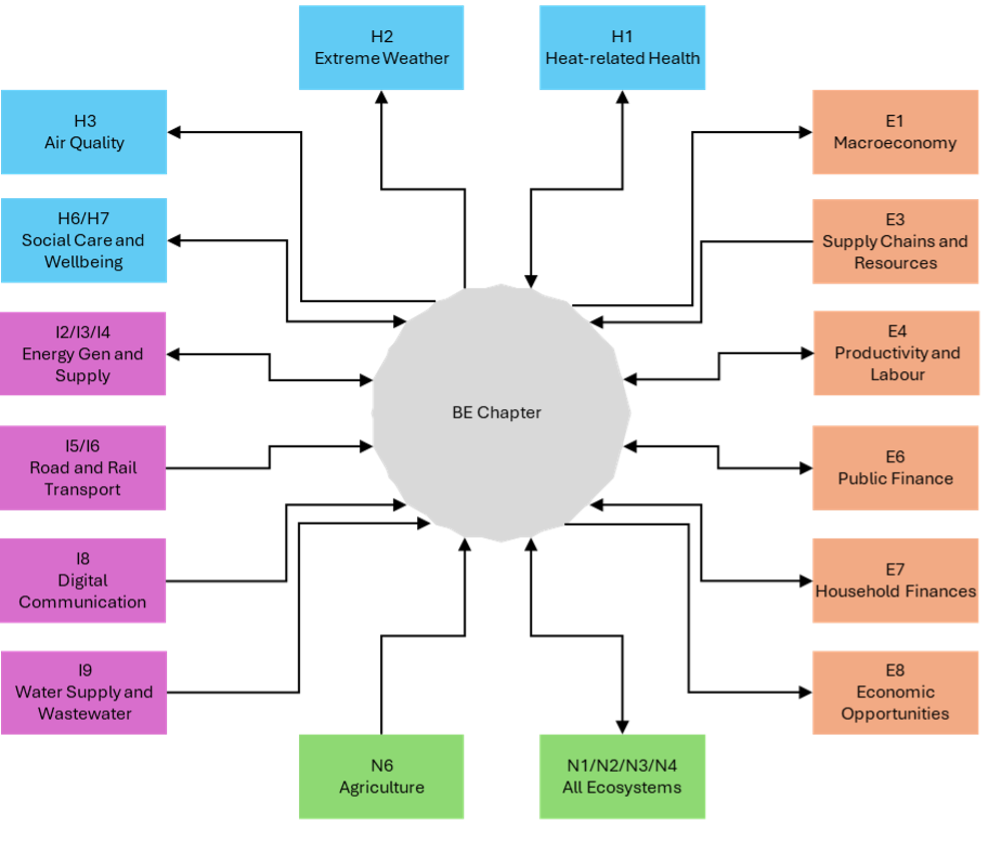
Figure 4.10 Built Environment chapter interconnecting risks with other chapters
4.4 References
ADEPT, Defra, and LAAP (2019) Preparing for a changing climate: good practice guidance for local government.
APPG (2023) Creative Health Review – How Policy can Embrace Creative Health. Available at: https://ncch.org.uk/creative-health-review (Accessed: 20 May 2025)
ARUP (2022) Addressing overheating risk in existing UK homes. Available at: https://www.theccc.org.uk/publication/addressing-overheating-risk-in-existing-uk-homes-arup/
Ackland, K., Griffiths, H., Barker, L., Davies, S., Driver, T., and Hunt, D. (2023) Mapping the impacts of coastal erosion on the heritage assets of Ynys Enlli (Bardsey Island), North Wales, UK. Journal of Island and Coastal Archaeology, 19(4), 786-813. https://doi.org/10.1080/15564894.2023.2227944
Adams-Groom, B., Selby, K., Derrett, S., Frisk, C. A., Pashley, C. H., Satchwell, J., King, D., McKenzie, G., and Neilson, R. (2022) Pollen season trends as markers of climate change impact: Betula, Quercus and Poaceae. Science of the Total Environment, 831, 154882.
Aktürk, G. and Lerski, M. (2021) ‘Intangible cultural heritage: a benefit to climate-displaced and host communities’, Journal of Environmental Studies and Sciences, 11(3), pp. 305–315. Available at: https://doi.org/10.1007/s13412-021-00697-y.
Albano, R., Sole, A., Adamowski, J., and Mancusi, L. (2014) A GIS-based model to estimate flood consequences and the degree of accessibility and operability of strategic emergency response structures in urban areas. Natural Hazards and Earth System Sciences, 14(11), 2847–2865. https://doi.org/10.5194/NHESS-14-2847-2014
Anderson, K. (2023) ‘The impact of increased flooding caused by climate change on heritage in England and North Wales, and possible preventative measures: what could/should be done?’, Built Heritage, 7(1), p. 7. Available at: https://doi.org/10.1186/s43238-023-00087-z
Andreou, A., Barrett, J., Taylor, P. G., Brockway, P. E., and Wadud, Z. (2020) Decomposing the drivers of residential space cooling energy consumption in EU-28 countries using a panel data approach. Energy and Built Environment, 1(4), 432–442. https://doi.org/10.1016/j.enbenv.2020.03.005
Arnell, N. W. (2022) The implications of climate change for emergency planning. International Journal of Disaster Risk Reduction, 83, 103425. https://doi.org/10.1016/J.IJDRR.2022.103425
Arnell, N. W., Freeman, A., Kay, A. L., Rudd, A. C., and Lowe, J. A. (2021) Indicators of climate risk in the UK at different levels of warming. Environmental Research Communications, 3(9) https://doi.org/10.1088/2515-7620/ac24c0
Arts Council England (2022) Creative Health and Wellbeing. Available at: https://www.artscouncil.org.uk/developing-creativity-and-culture/health-and-wellbeing/creative-health-wellbeing.
Assareh, N., Beddows, A., Stewart, G., Holland, M., Fecht, D., Walton, H., Evangelopoulos, D., Wood, D., Vu, T., and Dajnak, D. (2025) What Impact Does Net Zero Action on Road Transport and Building Heating Have on Exposure to UK Air Pollution? Environmental Science and Technology.
Association of British Insurers (ABI) (2023) ‘Sinking UK – last summer’s record-breaking heatwave leads to surge in insurance payouts for subsidence’. Available at: https://www.abi.org.uk/news/news-articles/2023/3/sinking-uk–last-summers-record-breaking-heatwave-leads-to-surge-in-insurance-payouts-for-subsidence/.
Association of British Insurers (ABI) (2024) ‘Weather damage insurance claims worst on record’. Available at: https://www.abi.org.uk/news/news-articles/2024/4/weather-damage-insurance-claims-worst-on-record/.
Asthana, S., and Gibson, A. (2021) Averting a public health crisis in England’s coastal communities: a call for public health research and policy. Journal of Public Health, 44(3), 642-650. https://doi.org/10.1093/pubmed/fdab130
Aviva (2024) One in thirteen new homes built in flood zone, Aviva plc, Available at: https://www.aviva.com/newsroom/news-releases/2024/01/one-in-thirteen-new-homes-built-in-flood-zone/ [Accessed: 9 May 2025]
BASIS (2018) Game Changer II: The impact of climate change on sports in the UK. https://basis.org.uk/resource/game-changer-ii/
BASIS (2023) Sport Environment and Climate Coalition (SECC) Resource Hub. https://basis.org.uk/resources/sport-environment-and-climate-coalition-resource-hub/
BBC News (2022) London fires: Dozens of homes destroyed after temperatures top 40C. Available at: Available at: https://www.bbc.co.uk/news/uk-england-london-62224618 (Accessed: 11 August 2025)
BEIS (2021a) Cooling in the UK. https://www.gov.uk/government/publications/cooling-in-the-uk
BEIS (2021b) Energy Follow Up Survey: thermal comfort, damp and ventilation Final report.
BGS (2024) BGS Groundwater Flooding Susceptibility: helping mitigate one of the UK’s most costly hazards, British Geological Survey, Available at: https://www.bgs.ac.uk/news/mitigrating-groundwater-flooding-susceptibility/ [Accessed: 9 May 2025]
Bain, S., Day, J., Jones, R., Hyslop, E., Wright, K., Davies, M., Heron, S. (2024) Climate Vulnerability Index Assessment for St Kilda World Heritage Property. Available at: https://www.historicenvironment.scot/archives-and-research/publications/publication/?publicationId=32a43674-b245-45c4-9e2e-b16b00a54620.
Baltrocchi, A. P. D., Maggi, L., Dal Lago, B., Torretta, V., Szabó, M., Nasirov, M., Kabilov, E., and Rada, E. C. (2023) Mechanisms of diffusion of radon in buildings and mitigation techniques. Sustainability, 16(1), 324.
Barnes, C., Chandler, R., Brierley, C. (2022) Comparison of Euro CORDEX output with UKCP18 regional ensemble. London. URL https://www.ucl.ac.uk/statistics/sites/statistics/files/evaluation_of_ukcordex_vs_ukcp18_v2.pdf
Bassett, R., Young, P.J., Blair, G.S., Cai, X.-M., Chapman, L. (2020) Urbanisation’s contribution to climate warming in Great Britain. Environmental Research Letters 15, 114014. https://doi.org/10.1088/1748-9326/abbb51
Bates, P. D., Savage, J., Wing, O., Quinn, N., Sampson, C., Neal, J., and Smith, A. (2023) A climate-conditioned catastrophe risk model for UK flooding, Natural Hazards and Earth System Sciences, 23(2), 891–908, https://doi.org/10.5194/nhess-23-891-2023
Bates, P. D., Wing, O. E. J., Smith, A. M., Sampson, C. C., Johnson, K. A., Fargione, J., and Morefield, P. (2023) A climate-conditioned catastrophe risk model for UK flooding, Natural Hazards and Earth System Sciences, 23, 891–908, https://doi.org/10.5194/nhess-23-891-2023
Beaven, R.P., Stringfellow, A.M., Nicholls, R.J., Haigh, I.D., Kebede, A.S., and Watts, J. (2020) Future challenges of coastal landfills exacerbated by sea-level rise. Waste Management, 105, 92-101. https://doi.org/10.1016/j.wasman.2020.01.027
Bevacqua, E., Maraun, D., Vousdoukas, M. I., Vrac, M., Mentaschi, L., Widmann, M., and Feyen, L. (2020) More meteorological events that drive compound coastal flooding are projected under climate change, Nature Communications, https://doi.org/10.1038/s43247-020-00044-z
Blinkhorn, E., James, R., Johnson, E., Sygrave, J., Tsamis, V. (2023) Seaford Head, East Sussex: rapid survey and assessment. Available at: https://historicengland.org.uk/research/results/reports/69-2023 (Accessed: 13 June 2025)
Bloomfield, H. C., Brayshaw, D. J., Deakin, M., and Greenwood, D. (2022) Hourly historical and near-future weather and climate variables for energy system modelling. Earth System Science Data, 14(6), 2749–2766. https://doi.org/10.5194/essd-14-2749-2022
Bonfield, P. (2025) FloodReady: an action plan to build the resilience of people and properties. Defra. https://www.gov.uk/government/publications/floodproof-an-action-plan-to-build-resilience
Borio, I., and Kassian, J. (2022) Property Flood Resilience Market Study, Flood Re, Available at: www.floodre.co.uk [Accessed: 9 May 2025]
Brand and Spencer (2018) – https://doi.org/10.1002/wat2.1264
British Geological Survey (2021) Maps show the real threat of climate-related subsidence to British homes and properties. Available at: https://www.bgs.ac.uk/news/maps-show-the-real-threat-of-climate-related-subsidence-to-british-homes-and-properties/ (Accessed: 11 August 2025)
British Geological Survey (2023) ‘Swelling and shrinking soils’, Swelling and shrinking soils [Preprint]. Available at: https://www.bgs.ac.uk/geology-projects/shallow-geohazards/clay-shrink-swell/.
British Geological Survey (n.d a) ‘GeoClimate UKCP18 Open’. Available at: https://www.bgs.ac.uk/datasets/geoclimateukcp18-open/.
British Geological Survey (n.d b) ‘Property subsidence assessment’. Available at: https://www.bgs.ac.uk/datasets/property-subsidence-assessment/.
British Red Cross (2023) Climate change risk in the UK and the role of the British Red Cross Crisis and Emergency Response Service [unpublished].
British Standards Institution (BSI) (2021) BS 5250:2021 Management of moisture in buildings – Code of practice. London: BSI.
British Standards Institution (BSI) (2023) ‘PAS 2035:2023 – Retrofitting dwellings for improved energy efficiency – Specification and guidance’. London: BSI. Available at: https://www.bsigroup.com/en-GB/insights-and-media/insights/brochures/pas-2035-retrofitting-dwellings-for-improved-energy-efficiency/.
Brookes, E., McDonagh, B., Wagner, C., Ashton, J., Harvey-Fishenden, A., Kennedy-Asser, A., Macdonald, N., Smith, K. (2024) ‘Learning from Arts and Humanities Approaches to Building Climate Resilience in the UK’, in S. Dessai et al. (eds.) Quantifying Climate Risk and Building Resilience in the UK. Cham: Springer International Publishing, pp. 75–89. Available at: https://doi.org/10.1007/978-3-031-39729-5_6.
Broomhall, A., Gray, E., and Ralph, C. (2025) Project CoolDown WP4 Customer Engagement Research. https://www.enwl.co.uk/globalassets/innovation/strategic-innovation-fund/cooldown/cooldown-alpha/wp4-customer-insight.pdf
Brousse, O., Simpson, C., Walker, N., Fenner, D., Meier, F., Taylor, J., Heaviside, C. (2022) Evidence of horizontal urban heat advection in London using six years of data from a citizen weather station network. Environmental Research Letters 17, 044041. https://doi.org/10.1088/1748-9326/ac5c0f
Brousse, O., Simpson, C., Zonato, A., Martilli, A., Taylor, J., Davies, M., and Heaviside, C. (2024) Cool Roofs Could Be Most Effective at Reducing Outdoor Urban Temperatures in London (United Kingdom) Compared With Other Roof Top and Vegetation Interventions: A Mesoscale Urban Climate Modeling Study. Geophysical Research Letters, 51(13) https://doi.org/10.1029/2024GL109634
Brown, S., Tompkins, E.L., Suckall, N., French, J., Haigh, I.D., Lazarus, E., Nicholls, R.J., Penning-Rowsell, E.C., Thompson, C.E.L., Townend, I., and van der Plank, S. (2023) Transitions in modes of coastal adaptation: addressing blight, engagement and sustainability. Frontiers in Marine Science. 10, 1153134. https://doi.org/10.3389/fmars.2023.1153134
Bühne, H. and Pettorelli, N. (2023) ‘Predicting the effects of climate change on ancient woodlands when it interacts with pressures from surrounding land use/land cover’, Forest Ecology and Management, 544, p. 121236. Available at: https://doi.org/10.1016/j.foreco.2023.121236.
Buro Happold (2025) Sustainable Spaces for Culture. Available at: Forthcoming (Accessed: 13 June 2025)
Burton, C., Ciavarella, A., Kelley, D. I., Hartley, A. J., McCarthy, M., New, S., Betts, R. A., and Robertson, E. (2025) Very high fire danger in UK in 2022 at least 6 times more likely due to human-caused climate change. Environmental Research Letters, 20(4), 044003. https://doi.org/10.1088/1748-9326/ADB764
Byrd, H. (2012) Post-occupancy evaluation of green buildings: the measured impact of over-glazing. Architectural Science Review, 55(3), 206–212.
Büntgen, U., Piermattei, A., Krusic, P., Esper, J., Sparks, T., Crivellaro, A. (2022) ‘Plants in the UK flower a month earlier under recent warming’, Proceedings of the Royal Society B: Biological Sciences, 289(1968) Available at: https://doi.org/10.1098/rspb.2021.2456.
CCC (2018) Managing the coast in a changing climate. Committee on Climate Change, London. Available at: https://www.theccc.org.uk/publication/managing-the-coast-in-a-changing-climate/ [Accessed 27 August 2025]
CCC (2022) Risks to health, wellbeing and productivity from overheating in buildings. https://www.theccc.org.uk/publication/risks-to-health-wellbeing-and-productivity-from-overheating-in-buildings/
CCC (2023a) Adapting to climate change – Progress in Northern Ireland. https://www.theccc.org.uk/publication/adapting-to-climate-change-progress-in-northern-ireland/
CCC (2023b) Adapting to climate change – Progress in Scotland. https://www.theccc.org.uk/publication/adapting-to-climate-change-progress-in-scotland/
CCC (2023c) Adapting to climate change – Progress in Wales. www.theccc.org.uk/publications
CCC (2023d) Delivering a reliable decarbonised power system.
CCC (2024) Independent Assessment of the Third National Adaptation Programme. Committee on Climate Change, London. Available at: https://www.theccc.org.uk/publication/independent-assessment-of-the-third-national-adaptation-programme/ [Accessed 27 August 2025]
CCC (2025) Progress in adapting to climate change: 2025 report to Parliament. https://www.theccc.org.uk/publication/progress-in-adapting-to-climate-change-2025/
Cabinet Office (2023) The UK Government Resilience Framework. https://www.gov.uk/government/publications/the-uk-government-resilience-framework/the-uk-government-resilience-framework-html
Canal and River Trust (2024) Our climate adaptation report 2024.
Carbon Brief (2024, August 16) Revealed: Three-quarters of prisons in England and Wales face ‘high risk’ of overheating. Carbon Brief. https://interactive.carbonbrief.org/overheating-prisons/index.html
Carslaw, N., Aghaji, J., Budisulistiorini, S. H., Carslaw, D. C., Chatzidiakou, L., Cheung, R. W., Dillon, T. J., Edwards, P., Genes, D., and Giorio, C. (2025) The INGENIOUS project: towards understanding air pollution in homes. Environmental Science: Processes and Impacts, 27(2), 355–372.
Carvalho, P., and Spataru, C. (2023) Gaps in the governance of floods, droughts, and heatwaves in the United Kingdom. Frontiers in Earth Science, 11, 1124166. https://doi.org/10.3389/FEART.2023.1124166/BIBTEX
Cebr (2024) The heritage sector in England and its impact on the economy: an updated report for Historic England. Available at: https://historicengland.org.uk/content/heritage-counts/pub/2024/heritage-sector-england-impact-on-economy-2024/.
Cebr (2025) Spillover impacts in the publicly funded arts and culture sector. Available at: https://www.artscouncil.org.uk/spillover-impacts (Accessed: 19 May 2025)
Chakraborty, T., Venter, Z.S., Qian, Y., Lee, X. (2022) Lower Urban Humidity Moderates Outdoor Heat Stress. AGU Advances 3. https://doi.org/10.1029/2022AV000729
Chartered Institute of Housing Northern Ireland (2025) Maintaining healthy homes: A guide to preventing and resolving damp and mould.
Chesher, J. (2023) Traditional Thatching Materials Issues Affecting a Sustainable Future. Available at: https://historicengland.org.uk/research/results/reports/8879/TraditionalThatchingMaterials_IssuesAffectingaSustainableFuture (Accessed: 16 September 2025)
Chowienczyk, K., McCarthy, M., Hollis, D., Dyson, E., Lee, M., Coley, D. (2020) Estimating and mapping urban heat islands of the UK by interpolation from the UK Met Office observing network. Building Services Engineering Research and Technology 41, 521–543. https://doi.org/10.1177/0143624419897254
Church Commissioners (2022) Case study: providing a cool refuge during a hot summer. Available at: https://www.churchofengland.org/sites/default/files/2022-11/Ellenbrook_CaseStudy.pdf.
Churcher, T. and Finneran, N. (2024) ‘Managing Heritage Landscapes of Cultural Value: A View from the National Trust Portfolio in Purbeck, Southern England’, in N. Finneran, D. Hewlett, and R. Clarke (eds.) Managing Protected Areas: People and Places. Cham: Springer International Publishing, pp. 65–81. Available at: https://doi.org/10.1007/978-3-031-40783-3_5.
Churkina, G., Kuik, F., Bonn, B., Lauer, A., Grote, R., Tomiak, K., and Butler, T. M. (2017) Effect of VOC emissions from vegetation on air quality in Berlin during a heatwave. Environmental Science and Technology, 51(11), 6120–6130.
Clark, S. N., Lam, H. C. Y., Goode, E.-J., Marczylo, E. L., Exley, K. S., and Dimitroulopoulou, S. (2023) The burden of respiratory disease from formaldehyde, damp and mould in English housing. Environments, 10(8), 136.
Climate NI. (2025) Extreme Weather Events in Northern Ireland. https://climatenorthernireland.org.uk/the-climate-challenge/extreme-weather-events-in-northern-ireland/
Coast Protection Act 1949, 12, 13 & 14 Geo. 6. c. 74. https://www.legislation.gov.uk/ukpga/Geo6/12-13-14/74
Cole, R., Ferguson, L., Heaviside, C., Murage, P., Macintyre, H.L., Taylor, J., Simpson, C.H., Brousse, O., Symonds, P., Davies, M., Hajat, S. (2024) Systemic inequalities in heat risk for greater London. Environ Int 190, 108925. https://doi.org/10.1016/j.envint.2024.108925
Cole, R., Hajat, S., Murage, P., Heaviside, C., Macintyre, H., Davies, M., Wilkinson, P. (2023) The contribution of demographic changes to future heat-related health burdens under climate change scenarios. Environ Int 173, 107836. https://doi.org/10.1016/j.envint.2023.107836
Coles, T. (2023) Climate Change and the Tourism Sector: Impacts and Adaptations at Visitor Attractions. Final Report. Available at: https://ore.exeter.ac.uk/repository/handle/10871/134487.
Colwill, T. (2024) Heritage Capital and Wellbeing. Available at: https://historicengland.org.uk/research/results/reports/8972/CulturalHeritageCapitalandWellbeing_Examiningtherelationshipbetweenheritagedensityandlifesatisfaction (Accessed: 13 June 2025)
Committee of Public Accounts (2023) The condition of school buildings. https://publications.parliament.uk/pa/cm5804/cmselect/cmpubacc/78/report.html#heading-2
Consumer Council for Water (2024) Water Mark 2024: Company Performance Data Appendices, Consumer Council for Water, Birmingham, Available at: https://www.ccw.org.uk/publication/water-mark-2024/ [Accessed: 1 June 2025]
Corns, A., Shaw, R., Shine, L., Henry, S., Pollard, E., Driver, T., Barker, L., Hunt, D., Davies, S., Robson, P., Hywel, G., Barry, J., Craven, K., Cullen, S. (2023) ‘CHERISH: Development of a Toolkit for the 3D Documentation and Analysis of the Marine and Coastal Historic Environment’, in 3D Imaging of the Environment. Taylor and Francis, pp. 138–162. Available at: https://doi.org/10.1201/9780429327575-9.
Council of Europe (2025) Strategy on the Environment. Luxembourg. Available at: https://rm.coe.int/gme-2024-10e-draft-council-of-europe-strategy-on-the-environment/1680b29c81 (Accessed: 3 June 2025)
Cross, T. (2018) Multi-Agency Flood Plan Review: Final Report. Department for Environment, Food and Rural Affairs (Defra)
Crowley, K., Cha, Y., Tett, S., Geffers, G. (2022) Cultural Heritage and Urban Resilience in Scotland Co-designing extreme rainfall impact assessment tools for adaptation. Edinburgh.
DAERA (2018) Baseline study and gap analysis of coastal erosion risk management NI. Department of Agriculture, Environment and Rural Affairs, Belfast. Available at: https://www.infrastructure-ni.gov.uk/sites/default/files/publications/infrastructure/coastal-erosion-risk-management-report-2019.pdf [Accessed 27 August 2025]
DAERA (2019) Northern Ireland Climate Change Adaptation Programme 2019-2024 (NICCAP2) https://www.daera-ni.gov.uk/publications/northern-ireland-climate-change-adaptation-programme-2019-2024
DAERA (2019a) Living With Water Programme. Department of Agriculture, Environment and Rural Affairs, Northern Ireland.
DAERA (2024) Coastal change information tool. Available at: https://opendata-daerani.hub.arcgis.com/datasets/DAERANI::coastal-change-information-tool (accessed 24 October 2025)
Defra (2010) The costs of the summer 2007 floods in England. https://www.gov.uk/flood-and-coastal-erosion-risk-management-research-reports/the-costs-of-the-summer-2007-floods-in-england
Defra (2023) The air quality strategy for England. https://www.gov.uk/government/publications/the-air-quality-strategy-for-england
Defra (2025a) Greening Government Commitments April 2021 to March 2024 report. https://www.gov.uk/government/publications/greening-government-commitments-april-2021-to-march-2024-report/greening-government-commitments-april-2021-to-march-2024-report#f-adapting-to-climate-change
Defra (2025b) STATISTICAL DIGEST OF RURAL ENGLAND: 6 – Education, Qualifications and Training. DANDY BOOKSELLERS LTD. Department of Education. (2025, January 23) Schools to close due to Storm Éowyn. https://www.education-ni.gov.uk/news/schools-close-due-storm-eowyn
D’Agostini A, Bernardino, M, Soares CG (2022) Projected wave storm conditions under the RCP8.5 climate change scenario in the North Atlantic Ocean. Ocean Engineering 266, 112874 https://doi.org/10.1016/j.oceaneng.2022.112874
DESNZ (2024). Projected wind-driven rain in the United Kingdom. https://www.gov.uk/government/publications/future-proofing-retrofits-against-risks-from-climate-change
DESNZ (2025) Assessing the future heating and cooling needs of the UK housing stock. Accessed at: https://www.gov.uk/government/publications/assessing-the-future-heating-and-cooling-needs-of-the-uk-housing-stock
DLUHC (2024) National Planning Policy Framework, Department for Levelling Up, Housing and Communities, Available at: https://www.gov.uk/guidance/national-planning-policy-framework [Accessed: 9 May 2025]
DLUHC (2023) English Housing Survey 2021 to 2022: housing quality and condition. https://www.gov.uk/government/statistics/english-housing-survey-2021-to-2022-housing-quality-and-condition/english-housing-survey-2021-to-2022-housing-quality-and-condition#damp
Davies, M.H., Dunlop, C., Firth, A., Jay, H., Whitewright, J. (2023) ‘Impacts of Climate Change on Cultural Heritage in the UK and Ireland’, Marine Climate Change Impacts Partnership, pp. 1–18.
Dawkins, L. C., Brown, K., Bernie, D. J., Lowe, J. A., Economou, T., Grassie, D., Schwartz, Y., Godoy-Shimizu, D., Korolija, I., Mumovic, D., Wingate, D., and Dyer, E. (2024) Quantifying overheating risk in English schools: A spatially coherent climate risk assessment. Climate Risk Management, 44, 100602. https://doi.org/10.1016/J.CRM.2024.100602
De Munck, C., Pigeon, G., Masson, V., Meunier, F., Bousquet, P., Tréméac, B., Merchat, M., Poeuf, P., and Marchadier, C. (2013) How much can air conditioning increase air temperatures for a city like Paris, France? International Journal of Climatology, 33(1), 210–227. https://doi.org/10.1002/joc.3415
Defra and Environment Agency (2021) Flood and coastal erosion risk management: an investment plan for 2021 to 2027, Department for Environment, Food and Rural Affairs and Environment Agency, London, Available at: https://assets.publishing.service.gov.uk/government/uploads/system/uploads/attachment_data/file/1006447/Flood_coastal_erosion_investment_plan_2021.pdf [Accessed: 9 May 2025]
Defra (2011) Shoreline Management Plan Guidance. Volume 1. Department for Environment, Food and Rural Affairs, London. Available at: https://assets.publishing.service.gov.uk/government/uploads/system/uploads/attachment_data/file/69206/pb11726-smpg-vol1-060308.pdf [Accessed 27 August 2025]
Defra (2023) Evaluation of Property Flood Resilience Repair Grant Scheme, Final Report Stage 4, Department for Environment, Food and Rural Affairs, London [Accessed: 9 May 2025]
Defra (2025) Record investment to protect thousands of UK homes and businesses, Department for Environment, Food and Rural Affairs, Available at: https://www.gov.uk/government/news/record-investment-to-protect-thousands-of-uk-homes-and-businesses [Accessed: 9 May 2025]
Defra (2023) The Third National Adaptation Programme (NAP3) and the Fourth Strategy for Climate Adaptation Reporting. www.gov.uk/official-documents.
Defra (2025a) Drainage and Wastewater Management Plans: statutory guidance. Department for Environment, Food and Rural Affairs.
Defra and Environment Agency (2026) £30 million boost for coastal communities adapting to eroding shores. [online] GOV.UK. Available at: https://www.gov.uk/government/news/30-million-boost-for-coastal-communities-adapting-to-eroding-shores [Accessed 29 January 2026].
Department for Communities – Historic Environment Division (2024a) Survey on the Condition of Listed Buildings (2023/24) Available at: https://www.communities-ni.gov.uk/publications/survey-condition-listed-buildings (Accessed: 3 May 2025)
Department for Communities – Historic Environment Division (2024b) Thermal upgrade of traditional buildings. Available at: https://www.communities-ni.gov.uk/publications/thermal-upgrade-traditional-buildings.
Department for Energy Security and Net Zero (2025) Energy efficiency installations under the Energy Company Obligation. https://www.nao.org.uk/reports/energy-efficiency-installations-under-the-energy-company-obligation/?nab=0
Department for Levelling Up, Housing and Communities (2023) ‘English Housing Survey: Headline Report 2021–22’. London: UK Government. Available at: https://www.gov.uk/government/statistics/english-housing-survey-2021-to-2022-headline-report.
Department for Levelling Up, Housing and Communities (2025) ‘The Future Homes and Buildings Standards: 2023 consultation’. London: UK Government. Available at: https://www.gov.uk/government/consultations/the-future-homes-and-buildings-standards-2023-consultation.
Department of Finance (2012, October) Technical booklet K – Ventilation. https://www.finance-ni.gov.uk/publications/technical-booklet-k
Deru, J., Fluck, H., Dowding, D., Crowe, E. (2022) Mapping climate-related hazards to historic sites. Available at: https://historicengland.org.uk/research/results/reports/27-2022 (Accessed: 22 October 2023)
DfE (2022) Advice for schools and other education settings during a heatwave. The Education Hub. https://educationhub.blog.gov.uk/2022/07/advice-for-schools-and-other-education-settings-during-a-heatwave/
DfE (2023a) Sustainability and climate change: a strategy for the education and children’s services systems. https://www.gov.uk/government/publications/sustainability-and-climate-change-strategy/9317e6ed-6c80-4eb9-be6d-3fcb1f232f3a
DfE (2023b) Sustainability and climate change: a strategy for the education and children’s services systems. https://www.gov.uk/government/publications/sustainability-and-climate-change-strategy/sustainability-and-climate-change-a-strategy-for-the-education-and-childrens-services-systems
Dong, J., Schwartz, Y., Korolija, I., and Mumovic, D. (2023) The impact of climate change on cognitive performance of children in English school stock: A simulation study. Building and Environment, 243, 110607. https://doi.org/10.1016/j.buildenv.2023.110607
DfE (2025) Summary of findings in relation to 3 climate risks: overheating, flooding and water scarcity. https://www.gov.uk/government/publications/impact-of-uk-climate-change-risk-on-the-delivery-of-education/summary-of-findings-in-relation-to-3-climate-risks-overheating-flooding-and-water-scarcity#flooding
DfI (2018) Northern Ireland Flood Risk Assessment (NIFRA) 2018, Department for Infrastructure, Belfast, Available at: https://www.infrastructure-ni.gov.uk/publications/northern-ireland-flood-risk-assessment-nifra-2018 [Accessed: 9 May 2025]DfI (2014) Planning Policy Statement 15 (Revised): Planning and Flood Risk. Available at: https://www.infrastructure-ni.gov.uk/sites/default/files/publications/infrastructure/PPS15%20Planning%20and%20Flood%20Risk.pdf [Accessed: 9 May 2025]
DfI (2023) Department for Infrastructure Business Plan 2023-24, Department for Infrastructure, Belfast, Available at: https://www.infrastructure-ni.gov.uk/publications/dfi-business-plan-2023-24 [Accessed: 9 May 2025]
DfI (2025) What is Flood Maps (NI)? https://www.infrastructure-ni.gov.uk/articles/what-flood-maps-ni
Dimitroulopoulou, S. (2021) Indoor Air Quality and Health. Environmental Scientist, 42–49. https://www.the-ies.org/sites/default/files/journals/improving-indoor-air-quality.pdf
Dimitroulopoulou, S., Dudzińska, M. R., Gunnarsen, L., Hägerhed, L., Maula, H., Visualisation, R. S., Visualisation, O. T., and Haverinen-Shaughnessy, U. (2023) Indoor air quality guidelines from across the world: An appraisal considering energy saving, health, productivity, and comfort. Environment International, 108127.
Doger de Speville, C., Seviour, W.J.M., Lo, Y.T.E. (2023) Predicting future UK nighttime urban heat islands using observed short-term variability and regional climate projections. Environmental Research Letters 18, 104044. https://doi.org/10.1088/1748-9326/acf94c
Doherty, R. M., Heal, M. R., and O’Connor, F. M. (2017) Climate change impacts on human health over Europe through its effect on air quality [Article]. Environmental Health, 16(S1), 33–44. https://doi.org/10.1186/s12940-017-0325-2
Dong, J., Schwartz, Y., Korolija, I., and Mumovic, D. (2024) Unintended consequences of English school stock energy-efficient retrofit on cognitive performance of children under climate change. Building and Environment, 249, 111107. https://doi.org/10.1016/J.BUILDENV.2023.111107
Downs, W. and Low, N. (2024) Prisons capacity and performance. POST (Parliamentary Office of Science and Technology), UK Parliament. Horizon Scan. https://doi.org/10.58248/HS73
Duerden, E. G., Taylor, M. J., Lee, M., McGrath, P. A., Davis, K. D., and Roberts, S. W. (2015) Decreased sensitivity to thermal stimuli in adolescents with autism spectrum disorder: Relation to symptomatology and cognitive ability. Journal of Pain, 16(5), 463–471. https://doi.org/10.1016/j.jpain.2015.02.001
Durosaiye, I.O., Hadjri, K., Liyanage, C.L. (2019) A critique of post-occupancy evaluation in the UK. Journal of Housing and the Built Environment 34, 345–352. https://doi.org/10.1007/s10901-019-09646-2
Dynamic Coast (2023) Coastal Change Adaptation Plan Guidance. Scottish Government. Available athttps://www.dynamiccoast.com/files/ccapg_2023feb.pdf [Accessed 27 August 2025]
EAC (2024) Heat resilience and sustainable cooling. https://committees.parliament.uk/publications/43103/documents/214494/default/
EFUS (2021) Energy Follow Up Survey (EFUS) 2017 reports. URL https://www.gov.uk/government/publications/energy-follow-up-survey-efus-2017-reports
EFUS (2021) Data on damp and mould prevalence and household conditions. https://assets.publishing.service.gov.uk/media/61449c52d3bf7f05b4562b66/efus-thermal.pdf
ENWL (2025) CoolDown Alpha WP3 Network Impact of Space Cooling. https://www.enwl.co.uk/globalassets/innovation/strategic-innovation-fund/cooldown/cooldown-alpha/wp3-wp7-network-impact-and-cost-benefit-analysis-summary.pdf
ESI (2016) The role of groundwater in risk from flooding in England: methodologies, analysis and preliminary findings. Bryan Lovell Meeting 2016: water, hazards and risk: managing uncertainty in a changing world. The Geological Society, 24–25 November 2016, London
EUROSION (2004) Living with coastal erosion in Europe: Sediment and Space for Sustainability. Part I – Major findings and Policy Recommendations of the EUROSION project. European Commission, Brussels. Available at: http://www.eurosion.org/reports-online/part1.pdf [Accessed 27 August 2025]
East Suffolk Council (2022) Resilient Coasts Project. Available at: https://aldringham.onesuffolk.net/assets/Uploaded-Documents-Misc/Resilient-Coasts-Project-Document-2022.pdf [Accessed 27 August 2025]
Environment Agency (2019) Long-term investment scenarios (LTIS) for flood and coastal risk management. Environment Agency, Bristol. Available at: https://www.gov.uk/government/publications/flood-and-coastal-risk-management-in-england-long-term-investment/long-term-investment-scenarios-ltis-2019 [Accessed 27 August 2025]
Environment Agency (2020a) Flood and Coastal Erosion Risk Management Strategy Roadmap to 2026. Environment Agency, Bristol. Available at: https://www.gov.uk/government/publications/flood-and-coastal-erosion-risk-management-strategy-roadmap-to-2026 [Accessed 27 August 2025]
Environment Agency (2020b) National Flood and Coastal Erosion Risk Management Strategy for England. Environment Agency, Bristol. Available at: https://www.gov.uk/government/publications/national-flood-and-coastal-erosion-risk-management-strategy-for-england–2 [Accessed 27 August 2025]
Environment Agency (2022) Thames Estuary TE2100 Plan, Environment Agency, London
Environment Agency (2023a) Making Space for Sand. Available at: https://www.makingspaceforsand.co.uk/ [Accessed 27 August 2025]
Environment Agency (2023b) Flood and Coastal Erosion Risk Management: Annual Report 2022-2023. Environment Agency, Bristol. Available at: https://www.gov.uk/government/publications/flood-and-coastal-risk-management-national-report/flood-and-coastal-erosion-risk-management-report-1-april-2022-to-31-march-2023 [Accessed 27 August 2025]
Environment Agency (2023c) Physical modifications challenges for the water environment. https://www.gov.uk/government/publications/physical-modifications-challenges-for-the-water-environment
Environment Agency (2024) Development and flood risk: Annual monitoring report, Available at: https://www.gov.uk/government/publications/development-and-flood-risk-annual-monitoring [Accessed: 9 May 2025]
Environment Agency (2024) Environment Agency corporate plan 2024-2025, Available at: https://www.gov.uk/government/publications/environment-agency-corporate-plan-2024-to-2025 [Accessed: 9 May 2025]
Environment Agency (2024a) Nature-based solutions position statement. https://www.gov.uk/government/publications/nature-based-solutions-environment-agency-position-statement
Environment Agency (2025) National Flood Risk Assessment 2 (NaFRA2): National assessment of flood and coastal erosion risk in England 2024, UK Government, Available at: https://www.gov.uk/government/publications/national-assessment-of-flood-and-coastal-erosion-risk-in-england-2024 [Accessed: 9 May 2025]
Environment Agency (2025a) Drought: how it is managed in England. https://www.gov.uk/government/publications/drought-management-for-england/drought-how-it-is-managed-in-england
Environment Agency (2025b) National assessment of flood and coastal erosion risk in England 2024. https://www.gov.uk/government/publications/national-assessment-of-flood-and-coastal-erosion-risk-in-england-2024/national-assessment-of-flood-and-coastal-erosion-risk-in-england-2024
Environment Agency (2025c) Flood and coastal erosion risk management report: 1 April 2024 to 31 March 2025. https://www.gov.uk/government/publications/flood-and-coastal-risk-management-national-report/
Environmental Audit Committee (2024) Heat resilience and sustainable cooling report. URL https://publications.parliament.uk/pa/cm5804/cmselect/cmenvaud/279/summary.html.
Eunice Lo, Y.T., Mitchell, D.M., Bohnenstengel, S.I., Collins, M., Hawkins, E., Hegerl, G.C., Joshi, M., Stott, P.A. (2020) U.K. Climate Projections: Summer Daytime and Nighttime Urban Heat Island Changes in England’s Major Cities. J Clim 33, 9015–9030. https://doi.org/10.1175/JCLI-D-19-0961.1
Fahy, J., Bachofen, C., Camponovo, R., Gallinelli, P., Schlaepfer, M. (2024) Beyond land surface temperature: identifying areas of daytime thermal discomfort in cities by combining remote sensing and field measurements. https://doi.org/10.31223/X5JQ5H
Fairclough, S. (2021) Coal tips: Almost 300 in Wales classed as “high-risk.” BBC News. https://www.bbc.co.uk/news/uk-wales-56073459
Ferguson, L., Taylor, J., Davies, M., Shrubsole, C., Symonds, P., and Dimitroulopoulou, S. (2020) Exposure to indoor air pollution across socio-economic groups in high-income countries: A scoping review of the literature and a modelling methodology. In Environment International (Vol. 143) Elsevier Ltd. https://doi.org/10.1016/j.envint.2020.105748
Finch, D. P., and Palmer, P. I. (2020) Increasing ambient surface ozone levels over the UK accompanied by fewer extreme events. Atmospheric Environment, 237, 117627.
Fire Brigades Union (2024) Firefighters call for “urgent action” to save lives as soaring temperatures trigger heat alert. https://www.fbu.org.uk/news/2024/06/29/firefighters-call-urgent-action-save-lives-soaring-temperatures-trigger-heat-alert
Flood Re Limited (2023) Transition Plan 2023: Our call to action – Delivering a vision of affordable flood insurance, Flood Re Limited, London, Available at: https://www.floodre.co.uk/wp-content/uploads/Flood_Re_Transition_Plan_report_2023.pdf [Accessed: 9 May 2025]
Flood Re Limited (2024) The Quinquennial Review. Available at: https://www.floodre.co.uk/wp-content/uploads/Flood-Re_QQR-2024_Digital.pdf [Accessed: 9 May 2025]
Flood Risk Management (Scotland) Act 2009, asp 6. https://www.legislation.gov.uk/asp/2009/6/contents
Forestry Commission (2023) Wildfire statistics for England.
GOV.UK (2006) Housing health and safety rating system (HHSRS): guidance for landlords and property-related professionals. URL https://www.gov.uk/government/publications/housing-health-and-safety-rating-system-guidance-for-landlords-and-property-related-professionals
GOV.UK (2004) Civil Contingencies Act 2004. Statute Law Database.
GOV.UK (2012) The Building (Amendment) Regulations (Northern Ireland) 2012.
GOV.UK (2025a) About Emergency Alerts. https://www.gov.uk/alerts
GOV.UK (2025b) About Our Services: Flood Forecasting Centre. https://www.gov.uk/government/organisations/flood-forecasting-centre/about/about-our-services
GOV.UK (2025c) Check for flooding in England. https://check-for-flooding.service.gov.uk/
Gearey, B.R. and Everett, R. (2021) ‘Running out of time? Peatland rehabilitation, archaeology and cultural ecosystem services’, Mires and Peat, 27(31), pp. 1–6. Available at: https://doi.org/10.19189/MaP.2021.KHR.StA.2195.
Glendell, M., Blackstock, K., Adams, K., Brickell, J., Comte, J.C., Gagkas, Z., Geris, J., Haro, D., Jabloun, M., Karley, A., Macleod, K., Naha, S., Paterson, E., Rivington, M., Thompson, C., Upton, K., Wilkinson, M., Williams, K. (2024) Future predictions of water scarcity in Scotland: impact on distilleries and agricultural abstractors. Available at: https://www.crew.ac.uk/sites/www.crew.ac.uk/files/publication/CRW2023_05_Main_report_and_appendices_FINAL_2024_06_17.pdf.
Government Office for Science (2024) ‘Future of the Subsurface’. London: UK Government. Available at: https://www.gov.uk/government/publications/future-of-the-subsurface-report.
Government, W. (2019) Prosperity for All: A Climate Conscious Wales A climate change adaptation plan for Wales.
Grassie, D., Dong, J., Schwartz, Y., Karakas, F., Milner, J., Bagkeris, E., Chalabi, Z., Mavrogianni, A., and Mumovic, D. (2023) Dynamic modelling of indoor environmental conditions for future energy retrofit scenarios across the UK school building stock. Journal of Building Engineering, 63, 105536. https://doi.org/10.1016/J.JOBE.2022.105536
Grassie, D., Schwartz, Y., Symonds, P., Korolija, I., Mavrogianni, A., and Mumovic, D. (2022) Energy retrofit and passive cooling: overheating and air quality in primary schools. Buildings and Cities, 3(1), 204–225. https://doi.org/10.5334/BC.159
Greater London Authority (2021) THE SPATIAL DEVELOPMENT STRATEGY FOR GREATER LONDON. URL https://www.london.gov.uk/sites/default/files/the_london_plan_2021.pdf
Green, D., Yu, D., Pattison, I., Wilby, R., Bosher, L., Patel, R., Thompson, P., Trowell, K., Draycon, J., Halse, M., Yang, L., and Ryley, T. (2017) City-scale accessibility of emergency responders operating during flood events. Natural Hazards and Earth System Sciences, 17(1), 1–16. https://doi.org/10.5194/NHESS-17-1-2017,
Green, L., Ashton, K., Edmonds, N., Fletcher, M., Azam, S., Hughes, K., Wheater, P., Bellis, M.A. (2024) Determining the Public Health Impact of Climate Change: A National Study Using a Health Impact Assessment Approach in Wales. Int J Public Health 69. https://doi.org/10.3389/ijph.2024.1606972
Gregory, D., Dawson, T., Elkin, D., Van Tilburg, H., Underwood, C., Richards, V., Viduka, A., Westley, K., Wright, J., Hollesen, J. (2022) ‘Of time and tide: the complex impacts of climate change on coastal and underwater cultural heritage’, Antiquity, 96(390), pp. 1396–1411. Available at: https://doi.org/10.15184/aqy.2022.115.
Griffin, A., Kay, A. L., Sayers, P., Bell, V., Stewart, E., and Carr, S. (2024) Widespread flooding dynamics under climate change: characterising floods using grid-based hydrological modelling and regional climate projections, Hydrology and Earth System Sciences, 28, 2635–2650, https://doi.org/10.5194/hess-28-2635-2024
Grottoli, E., Biausque, M., Jackson, D.W.T., Cooper, J.A.G (2023) Northern Ireland Historical Shorelines Analysis (NIHSA) Project: Final Report. Ulster University, 27pp.
Gössling, S. and Scott, D. (2025) ‘Climate change and tourism geographies’, Tourism Geographies, 27(3–4), pp. 642–652. Available at: https://doi.org/10.1080/14616688.2024.2332359.
HM Fire Service Inspectorate (2023) Independent Inspection of the Northern Ireland Fire and Rescue Service.
HM Inspectorate of Prisons (2017) Life in Prison: Living Conditions. House of Commons. (2020) Ageing Prison Population. https://prisonreformtrust.org.uk/wp-content/uploads/2024/08/Growing-old-and-dying-inside.pdf Knowledge Hub | The Flood Hub. (n.d.) Retrieved September 9, 2025, from https://thefloodhub.co.uk/knowledge-hub/
HM Treasury (2020) National Infrastructure Strategy: Fairer, faster, greener. HM Treasury, London. Available at: https://www.gov.uk/government/publications/national-infrastructure-strategy [Accessed 27 August 2025]
HMG (2018) A Green Future: Our 25 Year Plan to Improve the Environment. HM Government, Defra, London. Available at: https://www.gov.uk/government/publications/25-year-environment-plan [Accessed 27 August 2025]
HMG (2020) Flood and coastal erosion risk management: Policy Statement. HM Government, Defra, London. Available at: https://www.gov.uk/government/publications/flood-and-coastal-erosion-risk-management-policy-statement [Accessed 27 August 2025]
HMG (2023) The Third National Adaptation Programme (NAP3) and the Fourth Strategy for Climate Adaptation Reporting. HM Government, Defra, London. Available at: https://www.gov.uk/government/publications/third-national-adaptation-programme-nap3 [Accessed 27 August 2025]
Hansom, J.D., Lees, G., McGlashan, D.J., John, S. (2004) Shoreline management plans and coastal cells in Scotland. Coastal Management 32(3), 227-242.
Harrison, A. M., Plim, J.F.M., Harrison, M., Jones, L.D., Culshaw, M.G. (2012) ‘The relationship between shrink-swell occurrence and climate in south-east England’, Proceedings of the Geologists’ Association, 123(4), pp. 556–575. doi: 10.1016/j.pgeola.2012.05.002.
Hayles, C. (2022) How resilient are buildings in the UK and Wales to the challenges associated with a changing climate? Available at: https://figshare.cardiffmet.ac.uk/articles/online_resource/How_resilient_are_buildings_in_the_UK_and_Wales_to_the_challenges_associated_with_a_changing_climate_Practical_recommendations_for_risk-based_adaptation/20160683?file=36048170 (Accessed: 13 June 2025)
Hayles, C. (2022) Resilience of buildings to challenges associated with climate change. Cardiff: Welsh Government. Available at: https://www.gov.wales/sites/default/files/publications/2022-12/evidence-briefing-resilience-of-buildings-challenges-associated-with-climate-change.pdf.
Hayles, C. S., Huddleston, M., Chinowsky, P., and Helman, J. (2022) Summertime impacts of climate change on dwellings in Wales, UK. Building and Environment, 219, 109185.
Hayles, C., Huddleston, M., Chinowsky, P., Helman, J. (2023) Climate Adaptation Planning: Developing a Methodology for Evaluating Future Climate Change Impacts on Museum Environments and Their Collections, Heritage, 6(12), pp. 7446–7465. Available at: https://doi.org/10.3390/heritage6120390.
Hayles, C.S., Huddleston, M., Chinowsky, P., Helman, J., (2022) Summertime impacts of climate change on dwellings in Wales, UK, Building and Environment, 219, p. 109185. Available at: https://doi.org/10.1016/j.buildenv.2022.109185.
Health and Safety Executive (2024) Spray foam insulation applied to timber sloped roofs in dwellings: Modelling of moisture risk for retrofitted spray foam insulation in existing dwellings. Available at: https://www.gov.uk/government/publications/moisture-risk-of-spray-foam-insulation-applied-to-timber-sloped-roofs
Hendry, A., Haigh, I.D., Nicholls, R.J., Winter, H., Neal, R., Wahl, T., Joly-Laugel, A. and Darby, S.E. (2019) ‘Assessing the characteristics and drivers of compound flooding events around the UK coast’, Hydrology and Earth System Sciences, 23(7), pp. 3117–3139. Available at: https://doi.org/10.5194/hess-23-3117-2019.Herring, P. (2022) Strategically Assessing the Historic Landscape’s Sensitivity and Capacity in Relation to Change: A Discussion Document to Inform Preparation of Advice. Available at: https://historicengland.org.uk/research/results/reports/91-2022 (Accessed: 10 June 2023)
Hill, R., and Brunsden, V. (2009) “Heroes” as victims: Role reversal in the fire and rescue service. Irish Journal of Psychology, 30(1–2), 75–86. https://doi.org/10.1080/03033910.2009.10446299;WGROUP:STRING:PUBLICATION
Hillawi A, White C, Hucklesby R. (2025) Coastal heritage within FCERM: The challenge of conflicting priorities – Summary. Southern Coastal Group and SCOPAC. 11pp
Hinkel, J, Schuerch, M, French, J, Nicholls, RJ. (2023) Sea-level rise risk and adaptation in estuaries. In: Kennish MJ, Paerl HW, Croswell JR (eds) Climate Change and Estuaries, CRC Press, Chapter 23.
Historic England (2020) There’s no place like old homes: re-use and recycle to reduce carbon. https://historicengland.org.uk/content/heritage-counts/pub/2019/hc2019-re-use-recycle-to-reduce-carbon/
Historic England (2023) Response to call for evidence from Energy Security and Net Zero Committee on heating our homes. Available at: https://historicengland.org.uk/about/what-we-do/consultations/responses-to-the-consultation/other/ (Accessed: 13 June 2025)
Historic England (2024) Adapting Historic Buildings for Energy and Carbon Efficiency: Historic England Advice Note 18 (HEAN 18) Available at: https://historicengland.org.uk/images-books/publications/adapting-historic-buildings-energy-carbon-efficiency-advice-note-18/ (Accessed: 13 December 2024)
Historic England (2025a) CCRA4-IA Evidence submission.
Historic England (2025b) Risks of Energy Efficiency Interventions in Buildings of Traditional Construction. Available at: https://historicengland.org.uk/advice/technical-advice/retrofit-and-energy-efficiency-in-historic-buildings/improving-energy-efficiency-through-mitigation/risks-of-energy-efficiency-interventions/ (Accessed: 1 July 2025)
Historic England (2024) Climate Change Adaptation Report 2024 – Historic England and English Heritage. Available at: https://historicengland.org.uk/research/results/reports/70-2024.
Historic Environment Group (2023) Historic Environment and Climate Change in Wales: Sector Adaptation Plan Interim Report 4. Available at: https://cadw.gov.wales/sites/default/files/2025-01/SAP%20Interim%20Report%204%202023%20FINAL_0.pdf.
Historic Environment Scotland (2017) Climate change risk assessment. Edinburgh, UK. Available at: https://www.historicenvironment.scot/archives-and-research/publications/publication/?publicationId=55d8dde6-3b68-444e-b6f2-a866011d129a.
Historic Environment Scotland (2020) Climate Action Plan 2020-25. Available at: https://www.historicenvironment.scot/archives-and-research/publications/publication/?publicationId=94dd22c9-5d32-4e91-9a46-ab6600b6c1dd.
Historic Environment Scotland (2023a) Our Past, Our Future. Available at: https://www.historicenvironment.scot/archives-and-research/publications/publication/?publicationId=79204155-9eb2-4d29-ab14-aff200ec2801.
Historic Environment Scotland (2023b) Pointing the Way to the Future. Available at: https://www.historicenvironment.scot/archives-and-research/publications/publication/?publicationid=e9bd5276-9423-492b-9f3b-b04600b9c798 (Accessed: 5 June 2025)
Historic Environment Scotland (2025) CCRA4-IA evidence submission.
HM Chief Inspector of Prisons (2023) Annual Report 2022–23 (HC 1451) HM Inspectorate of Prisons. https://www.gov.uk/government/publications/hm-chief-inspector-of-prisons-annual-report-2022-to-2023
Home Office (2023a) Economic and social cost of fire. https://www.gov.uk/government/publications/economic-and-social-cost-of-fire/economic-and-social-cost-of-fire#costs-in-response-to-fire
Home Office (2023b) Fire and rescue workforce and pensions statistics: England, year ending March 2023. https://www.gov.uk/government/statistics/fire-workforce-and-pension-statistics-year-ending-march-2023/fire-and-rescue-workforce-and-pensions-statistics-england-year-ending-march-2023
House of Commons (2024) Government resilience: extreme weather. https://committees.parliament.uk/publications/44253/documents/220235/default/
Howarth, C. (2024) Preparing for heat risk is complex: Aligning adaptation and mitigation is essential. PLOS Climate, 3(3), e0000371. https://doi.org/10.1371/JOURNAL.PCLM.0000371
Howarth, C., and Robinson, E. J. Z. (2024) Effective climate action must integrate climate adaptation and mitigation [Article]. Nature Climate Change, 14(4), 300–301. https://doi.org/10.1038/s41558-024-01963-x
Howarth, C., Armstrong, A., McLoughlin, N., Murtagh, E., and Stuart-Watt, A. (2023) The 2022 heatwaves: England’s response and future preparedness for heat risk. https://www.lse.ac.uk/granthaminstitute/publication/the-2022-heatwaves-englands-response-and-future-preparedness-for-heat-risk/
Howarth, C., McLoughlin, N., Armstrong, A., Murtagh, E., Mehryar, S., Beswick, A., Ward, B., Ravishankar, S., and Stuart-Watt, A. (2024) Turning up the heat: learning from the summer 2022 heatwaves in England to inform UK policy on extreme heat. https://www.lse.ac.uk/granthaminstitute/publication/turning-up-the-heat/
Huang, J., Tang, X., Jones, P., Hao, T., Tundokova, R., Walmsley, C., Lannon, S., Frost, P., and Jackson, J. (2024) Mapping pedestrian heat stress in current and future heatwaves in Cardiff, Newport, and Wrexham in Wales, UK. Building and Environment, 251, 111168. https://doi.org/10.1016/j.buildenv.2024.111168
Humphrey-Taylor, B., James Williamson, R. and Nevell, M. (2020) ‘Safeguarding Cultural Heritage using novel technologies: The perspective from a UK volunteer-led site’, IOP Conference Series: Materials Science and Engineering, 949(1), p. 012110. Available at: https://doi.org/10.1088/1757-899X/949/1/012110.
Intergovernmental Panel on Climate Change (IPCC) (2021) Weather and Climate Extreme Events in a Changing Climate. In Climate Change 2021 – The Physical Science Basis (pp. 1513–1766) Cambridge University Press. https://doi.org/10.1017/9781009157896.013
JBA Risk Management (2025) Reducing Flood Risk: Which homes are most suitable for PFR? Phase 1: National-Level Analysis. Version 1.2. Flood Re, Available at: https://www.floodre.co.uk/wp-content/uploads/JBA-Flood-Re-Phase-1-Report.pdf [Accessed: 9 February 2026]
Jackson, D.W.T., Cooper, J.A.G. (2024a) Northern Ireland High Level Coastal Risk Assessment: Phase 1. Coastal cells 5, 6 and 7. Report prepared for the National Trust and the Department for Communities.
Jackson, D.W.T., Cooper, J.A.G. (2024b) Northern Ireland High Level Coastal Risk Assessment: Phase 2. Coastal cells 1, 2, 3 and 4. Report prepared for the National Trust and the Department for Communities.
James Hutton Institute (2023) Scotland’s Coastal Assets. The James Hutton Institute, Aberdeen. Available at: https://www.hutton.ac.uk/sites/default/files/files/publications/hutton_coast_booklet_web.pdf [Accessed 27 August 2025]
James, P., Aragon, V., Gauthier, S., Kalsi, K., Manfren, M., Mittal, T., . . . Gao, Y. (2025) Response to 2nd Call for Evidence to CCRA4 regarding Overheating Risk in Schools. University of Southampton and Hampshire County Council
Kennedy-Asser, A.T., Andrews, O.D., Montgomery, J., Jenkins, K.L., Smith, B.A.H., Lewis, E., Birkinshaw, S.J., He, Y., Pywell, R.F., Brown, M.J., Redhead, J.W., Warren, R., Robson, C., Smith, A.J.P., Nicholls, R.J., Mullan, D., McGuire, R. (2025) ‘The role of local knowledge in enhancing climate change risk assessments in rural Northern Ireland’, Climate Risk Management, 48, p. 100702. Available at: https://doi.org/10.1016/j.crm.2025.100702.
Kenny, G.P., Tetzlaff, E.J., Journeay, W.S., Henderson, S.B., O’Connor, F.K. (2024) Indoor overheating: A review of vulnerabilities, causes, and strategies to prevent adverse human health outcomes during extreme heat events. Temperature 11, 203–246. https://doi.org/10.1080/23328940.2024.2361223
Khosravi, F., Demski, C., King, L., Gross, L., and Scott, M. (2025) A nation unprepared: Extreme heat and the need for adaptation in the United Kingdom. Energy Research and Social Science, 124. https://doi.org/10.1016/j.erss.2025.104065
Kirby, R., Masselink, G., Essex, S., Poate, T., Scott, T. (2021) Coastal adaptation to climate change through zonation: A review of coastal change management areas (CCMAs) in England, Ocean and Coastal Management, https://doi.org/10.1016/j.ocecoaman.2021.105950
Kovats, S. and Brisley, R. (2021) ‘Health, Communities and the Built Environment’, in Betts, R.A., Haward, A.B. and Pearson, K.V. (eds) The Third UK Climate Change Risk Assessment Technical Report. Climate Change Committee, London. Available at: https://www.ukclimaterisk.org/wp-content/uploads/2021/06/CCRA3-Chapter-5-FINAL.pdf
LFB (2023, August) Operational News 45 – Extreme Heat Learning, Issue 45. https://www.london-fire.gov.uk/media/8012/foia-77181-response.pdf
LFB (2025a) Wildfire response vehicles. https://www.london-fire.gov.uk/about-us/services-and-facilities/vehicles-and-equipment/wildfire-response-vehicles/
LFB (2025b, July 7) London Fire Brigade trains with partners to protect London’s wildlife from wildfires. https://www.london-fire.gov.uk/news/2025-news/july/london-fire-brigade-trains-with-partners-to-protect-london-s-wildlife-from-wildfires/
LGA (2021) National resilience strategy call for evidence Local Government Association response. https://www.local.gov.uk/parliament/briefings-and-responses/national-resilience-strategy-call-evidence-local-government
Laino, E., and Iglesias, G. (2024) Multi-hazard assessment of climate-related hazards for European coastal cities, Journal of Environmental Management, https://doi.org/10.1016/j.jenvman.2024.120787
Lamond, J. and Gibbs, I. (2020) Enhancing the evidence base for property flood resilience, Data Highlight Sheet May 2020, University of the West of England, Bristol in collaboration with Sedgwick, Project sponsored by Flood Re [Accessed: 9 May 2025]
Lansley, A. (2024) Evidence submission: how is Cheltenham Festivals developing adaptive resilience.
Law Commission (2021) Regulating Coal Tip Safety in Wales A Consultation Paper. https://lawcom.gov.uk/project/regulating-coal-tip-safety-in-wales/
Lazarus E, Aldabet S, Thompson CEL, Hill CT, Nicholls RJ, French JR, Brown S, Thompkins EL, Haigh ID, Townend IH, Penning-Rowsell EC 2021 The UK needs an open data portal dedicated to coastal flood and erosion hazard risk and resilience. Anthrop. Coasts 4:137–46.
Lewis, A., and Moller, S. J. (2022) Chief Medical Officer’s Annual Report 2022 Air Pollution: Chapter 3: How air pollution is changing.
Liang, Y., Sengupta, D., Campmier, M. J., Lunderberg, D. M., Apte, J. S., and Goldstein, A. H. (2021) Wildfire smoke impacts on indoor air quality assessed using crowdsourced data in California. Proceedings of the National Academy of Sciences, 118(36), e2106478118.
Lincke, D., Hinkel, J., Mengel, M., and Nicholls, R. J. (2022) Understanding the drivers of coastal flood exposure and risk from 1860 to 2100, Earth’s Future, https://doi.org/10.1029/2021EF002584
Lingard, S. (2024) Museum emergency preparedness and response: A research report for Museum Development North. Available at: https://www.museumdevelopmentnorth.org.uk/wp-content/uploads/2024/09/MDNE-MDY-emergency-prep-response-project-FINAL-14-02-24.pdf (Accessed: 1 July 2025)
Lloyd, C. D., Norman, P. D., and McLennan, D. (2023) Deprivation in England, 1971–2020 [Article]. Applied Spatial Analysis and Policy, 16(1), 461–484. https://doi.org/10.1007/s12061-022-09486-8
Lomas, K. J., Watson, S., Allinson, D., Fateh, A., Beaumont, A., Allen, J., Foster, H., and Garrett, H. (2021) Dwelling and household characteristics’ influence on reported and measured summertime overheating: A glimpse of a mild climate in the 2050’s. Building and Environment, 201, 107986. https://doi.org/10.1016/j.buildenv.2021.107986
Lomas, K.J., Li, M. (2023) An overheating criterion for bedrooms in temperate climates: Derivation and application. Building Services Engineering Research and Technology 44, 485–517. https://doi.org/10.1177/01436244231183113
Lomas, K.J., Li, M., Drury, P. (2024) How do energy efficiency measures affect the risk of summertime overheating and cold discomfort? Evidence from English homes. Energy Policy 188, 114108. https://doi.org/10.1016/j.enpol.2024.114108
Lu, J., Marincioni, V., Orr, S.A., Altamirano-Medina, H. (2021) Climate Resilience of Internally-Insulated Historic Masonry Walls in London under Future Moisture Loads, Minerals, 11(3), p. 271. doi: 10.3390/min11030271.
Luxford, N.,Batool, T., Thickett, D., Lankester, P. (2024) Using environmental monitoring data to assess the effectiveness of cooling for object temperature control, Scientific Culture, 11(1), pp. 41–48. Available at: https://zenodo.org/records/14511059 (Accessed: 20 June 2025)
Lyddon, C, Chien, N, Vasilopoulos, G, Ridgill, M, Moradian, S, Olbert, A, Coulthard, T, Barkwith, A, Robins, P. (2024) Thresholds for estuarine compound flooding using a combined hydrodynamic–statistical modelling approach, Nat. Hazards Earth Syst. Sci., 24, 973–997, https://doi.org/10.5194/nhess-24-973-2024.
MCCIP (2020) Marine Climate Change Impacts Partnership Report Card 2020. Available at: https://www.mccip.org.uk/ [Accessed 27 August 2025]
MHCLG (2025) Fire and rescue incident statistics, year ending March 2025. https://www.gov.uk/government/statistics/fire-and-rescue-incident-statistics-year-ending-march-2025/fire-and-rescue-incident-statistics-year-ending-march-2025
Macintyre, H.L., Heaviside, C., Cai, X., Phalkey, R. (2021) Comparing temperature-related mortality impacts of cool roofs in winter and summer in a highly urbanized European region for present and future climate. Environ Int 154, 106606. https://doi.org/10.1016/j.envint.2021.106606
Mahendran, R., Xu, R., Li, S. and Guo, Y. (2021). Interpersonal violence associated with hot weather. The Lancet Planetary Health, 5(9), e571–e572. https://doi.org/10.1016/S2542-5196(21)00210-2
Mak, H.W., Gallou, E. and Fancourt, D. (2024) Is social capital higher in areas with a higher density of historic assets? Analyses of 11,112 adults living in England, Perspectives in Public Health, 144(4), pp. 251–262. Available at: https://doi.org/10.1177/17579139221145609.
Mann, B., Towler, A., and Settle, K. (2022) An independent review of the Civil Contingencies Act (2004) https://nationalpreparednesscommission.uk/wp-content/uploads/2022/03/NPC-CCA-Report-FINAL-FOR-PUBLICATION-ON-24-MARCH-2022.pdf
Masselink, G. and Russell, P. (2013) Impacts of climate change on coastal erosion. MCCIP Science Review 2013, 71–86 doi:10.14465/2013.arc09.071-086
Masselink, G., Russell, P., Rennie, A., Brooks, S., and Spencer, T. (2020) Impacts of climate change on coastal geomorphology and coastal erosion relevant to the coastal and marine environment around the UK. MCCIP Science Review 2020, 158-189. https://doi.org/10.14465/2020.arc08.cgm
Matthiesen, H., Brunning R., Carmichael B., Hollesen J. (2022) Wetland archaeology and the impact of climate change, Antiquity, 96(390), pp. 1412–1426. Available at: https://doi.org/10.15184/aqy.2022.112.
Mavrogianni, A., Taylor, J., Davies, M., Thoua, C., and Kolm-Murray, J. (2015) Urban social housing resilience to excess summer heat. Building Research and Information, 43(3), 316–333.
McDonagh, B.,Brookes, E., Smith, K., Worthen, H., Coulthard, T.J., Hughes, G., Mottram, S., Skinner, A., Chamberlain, J. (2023) Learning histories, participatory methods and creative engagement for climate resilience, Journal of Historical Geography, 82, pp. 91–97. Available at: https://doi.org/10.1016/j.jhg.2023.09.002.
McKenzie A. A. and Ward R. S. (2015) Estimating numbers of properties susceptible to groundwater flooding in England British Geological Survey Open Report, OR/15/016. 16pp
McLintock, K. and Sheard, L. (2024). Prison healthcare in England and Wales is in perpetual crisis. The BMJ, 384, q562. https://doi.org/10.1136/bmj.q562
Megarry, W., Daly, C. and Nerguti, A. (2024) Evaluating climate change risk at Ireland’s Tentative World Heritage Sites. Journal of Irish Archaeology, 33, 159–169.
Mehring, P., Geoghegan, H., Cloke, H. L., and Clark, J. M. (2022) Going home for tea and medals: How members of the flood risk management authorities in England construct flooding and flood risk management, Journal of Flood Risk Management, 15, e12768, https://doi.org/10.1111/jfr3.12768
Met Office (2022a) UKCP18 Headline Findings, Version 4.0, August 2022. Available at: https://www.metoffice.gov.uk/binaries/content/assets/metofficegovuk/pdf/research/ukcp/ukcp18_headline_findings_v4_aug22.pdf [Accessed: 12 February 2026]
Met Office. (2022b). Up to 50% increase in wildfires by 2100. https://www.metoffice.gov.uk/about-us/news-and-media/media-centre/weather-and-climate-news/2022/up-to-50-increase-in-wildfires-by-2100 [Accessed: 20 February 2026]
Met Office (2024) UK Climate Projections: Science Report, Met Office Hadley Centre, Available at: https://www.metoffice.gov.uk/research/approach/collaboration/ukcp/science/science-reports [Accessed: 9 May 2025]
Met Office (2025) UK Climate Projections (UKCP18) guidance. https://www.metoffice.gov.uk/research/approach/collaboration/ukcp
Met Office (2025) What are the National Severe Weather Warning Service Impact tables? https://weather.metoffice.gov.uk/guides/severe-weather-advice
Milner, J., Shrubsole, C., Das, P., Jones, B., Ridley, I., Chalabi, Z., Hamilton, I., Armstrong, B., Davies, M., and Wilkinson, P. (2014) Home energy efficiency and radon related risk of lung cancer: modelling study. Bmj, 348.
Ministry of Housing (2021) Overheating: Approved Document O. Statutory guidance. URL https://www.gov.uk/government/publications/overheating-approved-document-o
MoD (2021) Armed Forces support Storm Arwen response in Scotland and northern England. https://www.gov.uk/government/news/armed-forces-support-storm-arwen-response-in-scotland-and-northern-england
MoD (2021, March 30) Ministry of Defence Climate Change and Sustainability Strategic Approach. https://www.gov.uk/government/publications/ministry-of-defence-climate-change-and-sustainability-strategic-approach
MoJ (2022) Certified Prisoner Accommodation Policy Framework. https://www.gov.uk/government/publications/certified-prisoner-accommodation-policy-framework
MoJ (2024) Climate change adaptation strategy 2024: MOJ. https://www.gov.uk/government/publications/climate-change-adaptation-strategy-moj/climate-change-adaptation-strategy-2024-moj
MoJ (2025a) The impact of overcrowding on assaults in closed adult public prisons. GOV.UK. https://www.gov.uk/government/publications/the-impact-of-overcrowding-on-assaults-in-adult-public-prisons/the-impact-of-overcrowding-on-assaults-in-closed-adult-public-prisons
MoJ (2025b) Annual Report and Accounts 2024–25 (HC 1417) HM Government. https://www.gov.uk/government/publications/ministry-of-justice-annual-report-and-accounts-2024-to-2025
Moody’s RMS and Flood Re (2023) Evaluating the Performance of UK Flood Defences Under Climate Change, Available at: https://www.floodre.co.uk [Accessed: 9 May 2025]
Morgan, C., Foster, J.A., Poston, A., Sharpe, T.R. (2017) Overheating in Scotland: contributing factors in occupied homes. Building Research and Information 45, 143–156. https://doi.org/10.1080/09613218.2017.1241472
Moulds, S., Buytaert, W., Templeton, M. R., and Kanu, I. (2021) Modelling the impacts of urban flood risk management on social inequality, Water Resources Research, https://doi.org/10.1029/2020WR029024
Muir, F.M.E., Hurst, M.D., Rennie, A.F., Hansom, J.D. (2021). Dynamic Coast: National Coastal Erosion Risk Assessment. CRW2017_08. Scotland’s Centre of Expertise for Waters (CREW).
Muis, S., Aerts, J.C.J.H., Á. Antolínez, J.A., Dullaart, J.C., Duong, T.M., Erikson, L., Haarsma, R.J., Apecechea, M.I., Mengel, M., Le Bars, D., O’Neill, A., Ranasinghe, R., Roberts, M.J., Verlaan, M., Ward, P.J. and Yan, K. (2023) ‘Global Projections of Storm Surges Using High-Resolution CMIP6 Climate Models’, Earth’s Future, 11(9), p. e2023EF003479. Available at: https://doi.org/10.1029/2023EF003479.Murage, P., Hajat, S., Macintyre, H.L., Leonardi, G.S., Ratwatte, P., Wehling, H., Petrou, G., Higlett, M., Hands, A., Kovats, S. (2024) Indicators to support local public health to reduce the impacts of heat on health. Environ Int 183, 108391. https://doi.org/10.1016/j.envint.2023.108391
NAO (2023) Resilience to flooding, National Audit Office, Available at: https://www.nao.org.uk/reports/resilience-to-flooding/ [Accessed: 9 May 2025]
NCERM (2025) National Coastal Erosion Risk Mapping Project. Updated coastal erosion projections for England and Wales. Environment Agency, Bristol. Available at: https://www.data.gov.uk/dataset/e75374d5-ef4b-4f9f-abc1-6aefde4627b7/national-coastal-erosion-risk-mapping-ncerm-national-2024 [Accessed 27 August 2025]
NESO (2024) Advice on achieving clean power for Great Britain by 2030.
NFCC (2024) Flooding Response position statement. https://nfcc.org.uk/our-services/position-statements/flooding-response-position-statement/
NFCC (2025a, February 3) UK not fully prepared for impacts of climate change, say Fire Chiefs. https://nfcc.org.uk/uk-not-fully-prepared-for-impacts-of-climate-change-say-fire-chiefs/
NFCC (2025b, June) Wildfire numbers this year surge past 500, as Fire Chiefs urge public caution. https://nfcc.org.uk/wildfire-numbers-this-year-surge-past-500-as-fire-chiefs-urge-public-caution/
NI Direct (2025) Severe weather, storms, flooding and drought. https://www.nidirect.gov.uk/articles/severe-weather-storms-flooding-and-drought
NICCAP3 (2025a) Annex IV – Draft Strategic Environmental Assessment Screening. https://www.daera-ni.gov.uk/sites/default/files/2025-06/Annex%20IV%20-%20Draft%20Strategic%20Environmental%20Assessment%20Screening.pdf
NICCAP3 (2025b) Public Consultation on the draft Third Northern Ireland Climate Change Adaptation Programme (NICCAP3) https://www.daera-ni.gov.uk/consultations/public-consultation-draft-third-northern-ireland-climate-change-adaptation-programme-niccap3
NIFRS (2025) NIFRS Annual Report and Statement of Accounts 2023-24. https://www.nifrs.org/home/about-us/publications/
NIPS (2024) Northern Ireland Prison Service: Climate Change Risk Assessment 4 – Call for Evidence – internal temperature monitoring data [data not yet published].
NRW (2025) Flooding. https://naturalresources.wales/flooding/?lang=en
National Audit Office (2023) Government resilience: extreme weather. https://www.nao.org.uk/reports/government-resilience-extreme-weather/
National Risk Register (2025) https://www.gov.uk/government/publications/national-risk-register-2025
National Trust (2023) A Climate for Change: Adaptation and the National Trust. Available at: https://nt.global.ssl.fastly.net/binaries/content/assets/website/national/pdf/a-climate-for-change-adaptation-and-the-national-trust-report-full.pdf (Accessed: 15 March 2025)
National Trust (2025) Working towards a green recovery. Available at: https://www.nationaltrust.org.uk/our-cause/nature-climate/climate-change-sustainability/working-towards-green-recovery?utm_source=chatgpt.com (Accessed: 25 June 2025)
National Trust for Scotland (2024) Plan for Nature. Available at: https://www.nts.org.uk/what-we-do/wildlife/plan-for-nature.
Natural England (2024) Natural England Climate Change Adaptation Plan. Climate change adaptation reporting: fourth round.
Natural Resources Wales (2020) Flooding in Wales in February 2020 – Response from Natural Resources Wales. https://www.naturalresourceswales.gov.uk/about-us/news-and-blogs/statements/february-2020-floods-in-wales-our-response/?lang=cy
Natural Resources Wales (2023) Flood Risk Management Annual Report 2022 to 2023. Available at: https://naturalresources.wales/evidence-and-data/research-and-reports/flooding-reports-evidence-and-data/flood-risk-management-annual-report-2022-2023/ [Accessed: 12 February 2026]
Natural Resources Wales (2024) Long Term Investment Requirements for Flood Defences in Wales, Natural Resources Wales, Available at: https://naturalresources.wales/evidence-and-data/research-and-reports/flooding-reports-evidence-and-data/long-term-investment-requirements-for-flood-defences-in-wales/ [Accessed: 9 May 2025]
New Civil Engineer (2025) Government pledges £2.65bn investment in UK flood defences over next two years, New Civil Engineer, Available at: https://www.newcivilengineer.com/latest/government-pledges-2-65bn-investment-in-uk-flood-defences-over-next-two-years-05-02-2025/ [Accessed: 9 May 2025]
Ngan, T.T., Wang, R., Tate, C., Green, M., Mitchell, R., Hunter, R.F., O’Neill, C. (2025) Inequality in green space distribution and its association with preventable deaths across urban neighbourhoods in the UK, stratified by Index of Multiple Deprivation. J Epidemiol Community Health (1978) 79, 102–109. https://doi.org/10.1136/jech-2024-222485
Nguyen, K.N. and Baker, S. (2023) Climate Change and UNESCO World Heritage-Listed Cultural Properties: A Systematic Review, 2008–2021, Heritage, 6(3), pp. 2394–2420. Available at: https://doi.org/10.3390/heritage6030126.
Nicholls, R.J., Beaven, R.P., Stringfellow, A., Monfort, D., Le Conzanet, G., Wahl, T., Gebert, J., Wadey, M., Arns, A., Spencer, K.L., Reinhart, D., Heimovaara, T., Santos, V.M., Enriquez, A.R., Cope, S. (2021) Coastal Landfills and Rising Sea Levels: A Challenge for the 21st Century, Frontiers in Marine Science, 8. Available at: https://doi.org/10.3389/fmars.2021.710342.
ONS (2021) Census 2021: Population and household estimates for England and Wales. Office for National Statistics, Newport. Available at: https://www.ons.gov.uk/peoplepopulationandcommunity/populationandmigration/populationestimates [Accessed 27 August 2025]
Ordnance Survey (2025) How location data supports wildfire preparedness across Britain. Available at: https://www.ordnancesurvey.co.uk/insights/how-location-data-supports-wildfire-preparedness-across-britain (Accessed: 6 October 2025)
O’Connell, M. (2023) Heritage and carbon: addressing the skills gap. Available at: https://www.grosvenor.com/getattachment/77042425-b1cc-4c45-b338-5193a1c93d32/Heritage-and-Carbon_Final_Digital_DPS.pdf (Accessed: 13 June 2025)
O’Neill, M. S., Zanobetti, A., and Schwartz, J. (2005) Disparities by race in heat-related mortality in four US cities: the role of air conditioning prevalence. Journal of Urban Health, 82(2), 191–197.
O’Neill, S., Tett, S.F.B. and Donovan, K. (2022) Extreme rainfall risk and climate change impact assessment for Edinburgh World Heritage sites, Weather and Climate Extremes, 38. Available at: https://doi.org/10.1016/j.wace.2022.100514.
Pakdehi, M., Ahmadisharaf, E., Azimi, P., Yan, Z., Keshavarz, Z., Caballero, C., and Allen, J. G. (2025) Modeling the latent impacts of extreme floods on indoor mold spores in residential buildings: Application of machine learning algorithms. Environment International, 109319.
Palmer, M.D., Howard, T., Tinker, J., Lowe, J., Bricheno, L., Calvert, D., Edwards, T., Gregory, J., Harris, G., Krijnen, J., Pickering, M., Roberts, C., Wolf, J. (2018) UKCP18 marine report, 133 pp. https://www.metoffice.gov.uk/pub/data/weather/uk/ukcp18/science-reports/UKCP18-Marine- report.pdf
Palmer M.D., Harrison B.J., Gregory J.M., Hewitt, H.T., Lowe, J.A., Weeks, J.H. (2024) A framework for physically consistent storylines of UK future mean sea level rise. Climatic Change 177:106 https://doi.org/10.1007/s10584-024-03734-1
Peachey, J. (2022) Storm Arwen: from devastation to woodland regeneration. https://insidedio.blog.gov.uk/2022/01/20/storm-arwen-from-devastation-to-woodland-regeneration/?utm_source=chatgpt.com
Perry, M. C., Vanvyve, E., Betts, R.A., Palin, E.J. (2022) Past and future trends in fire weather for the UK, Natural Hazards and Earth System Sciences, 22(2), pp. 559–575. doi: 10.5194/nhess-22-559-2022.
Pescaroli, G. (2018) Perceptions of cascading risk and interconnected failures in emergency planning: Implications for operational resilience and policy making. International Journal of Disaster Risk Reduction, 30, 269–280. https://doi.org/10.1016/J.IJDRR.2018.01.019
Prison Reform Trust. (2024) Growing old and dying inside. https://prisonreformtrust.org.uk/publication/growing-old-and-dying-inside/
Prison healthcare in England and Wales is in perpetual crisis. BMJ, 384. https://doi.org/10.1136/BMJ.Q562 Met Office. (2024) UK Climate Projections (UKCP18) https://www.metoffice.gov.uk/research/approach/collaboration/ukcp
Pritchard, O. G., Hallett, S. H. and Farewell, T. S. (2015) Probabilistic soil moisture projections to assess Great Britain’s future clay-related subsidence hazard, Climatic Change, 133(4), pp. 635–650. doi: 10.1007/s10584-015-1486-z.
Ramsey, V., Scannell, C., Dunbar, T., Sanderson, M., Lowe, J.A. (2024) Co-producing an urban heat climate service for UK cities: A case study of Belfast, Northern Ireland. Clim Serv 34, 100464. https://doi.org/10.1016/j.cliser.2024.100464
Rathebe, P. C., Mphaga, K. V., and Masekameni, D. M. (2025) Climate change and environmental radioactivity: a review of studies on climate conditions in variation on indoor radon concentrations. Environmental Monitoring and Assessment, 197(4), 1–26. https://doi.org/10.1007/S10661-025-13889-8/TABLES/2
Ravishankar, S., and Howarth, C. (2024) Exploring heat risk adaptation governance: A case study of the UK. Environmental Science and Policy, 157, 103761. https://doi.org/10.1016/J.ENVSCI.2024.103761
Regen (2025) The Welsh culture sector and the climate and nature emergencies. Available at: https://www.gov.wales/sites/default/files/publications/2025-05/culture-sector-in-Wales-climate-and-nature-action-case-study-report.pdf (Accessed: 5 May 2025)
Rennie, AF, Hansom, JD, Hurst, MD, Muir, FME, Naylor LA, Dunkley, RA, MacDonell, CJ. (2021) Dynamic Coast: The National Overview CRW2017_08. Scotland’s Centre of Expertise for Waters (CREW) Available at: https://www.crew.ac.uk/dynamic-coast [Accessed 27 August 2025]
Richards, J. (2024) Modelling the impact of climate change on cultural practices: the future of fen skating (1981–2079), Regional Environmental Change, 24(2), p. 61. Available at: https://doi.org/10.1007/s10113-024-02218-3.
Richards, J. and Brimblecombe, P. (2022) Moisture as a Driver of Long-Term Threats to Timber Heritage—Part I: Changing Heritage Climatology, Heritage, 5(3), pp. 1929–1946. Available at: https://doi.org/10.3390/heritage5030100.
Richards, J., Cooke, E.L., Coombes, M., Jones, J., Viles, H. (2024) Evaluating the robustness of nature-based solutions: future resilience of sedum-based soft capping as a conservation approach for heritage sites in Britain and Ireland, Physical Geography, 45(1), pp. 20–38. Available at: https://doi.org/10.1080/02723646.2023.2212422.
Richmond, J. G., and Hill, R. (2023) Rethinking local resilience for extreme heat events. Public Health, 218, 146–148. https://doi.org/10.1016/J.PUHE.2023.03.005
Riley, A.L., Amezaga, J., Burke, I.T., Byrne, P., Cooper, N., Crane, R.A., Comber, S.D.W., Gandy, C.J., Hudson-Edwards, K.A., Jennings, E., Lewis, E., Lofts, S., MacDonald, J.M., Malcolm, H., Mayes, W.M., Onnis, P., Olszewska, J., Spears, B., Jarvis, A.P. (2022) Incorporating conceptual site models into national-scale environmental risk assessments for legacy waste in the coastal zone. Front. Environ. Sci. 10. https://doi.org/10.3389/fenvs.2022.1045482
Ritson, J.P., Lees, K.J., Hill, J., Gallego-Sala, A., Bebber, D.P. (2025) Climate change impacts on blanket peatland in Great Britain, Journal of Applied Ecology, 62(3), pp. 701–714. Available at: https://doi.org/10.1111/1365-2664.14864.
Russell, A., and Sayers, P. (2022) Assessing future flood risk and developing integrated flood risk management strategies: A case study from the UK Climate Change Risk Assessment, Sustainability, https://doi.org/10.3390/su142113945
Rözer, V., and Surminski, S. (2021) Current and future flood risk of new build homes across different socio-economic neighbourhoods in England and Wales, Environmental Research Letters, https://doi.org/10.1088/1748-9326/abec04
SEPA (2020) Briefing: Flood maps for Scotland v2.0, Scottish Environment Protection Agency, Available at: https://www.sepa.org.uk/media/536086/flood-maps-v20-briefing.pdf [Accessed: 9 May 2025]
SEPA (2022) Technical Flood Risk Guidance for Stakeholders: SEPA requirements for undertaking a Flood Risk Assessment, version 1, Scottish Environment Protection Agency, Available at: https://www.sepa.org.uk/media/162602/ss-nfr-p-002-technical-flood-risk-guidance-for-stakeholders.pdf [Accessed: 9 May 2025]
SEPA (2025) Flood Map Version 3.0 Release Notes, Scottish Environment Protection Agency, Available at: https://www.sepa.org.uk/media/htpldzvk/flood-map-version-3_0-release-notes.pdf [Accessed: 9 May 2025]
SEPA (2022) Flood Risk Management Plans. https://www2.sepa.org.uk/frmplans/
SEPA (2024) Flooding. https://www.sepa.org.uk/environment/water/flooding/
SFRS (2024) Fire and Rescue Incident Statistics 2023-24.
SFRS (2025) Wildfire Danger Assessments. https://www.firescotland.gov.uk/outdoors/wildfires/wildfire-danger-assessments/
Sahani, J., Kumar, P., and Debele, S. E. (2023) Efficacy assessment of green-blue nature-based solutions against environmental heat mitigation. Environment International, 179, 108187. https://doi.org/10.1016/j.envint.2023.108187
Sahani, J., Kumar, P., Debele, S.E. (2024) Assessing demographic and socioeconomic susceptibilities to heatwaves in the Southeastern United Kingdom. Sustain Cities Soc 117, 105958. https://doi.org/10.1016/j.scs.2024.105958
Salvati, A., and Kolokotroni, M. (2023) Urban microclimate and climate change impact on the thermal performance and ventilation of multi-family residential buildings. Energy and Buildings, 294. https://doi.org/10.1016/j.enbuild.2023.113224
Sanderson, M. G., Eastman, M. and Lowe, J. A. (2024) ‘Projected wind-driven rain in the United Kingdom’. London: DESNZ. Available at: https://www.gov.uk/government/publications/future-proofing-retrofits-against-risks-from-climate-change.
Sayers, P.B., Moss, C., Carr, S., and Payo, A. (2022) Responding to climate change around England’s coast – The scale of the transformational challenge. Ocean and Coastal Management, 225, 106187. https://doi.org/10.1016/j.ocecoaman.2022.106187
Sayers and Partners (2023) Climate Change Risk Assessment School Estate for Department of Education [not published]. Schwartz, Y., Korolija, I., Godoy-Shimizu, D., Hong, S. M., Mavrogianni, A., and Mumovic, D. (2024)
Sayers, P. B., Horritt, M. S., Carr, S., Kay, A., Mauz, J., Lamb, R., and Penning-Rowsell, E. (2020) Third UK Climate Change Risk Assessment (CCRA3-IA-TR): Future flood risk, research undertaken by Sayers and Partners for the Committee on Climate Change, Committee on Climate Change, London, Available at: https://www.ukclimaterisk.org/wp-content/uploads/2020/07/Future-Flooding-Main-Report-Sayers-1.pdf [Accessed: 9 May 2025]
Sayers, P. B., Lindley, S., Carr, S., and Figueroa-Alfaro, R. (2023) The impacts of climate change on population groups in Scotland, research undertaken by Sayers and Partners in association with the University of Manchester for ClimateXChange, Available at: https://www.climatexchange.org.uk/publications/the-impacts-of-climate-change-on-population-groups-in-scotland/ [Accessed: 9 May 2025]
Sayers, P., Griffin, A., Lowe, J., Bernie, D., Carr, S., Kay, A., and Stewart, L. (2024) Beyond the local climate change uplift – The importance of changes in spatial structure on future fluvial flood risk in Great Britain, Natural Hazards, 120(4), 3773–3798, https://doi.org/10.1007/s11069-023-06350-x
Sayers, P., Moss, C., Carr, S., and Payo, A. (2022) Responding to climate change around England’s coast – The scale of the transformational challenge, Ocean and Coastal Management, 225, 106187, https://doi.org/10.1016/J.OCECOAMAN.2022.106187
Sayers, P., Penning-Rowsell, E., Horritt, M. (2017) Flood vulnerability, risk and social disadvantage: Current and future patterns in the UK, Journal of Regional Environmental Change, https://doi.org/10.1007/s10113-017-1252-z
Sayers, P.B., Ashley, R., Carr, S., Eccleston, P., Horritt, M., Horton, B., and Miller, J. (2022) Surface Water – Risk and Investment Needs. A report by Sayers and Partners for the National Infrastructure Commission, London. Available at: http://www.sayersandpartners.co.uk/uploads/6/2/0/9/6209349/2022_sayers_et_al_nic_-_surface_water_-_final_submitted_-_24nov2022_hqprint.pdf [Accessed: 5 Aug 2025]
Scarlett, A. (2024) Machinery for Harvesting and Processing Cereal Straw for Thatching Phase 1 Report. Available at: https://historicengland.org.uk/research/results/reports/35-2023.
School building-stock climate resilience: evaluating London’s school stock overheating performance. Intelligent Buildings International. https://doi.org/10.1080/17508975.2024.2410804;WGROUP:STRING:PUBLICATION
Schwartz, Y., Korolija, I., Godoy-Shimizu, D., Hong, S. M., Mavrogianni, A. and Mumovic, D. (2024). School building-stock climate resilience: evaluating London’s school stock overheating performance. Intelligent Buildings International, 16(3), 107–128. https://doi.org/10.1080/17508975.2024.2410804
Scotland’s Third Land Use Strategy (2021-26) – Scottish Government. (2021). Scotland’s third land use strategy 2021–2026: Getting the best from our land. Scottish Government. https://www.gov.scot/publications/scotlands-third-land-use-strategy-2021-2026-getting-best-land/
Scottish Environment Protection Agency (SEPA). (2025). National Flood Risk Assessment 2025. Available at: https://beta.sepa.scot/media/2kliy0j5/national-flood-risk-assessment-2025.pdf (accessed: 04 March 2026)
Scottish Government (2014) Scottish Planning Policy, Available at: https://www.gov.scot/publications/scottish-planning-policy/ [Accessed: 9 May 2025]
Scottish Government (2019) Climate Ready Scotland: Second Scottish Climate Change Adaptation Programme 2019-2024.
Scottish Government (2021a) Heat in Buildings Strategy – achieving net zero emissions in Scotland’s buildings. URL https://www.gov.scot/publications/heat-buildings-strategy-achieving-net-zero-emissions-scotlands-buildings.
Scottish Government (2021b) Scottish House Condition Survey: Local Authority Analysis 2017-2019. Available at: https://www.gov.scot/publications/scottish-house-condition-survey-local-authority-analysis-2017-2019/.
Scottish Government (2021c) Cleaner Air for Scotland 2: Towards a Better Place for Everyone. https://www.gov.scot/publications/cleaner-air-scotland-2-towards-better-place-everyone/
Scottish Government (2022) Storm Arwen review. https://www.gov.scot/publications/storm-arwen-review/
Scottish Government (2023) Coastal Change Adaptation Plan Guidance. Scottish Government. https://www.dynamiccoast.com/files/ccapg_2023feb.pdf (accessed: 20 February 2026)
Scottish Government (2024) Adaptation to climate change. Available at: https://www.gov.scot/policies/climate-change/climate-change-adaptation
Scottish Government (2024) Scottish National Adaptation Plan 2024-2029. Scottish Government, Edinburgh. Available at: https://www.gov.scot/publications/scottish-national-adaptation-plan-2024-2029-2/ [Accessed 27 August 2025]
Scottish Government (2025a) Building Standards Division Domestic Technical Handbook. Available at: http://www.gov.scot/bsd.
Scottish Government (2025b) Scottish House Condition Survey: 2023 Key Findings. Available at: https://www.gov.scot/publications/scottish-house-condition-survey-2023-key-findings/.
Scottish Statutory Instruments (2022a) Guidance on the building regulation requirements on overheating. Building regulations: approved documents and Building regulation. URL https://www.gov.wales/approved-document-o-overheating
Scottish Statutory Instruments (2022b) The Building (Scotland) Amendment Regulations 2022. URL https://www.legislation.gov.uk/ssi/2022/136/part/3
Shah, B., VanSnick, S., Gaspar, P., Long, E.R., Orr, S.A. (2025) Future Occurrence of Climate-Induced Extreme Heat Events in Museum Galleries: A Modeling Study under Two 21st Century Climate Scenarios at VandA South Kensington, Journal of the American Institute for Conservation, 64(1), pp. 3–16. Available at: https://doi.org/10.1080/01971360.2024.2390709.
Simpson, C. H., Halai, S., Price, J., Petrou, G., Heaviside, C., and Davies, M. (2025) Air conditioning and the future electricity system in Great Britain. https://doi.org/https://doi.org/10.2139/ssrn.5369148
Simpson, C.H., Brousse, O., Taylor, T., Milojevic, A., Grellier, J., Taylor, J., Fleming, L.E., Davies, M., Heaviside, C. (2025) The mortality and associated economic burden of London’s summer urban heat island effect: a modelling study. Lancet Planet Health 9, e219–e226. https://doi.org/10.1016/S2542-5196(25)00025-7
Simpson, C.H., Brousse, O., Heaviside, C. (2024) Estimated mortality attributable to the urban heat island during the record-breaking 2022 heatwave in London. Environmental Research Letters 19, 094047. https://doi.org/10.1088/1748-9326/ad6c65
Simpson, C.H., Brousse, O., Taylor, T., Grellier, J., Taylor, J., Fleming, L.E., Davies, M., Heaviside, C. (2024) Modeled temperature, mortality impact and external benefits of cool roofs and rooftop photovoltaics in London. Nature Cities 1, 751–759. https://doi.org/10.1038/s44284-024-00138-1
Skouralis, A. and Lux, N. (2023) The impact of flood risk on England’s property market, Research Report, Real Estate Research Centre, Bayes Business School, City, University of London [Accessed: 9 May 2025]
Sport England (2023) Warning that climate change poses ‘serious threat’ to sport and physical activity in England. https://www.sportengland.org/news-and-inspiration/warning-climate-change-poses-serious-threat-sport-and-physical-activity
Stafford, R. (ed) et al. (2021) Nature-based solutions for climate change in the UK: A report by the British Ecological Society. London, UK. Available at: https://www.britishecologicalsociety.org/wp-content/uploads/2022/02/NbS-Report-Final-Updated-Feb-2022.pdf.
Stamp, S., Burman, E., Chatzidiakou, L., Cooper, E., Wang, Y., and Mumovic, D. (2022) A critical evaluation of the dynamic nature of indoor-outdoor air quality ratios. Atmospheric Environment, 273, 118955.
StatsWales (2024a) Fires by month and financial year. https://statswales.gov.wales/Catalogue/Community-Safety-and-Social-Inclusion/Community-Safety/Fire-Incidents/Fires-and-False-Alarms/fires-by-month-financialyear
StatsWales (2024b) Special Service Incidents attended by Fire and Rescue Service. https://statswales.gov.wales/Catalogue/Community-Safety-and-Social-Inclusion/Community-Safety/Fire-Incidents/specialserviceincidents-attended-by-fireandrescueservice
Stewart, I. (2024) Introduction to the Domestic Energy Market. https://commonslibrary.parliament.uk/research-briefings/cbp-9768/
Stockley, B. S. (2018) Managing wildfires and much more on the Defence Training Estate. https://insidedio.blog.gov.uk/2018/08/13/managing-wildfires-and-much-more-on-the-defence-training-estate/?utm_source=chatgpt.com
Swain, D. L., Wing, O. E. J., Bates, P. D., Done, J. M., Johnson, K. A., Cameron, D. R. (2020) Increased flood exposure due to climate change and population growth in the United States, Earth’s Future, 8(11), e2020EF001778, https://doi.org/10.1029/2020EF001778
Tasker, S. and Wentworth, J. (2024) POSTnote 717 Wildfire risks to UK landscapes. Available at: https://researchbriefings.files.parliament.uk/documents/POST-PN-0717/POST-PN-0717.pdf.
Taylor, J., McLeod, R., Petrou, G., Hopfe, C., Mavrogianni, A., Castaño-Rosa, R., Pelsmakers, S., and Lomas, K. (2023) Ten questions concerning residential overheating in Central and Northern Europe. Building and Environment, 234. https://doi.org/10.1016/j.buildenv.2023.110154
Taylor, J., Simpson, C., Brousse, O., Viitanen, A.-K., Heaviside, C. (2024) The potential of urban trees to reduce heat-related mortality in London. Environmental Research Letters 19, 054004. https://doi.org/10.1088/1748-9326/ad3a7e
Taylor, J., Symonds, P., Heaviside, C., Chalabi, Z., Davies, M., Wilkinson, P. (2021) Projecting the impacts of housing on temperature-related mortality in London during typical future years. Energy Build 249, 111233. https://doi.org/10.1016/j.enbuild.2021.111233
Tett, S.F.B., Cha, Y., Donovan, K., Geffers, G., Hawkings, E. (2023) The Impact of an Extreme Cloud burst on Edinburgh Castle. Available at: https://doi.org/10.1175/BAMS-D-22-0196.1.
Thames Water (2023) Our Drainage and Wastewater Management Plan 2025-2050: The Plan, Thames Water, London, Section 2.9, Available at: https://www.thameswater.co.uk/media-library/home/about-us/regulation/drainage-and-wastewater/the-plan.pdf [Accessed: 17 June 2025]
The Executive Office (2021) The Northern Ireland Civil Contingencies Framework. https://www.executiveoffice-ni.gov.uk/publications/northern-ireland-civil-contingencies-framework
They Work for You (2025, February 11) Schools: Damage from Storm Éowyn: Northern Ireland Assembly debates. https://www.theyworkforyou.com/ni/?id=2025-02-11.4.30#g4.37
Thompson, V., Mitchell, D., Melia, N., Bloomfield, H., Dunstone, N., Kay, G. (2025) Detecting Rising Wildfire Risks for South East England, Climate Resilience and Sustainability, 4(1), p. e70002. doi: 10.1002/CLI2.70002.
Thomson, H., Simcock, N., Bouzarovski, S., and Petrova, S. (2019) Energy poverty and indoor cooling: An overlooked issue in Europe. Energy and Buildings, 196, 21–29.
Town and Country Planning Association (2024) Delivering flood resilience through the planning system in England: Understanding opportunities, challenges and barriers with a focus on the post-consent planning process, Available at: https://www.tcpa.org.uk [Accessed: 9 May 2025]
Townend, I.H., French, J.R., Nicholls, R.J., Brown, S., Carpenter, S., Haigh, I.D., Hill, C.T., Lazarus, E., Penning-Rowsell, E.C., Thompson, C.E.L., and Tompkins, E.L. (2021) Operationalising coastal resilience to flood and erosion hazard: A demonstration for England. Science of the Total Environment, 783, 146880. https://doi.org/10.1016/j.scitotenv.2021.146880
Townend, I.H., Nicholls, R.J., and Penning-Rowsell, E.C. (2022) Coastal flooding: Managing the unavoidable. In: Flood Risk Management (eds. E. Penning-Rowsell and M. Johnson), pp. 321-345. Routledge, London.
Townend I., French J., Nicholls R. (2024) Framing resilience to manage complex environmental systems. One Earth 11, 1941-1952 https://doi.org/10.1016/j.oneear.2024.09.008
UK Health Security Agency (2024) Looking after children and those in early years settings before and during hot weather: teachers and other educational professionals. https://www.gov.uk/guidance/looking-after-children-and-those-in-early-years-settings-before-and-during-hot-weather-teachers-and-other-educational-professionals
UK Power Networks (2024) UK Power Networks Climate Change Adaptation 4 th Round Report. https://media.umbraco.io/uk-power-networks/pzwgb3rm/uk-power-networks-climate-change-adaptation_4th-round-report.pdf
UKHSA (2023) Health Effects of Climate Change (HECC) in the UK: 2023 report Chapter 5. Impact of climate change policies on indoor environmental quality and health in UK housing.
UKHSA (2024) Looking after children and those in early years settings during heatwaves: For teachers and professionals. GOV.UK. https://www.gov.uk/guidance/looking-after-children-and-those-in-early-years-settings-before-and-during-hot-weather-teachers-and-other-educational-professionals
UKHSA (2025a) Adverse Weather and Health Plan April 2023 to March 2024. https://www.gov.uk/government/publications/adverse-weather-and-health-plan
UKHSA (2025b) Heat health alerts. https://ukhsa-dashboard.data.gov.uk/weather-health-alerts/heat
Ulster Architectural Heritage (2021) Impacts of climate change on the historic built environment: a report and guide. Available at: https://www.ulsterarchitecturalheritage.org.uk/wp-content/uploads/2022/11/Climate-Change-Report-2021-1.pdf (Accessed: 13 September 2024)
Vandemeulebroucke, I., Kotova, L., Caluwaerts, S., Van Den Bossche, N. (2023) Degradation of brick masonry walls in Europe and the Mediterranean: Advantages of a response-based analysis to study climate change, Building and Environment, 230. doi: 10.1016/j.buildenv.2022.109963.
Vandemeulebroucke, I., Kotova, L., Caluwaerts, S., Van Den Bossche, N. (2024) Impact of climate change on degradation risks in solid masonry walls: uncertainty assessment using a multi-model ensemble, Building and Environment, 264.
VELUX and RAND Europe (2022) Healthy Homes Barometer 2022: Sustainable Buildings for a Resilient Society. https://contenthub.velux.com/api/public/content/4463d-e6285-7d455_downloadOriginal?v=e8192d10
Victor, N. J., Siingh, D., Singh, R. P., Singh, R., and Kamra, A. K. (2019) Diurnal and seasonal variations of radon (222Rn) and their dependence on soil moisture and vertical stability of the lower atmosphere at Pune, India. Journal of Atmospheric and Solar-Terrestrial Physics, 195, 105118.
Voke, E., Zepeda Rivas, D., Jones, C., Ap Dafydd Tomos, B., Bowden, C., Bracci, F., Brown, C., Gresswell, E., Ireland, E., Monteleone, L., Parkes, B., Paul, A., Pérez-Vértiz, G., Simpson, C., Symonds, P., Mavrogianni, A., Wood, R., and Smithers, R. J. (2025) Heat vulnerability assessment and adaptation of urban buildings: a Manchester case study. https://assets.publishing.service.gov.uk/media/68821bbdf47abf78ca1d361a/Adapting_homes_to_heat_in_Greater_Manchester.pdf
Wales Safer Communities. (n.d.) Civil Contingencies and Resilience. Retrieved August 7, 2025, from https://safercommunities.wales/public-safety/civil-contingencies/
Wan, K., Lane, M., Feng, Z. (2023) Heat-health governance in a cool nation: A case study of Scotland. Environ Sci Policy 147, 57–66. https://doi.org/10.1016/j.envsci.2023.05.019
Water Magazine (2024) Ofwat calls on water sector to improve its performance after companies fall short on targets, Water Magazine, Available at: https://www.watermagazine.co.uk/2024/10/08/ofwat-calls-on-water-sector-to-improve-its-performance-after-companies-fall-short-on-targets/ [Accessed: 9 May 2025]
Water UK (2025) National guidance document on the provision of water for firefighting. https://www.water.org.uk/national-guidance-document-provision-water-firefighting
Weeks, J.H., Fung, F., Harrison, B.J., Palmer, M.D. (2023) The evolution of UK sea-level projections. Environ. Res. Commun. 5 032001. 10.1088/2515-7620/acc020
Welsh Government (2019) Prosperity for All: A Climate Conscious Wales A climate change adaptation plan for Wales.
Welsh Government (2020) The National Strategy for Flood and Coastal Erosion Risk Management in Wales, Welsh Government, Cardiff, Crown copyright, ISBN 978-1-80082-358-7, Available at: https://www.gov.wales/sites/default/files/publications/2021-03/the-national-strategy-for-flood-and-coastal-erosion-risk-management-in-wales.pdf [Accessed: 8 May 2025]
Welsh Government (2021) Technical Advice Note 15: Development, flooding and coastal erosion, 44pp.
Welsh Government (2021) ‘Coal tip safety’. Available at: https://www.gov.wales/coal-tip-safety.
Welsh Government (2022) ‘Prosperity for All: A Climate Conscious Wales – Progress Report’. Available at: https://www.gov.wales/sites/default/files/publications/2022-12/prosperity-for-all-a-climate-conscious-wales-progress-report.pdf.
Welsh Government (2024) Climate Adaptation Strategy for Wales. Available at: https://www.gov.wales/climate-adaptation-strategy-wales-2024 (Accessed: 13 June 2025)
Welsh Government (2024) Fire and rescue incident statistics: April 2023 to March 2024.
Welsh Government (2024a) Clean Air Plan for Wales: Healthy Air, Healthy Wales. https://www.gov.wales/clean-air-plan-wales-healthy-air-healthy-wales
Welsh Government (2024b) Environment (Air Quality and Soundscapes) (Wales) Act 2024. Law Wales. https://law.gov.wales/environment-air-quality-and-soundscapes-wales-act-2024
Welsh Government (2025) Technical Advice Note 15: Development, Flooding and Coastal Erosion, Available at: https://www.gov.wales/technical-advice-note-tan-15-development-flooding-and-coastal-erosion [Accessed: 9 May 2025]
Westley, K. (2019) Refining Broad-Scale Vulnerability Assessment of Coastal Archaeological Resources, Lough Foyle, Northern Ireland, The Journal of Island and Coastal Archaeology, 14(2), pp. 226–246. Available at: https://doi.org/10.1080/15564894.2018.1435592.
Whitty, C., and Loveless, J. (2021) Chief Medical Officer’s Annual Report 2021: Health in Coastal Communities. Department of Health and Social Care, London. Available at: https://www.gov.uk/government/publications/chief-medical-officers-annual-report-2021-health-in-coastal-communities [Accessed 27 August 2025]
Wignall, R.M.L., Gordon, J.E, Brazier, V., MacFadyen, C.C.J., Everett, N.S. (2018) A qualitative risk assessment for the impacts of climate change on nationally and internationally important geoheritage sites in Scotland, Proceedings of the Geologists’ Association, 129(2), pp. 120–134. Available at: https://doi.org/10.1016/j.pgeola.2017.11.003.
Williams, Z. J., Failla, M. D., Davis, S. L., Heflin, B. H., Okitondo, C. D., Moore, D. J., and Cascio, C. J. (2019) Thermal Perceptual Thresholds are typical in Autism Spectrum Disorder but Strongly Related to Intra-individual Response Variability. Scientific Reports 2019 9:1, 9(1), 1–14. https://doi.org/10.1038/s41598-019-49103-2
Wing, O. E. J., Bates, P. D., Smith, A. M., Sampson, C. C., Johnson, K. A., Fargione, J., and Morefield, P. (2018) Estimates of present and future flood risk in the conterminous United States, Environmental Research Letters, 13(3), 034023, https://doi.org/10.1088/1748-9326/AAAC65
Wing, O. E. J., Lehman, W., Bates, P. D., Sampson, C. C., Quinn, N., Smith, A. M., Neal, J. C., Porter, J. R., and Kousky, C. (2022) Inequitable patterns of US flood risk in the Anthropocene, Nature Climate Change, 12(2), 156–162, https://doi.org/10.1038/s41558-021-01265-6
World Health Organization (2019) What is the evidence on the role of the arts in improving health and well-being? A scoping review. Available at: https://iris.who.int/bitstream/handle/10665/329834/9789289054553-eng.pdf (Accessed: 2 March 2025)
Yang, Y., Javanroodi, K., and Nik, V. M. (2021) Climate change and energy performance of European residential building stocks – A comprehensive impact assessment using climate big data from the coordinated regional climate downscaling experiment. Applied Energy, 298. https://doi.org/10.1016/j.apenergy.2021.117246
Yu, D., Yin, J., Wilby, R. L., Lane, S. N., Aerts, J. C. J. H., Lin, N., Liu, M., Yuan, H., Chen, J., Prudhomme, C., Guan, M., Baruch, A., Johnson, C. W. D., Tang, X., Yu, L., and Xu, S. (2020) Disruption of emergency response to vulnerable populations during floods [Article]. Nature Sustainability, 3(9), 728–736. https://doi.org/10.1038/s41893-020-0516-7
Zhang, M., Chen, S., Ren, Y., Yu, Z., and Yu, J. (2025) Hourly cooling demand prediction through a bottom-up model in London. International Journal of Green Energy. https://doi.org/10.1080/15435075.2025.2452220
Zhu, Y., Guo, S., and Liang, W. (2024) A literature review investigating the impact of temperature and humidity on volatile organic compound emissions from building materials. Building and Environment, 111845.
[1] Note: BE2 addresses temporary flooding impacts to buildings and communities, while BE3 focuses on permanent coastal land loss through erosion.
[2] All UK nations use consistent risk thresholds (1% and 0.1% AEP).
Downloads
-

CCRA4 Technical Report – Chapter 4 – Built Environment
Type: PDF (3 MB)
Share on: